
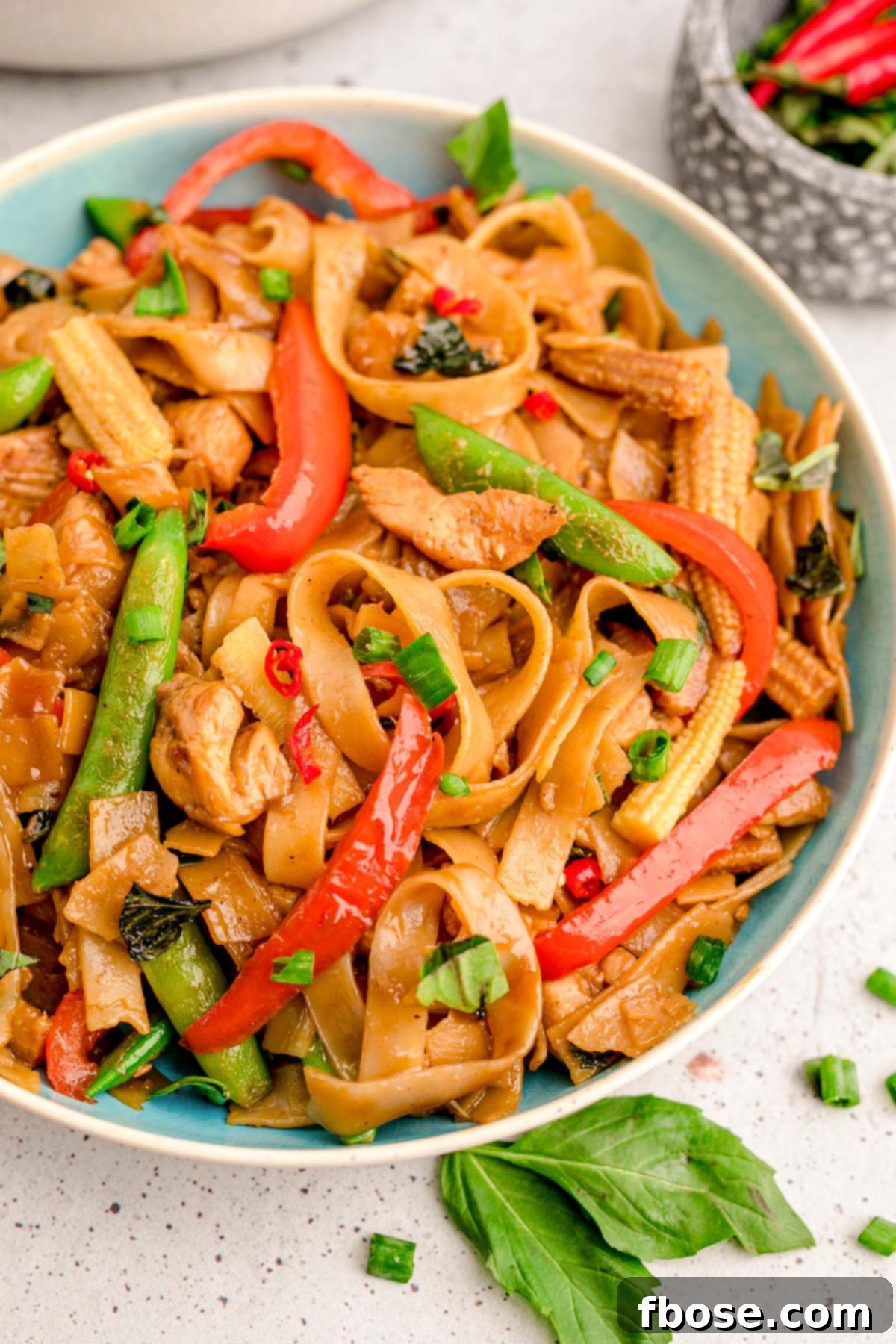
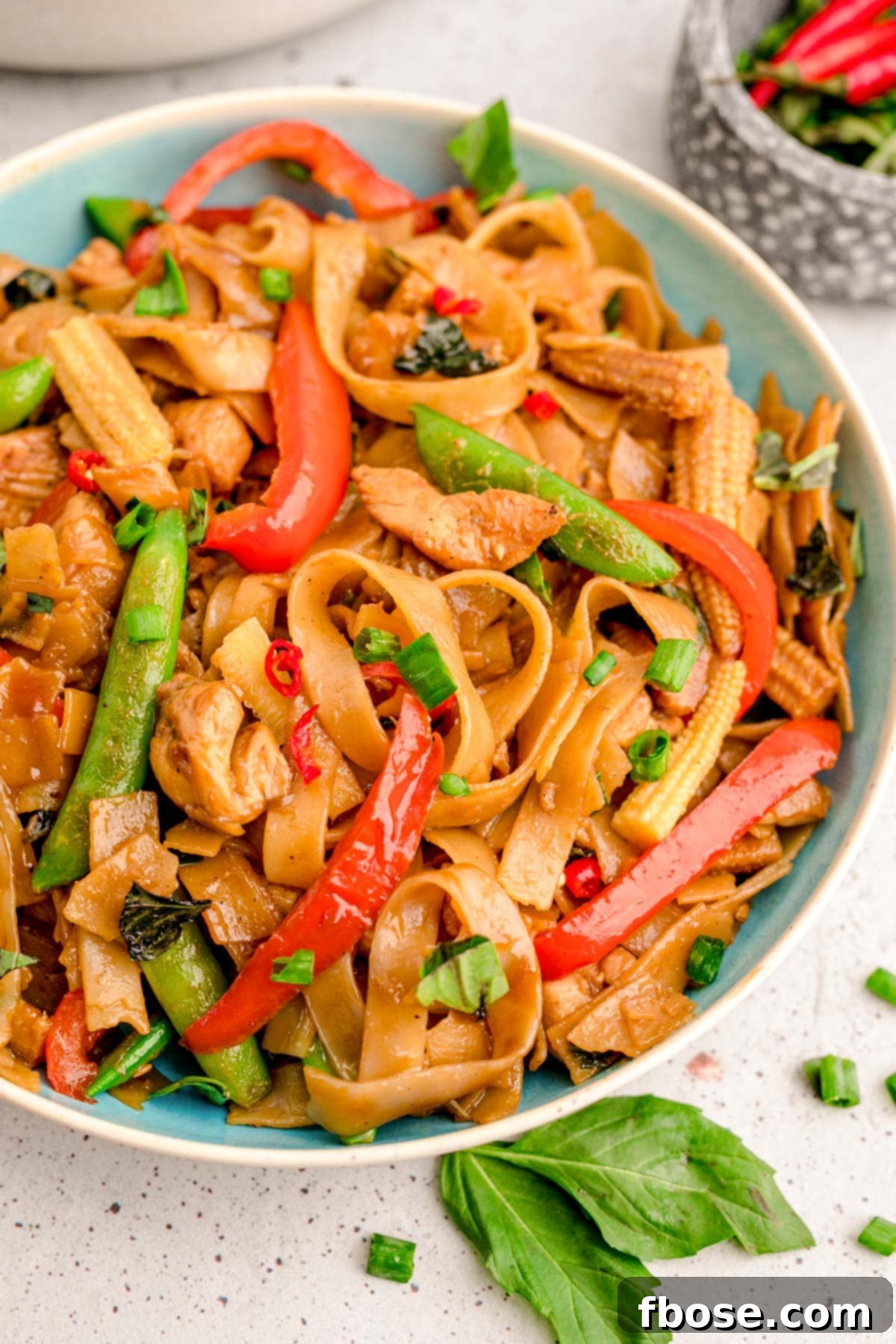
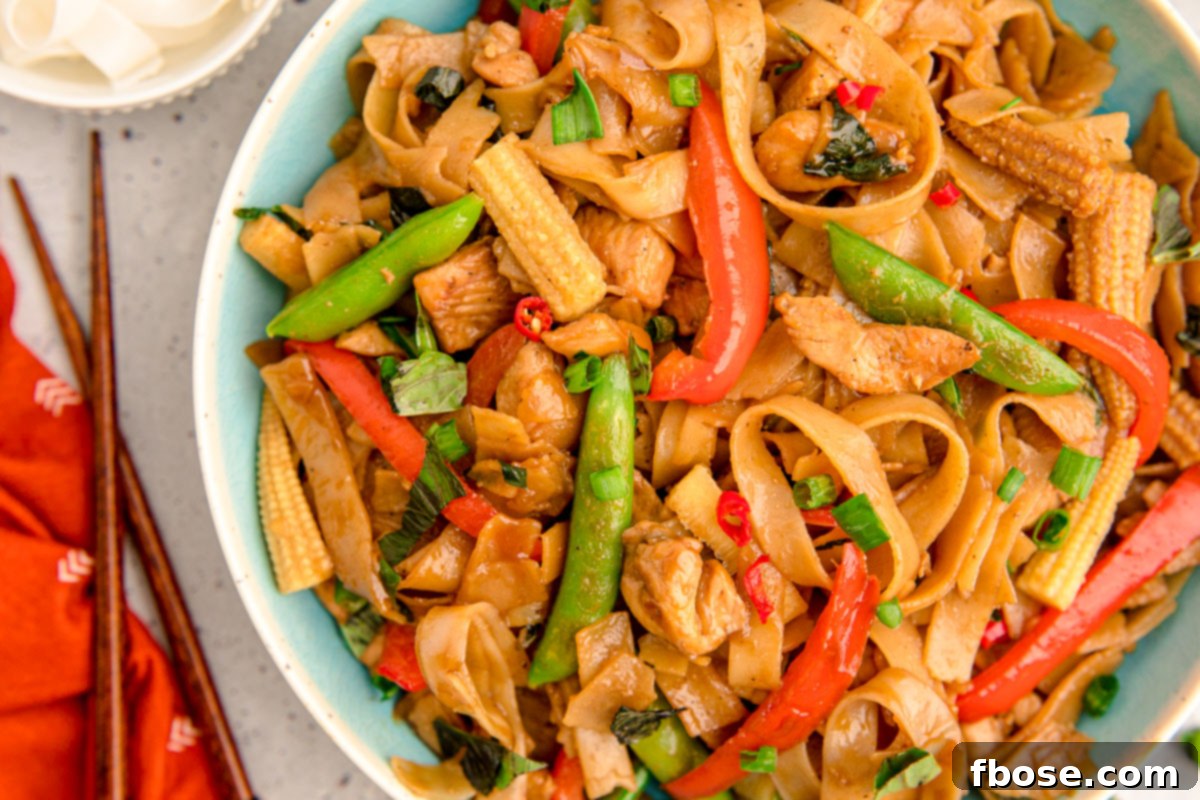
Drunken Noodles, also widely known as Pad Kee Mao, is a beloved Thai stir-fry noodle dish renowned for its vibrant flavors, tender protein, crisp vegetables, and a signature kick of heat. This popular dish offers a delicious journey through the rich culinary landscape of Thailand, making it a favorite for many seeking an authentic and satisfying meal. Best of all, you can whip up this incredible creation right in your own kitchen in just under 35 minutes!
If you’re a fan of homemade Thai cuisine, you’ll also adore my Tom Kha Gai Thai Chicken Coconut Soup, a creamy, aromatic delight perfect for any occasion.
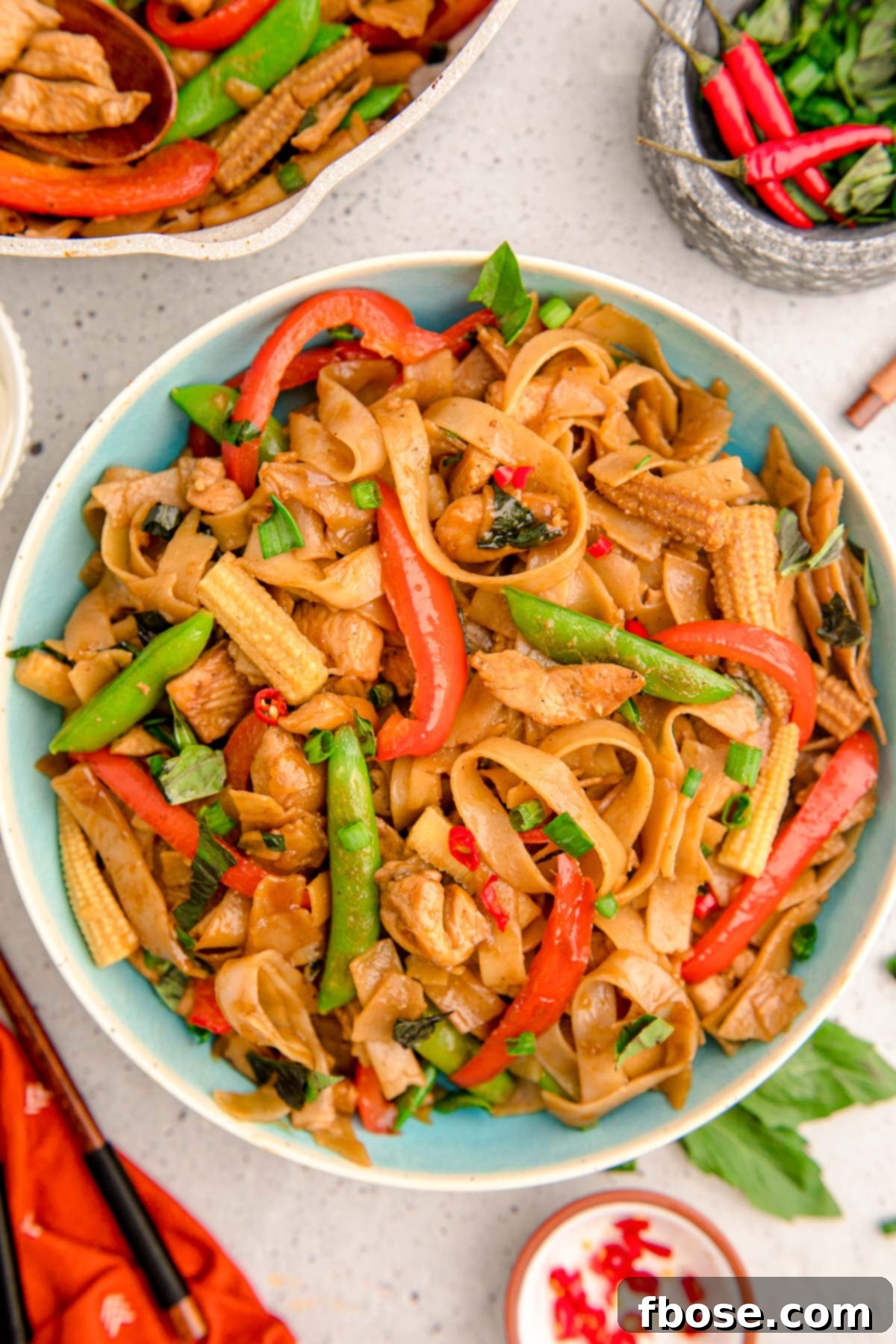
The craving for authentic Thai Drunken Noodles often leads us straight to our favorite local Thai restaurant. But what if you could recreate that irresistible taste at home, perhaps even surpassing your takeout expectations? This homemade Drunken Noodles recipe promises just that – a richly flavorful, spicy, and deeply satisfying dish that will have you eagerly anticipating your next home-cooked Thai meal. Enjoy the fresh ingredients, customized spice level, and the joy of preparing this classic dish in the comfort of your own kitchen.
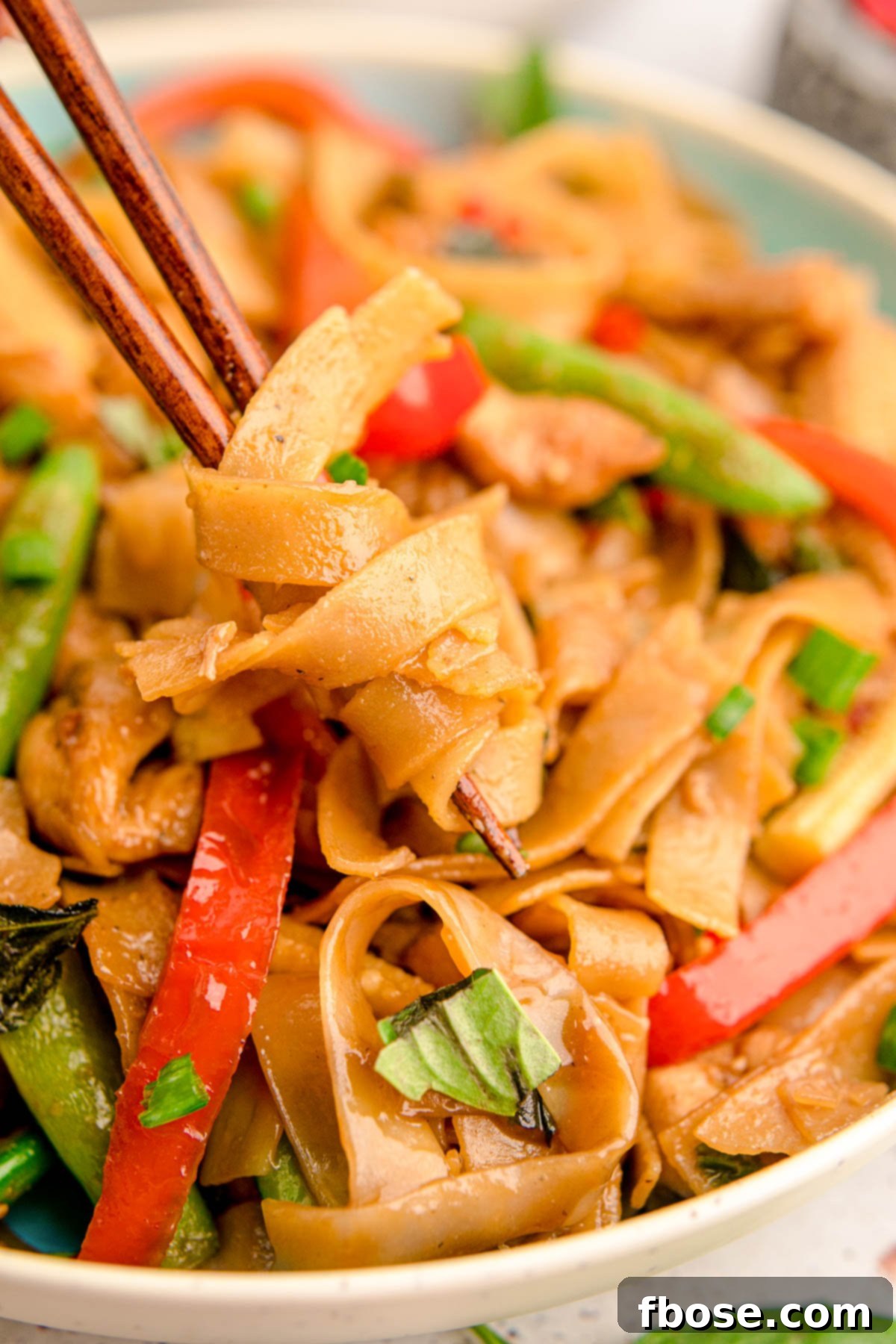
Pad Kee Mao, as it’s known in Thailand, is distinguished by its use of wide, chewy rice noodles, a savory-spicy sauce, and an assortment of fresh vegetables and protein. The characteristic “kick” comes from Thai bird’s eye chili peppers, which impart an invigorating heat that surprisingly leaves you wanting more. This hearty and well-rounded meal masterfully combines carbohydrates from the noodles, essential vitamins from the vegetables, and satisfying protein, guaranteeing a full stomach and a truly delighted palate. It’s a complete meal that bursts with umami, sweet, salty, and spicy notes in every bite.
Why Are They Called Drunken Noodles? The Story Behind the Name
The name “Drunken Noodles” often sparks curiosity, given that the recipe contains absolutely no alcohol. Several fascinating theories attempt to explain this intriguing moniker. One popular belief suggests that the dish is so intensely spicy, eating it makes people feel as though they’re getting “drunk” or at least induces a state of euphoria or intense heat that requires copious amounts of liquid to wash down, much like the effects of alcohol. Imagine the heat hitting your tongue, making you flush and reach for a cool drink – a truly intoxicating experience!
Another widely circulated theory posits that Pad Kee Mao is the ultimate “hangover cure” or a go-to late-night meal, often prepared and consumed after a lively night of drinking. Its bold, robust flavors and substantial nature are said to be perfect for soaking up alcohol and re-energizing the body. Many Thais enjoy this dish late at night from street vendors after a night out. Regardless of the true origin of its name, one thing is certain: this dish is an absolute culinary adventure that demands to be experienced for its unforgettable taste and invigorating spice.
Why You’ll Love This Drunken Noodles Recipe
Having explored various renditions of this classic dish, I can confidently say that this recipe stands out. While I dream of trying an authentic batch in Thailand, the best version I’ve encountered to date was at Sawadee in Salt Lake City, and this recipe draws heavily from that unforgettable experience, bringing that authentic taste right to your table. Here are just a few reasons why you’ll fall in love with making your own Drunken Noodles:
- Effortless Protein Customization: Not a fan of chicken? No problem! This versatile recipe allows you to easily swap the chicken for 8 ounces of succulent shrimp, tender beef slices, or flavorful pork. For a vegetarian option, pressed and pan-fried tofu or tempeh also work wonderfully, absorbing the sauce beautifully. Just ensure your chosen protein is cooked through before introducing the vegetables to the wok for optimal results.
- Master Your Spice Level: Drunken Noodles are famously spicy, but your palate is the boss! You have complete control over the heat. For a milder experience, simply reduce or omit the Thai bird’s eye chili. If you crave an inferno, feel free to increase the amount of chili used, or even add a dash of chili oil at the end for an extra fiery kick. You can also experiment with other chilies like serrano for a different flavor profile.
- Boost Your Veggie Intake: If you’re a vegetable enthusiast, this dish is a blank canvas! Enhance its nutritional value and textural complexity by incorporating thinly sliced onions, traditional Chinese broccoli, crunchy celery, vibrant standard broccoli florets, fresh mushrooms, or even healthy spinach. Experiment with your favorites to create a personalized stir-fry that is both delicious and packed with goodness. Ensure quick cooking to keep them tender-crisp.
- A Lightning-Fast Weeknight Meal: Who doesn’t appreciate a meal that’s both bursting with flavor and ready to serve in a mere 35 minutes? This recipe is a game-changer for busy weeknights, offering a quick, delicious, and deeply satisfying alternative to takeout. Its minimal cooking time and maximum flavor make it a perfect addition to any fast-paced dinner rotation, allowing you to enjoy gourmet Thai food without the wait.
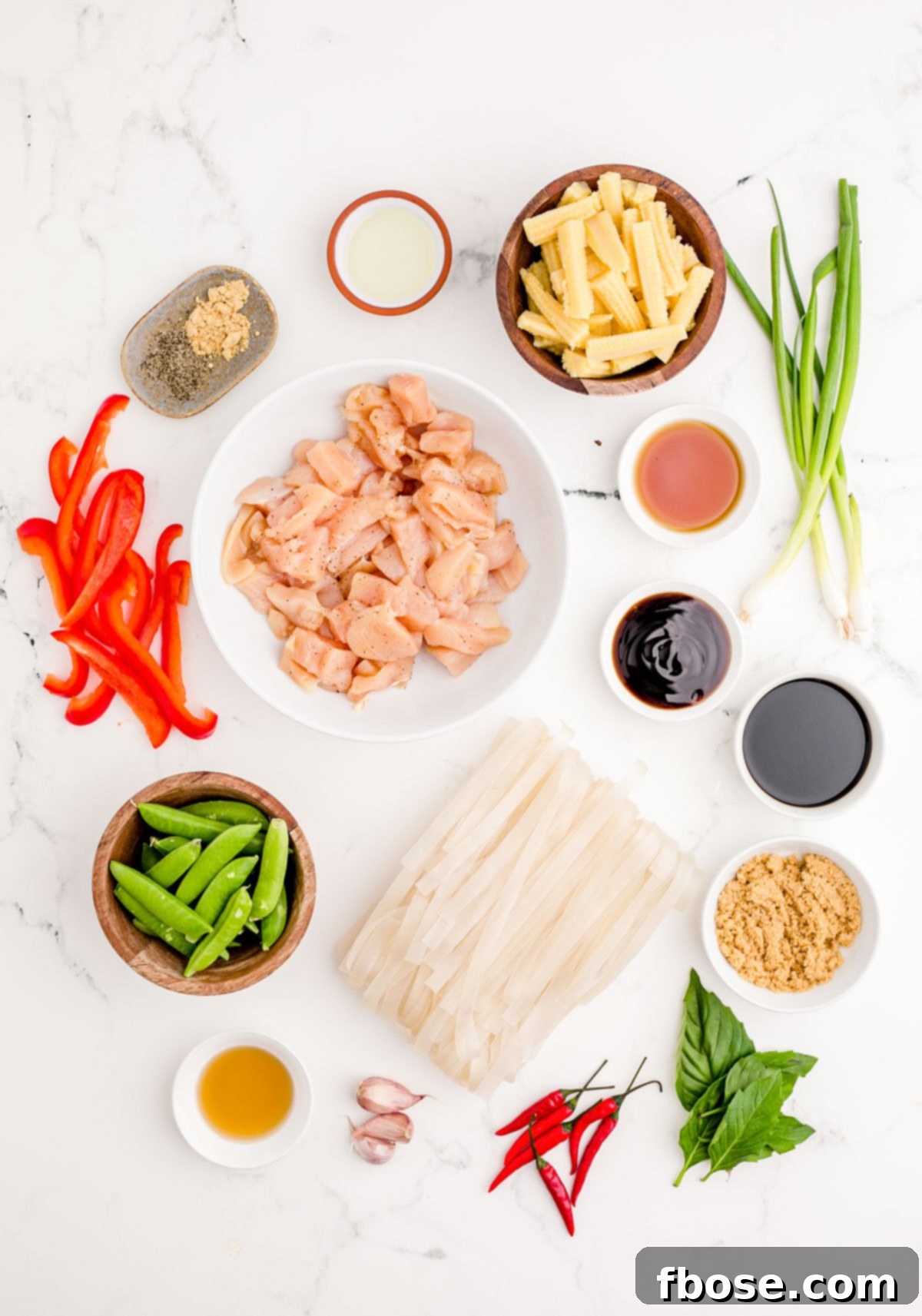
Essential Drunken Noodles Ingredients
Crafting the perfect Drunken Noodles requires a blend of common and specific Asian ingredients that contribute to its distinctive taste profile. Understanding each component’s role will help you achieve that authentic flavor. Here’s what you’ll need for this incredibly flavorful dish:
- Flat Wide Dried Rice Noodles: These are the backbone of the dish, providing a chewy texture and absorbing the rich sauce wonderfully. Look for ones about ¼ inch wide or more.
- Sesame Oil: Used primarily at the end of noodle preparation, it adds a subtle nutty fragrance and helps prevent the noodles from sticking together.
- Soy Sauce: A fundamental ingredient for the savory, umami base of the sauce. You can use light or regular soy sauce, or low-sodium if preferred.
- Oyster Sauce: Crucial for adding depth, a hint of sweetness, and a beautiful glossy sheen to the stir-fry. Vegetarian mushroom-based oyster sauces are also available.
- Fish Sauce: An absolute must for authentic Thai cuisine, this fermented anchovy sauce delivers an unparalleled savory, salty, and intensely umami punch. Don’t skip it!
- Light Brown Sugar: Balances the savory and spicy notes with a touch of essential sweetness, contributing to the dish’s complex flavor profile.
- Ground Black Pepper: A classic seasoning that adds a subtle warmth and aroma, complementing the chili’s heat without overpowering it.
- Ground Ginger: Contributes a fragrant, slightly spicy, and warm zest, providing an important aromatic layer to the sauce.
- Chicken Breasts: Cut into tender, bite-sized pieces, these provide the primary protein. Thighs can also be used for extra richness.
- Vegetable Oil: Ideal for stir-frying due to its high smoke point, ensuring your ingredients cook quickly without burning.
- Garlic: Aromatic cornerstone of countless stir-fries, providing a pungent and savory base.
- Thai Bird’s Eye Chili: The star for that signature fiery heat. Adjust the quantity according to your desired spice level. Handle with care!
- Baby Corn: Adds a delightful sweet crunch and visual appeal to the medley of vegetables.
- Red Bell Pepper: Brings vibrant color, natural sweetness, and a pleasant crispness to the stir-fry.
- Snow Peas: Offers a fresh, vibrant snap and a delicate sweet flavor.
- Green Onions: Used both in the stir-fry for a mild onion flavor and as a fresh garnish.
- Thai Basil: Crucial for the unique aromatic, slightly peppery, and anise-like finish that defines Drunken Noodles.
A Note on Thai Basil: Both Thai Basil and Thai Holy Basil are fragrant herb varieties integral to Thai cuisine. While Thai Holy Basil (Pad Krapow), with its slightly spicier, peppery notes, is traditionally used in Drunken Noodles, it can be quite challenging to find outside of specialty Asian markets. Thai Basil (often labeled “Thai Sweet Basil”), with its slightly peppery, licorice-like flavor, makes an excellent and much more accessible substitute that still provides the dish’s characteristic aroma. We love growing Thai basil in our home herb garden for its vibrant taste, but if neither is available, regular sweet basil can be used in a pinch, though the flavor profile will differ slightly, missing some of that authentic Thai essence.
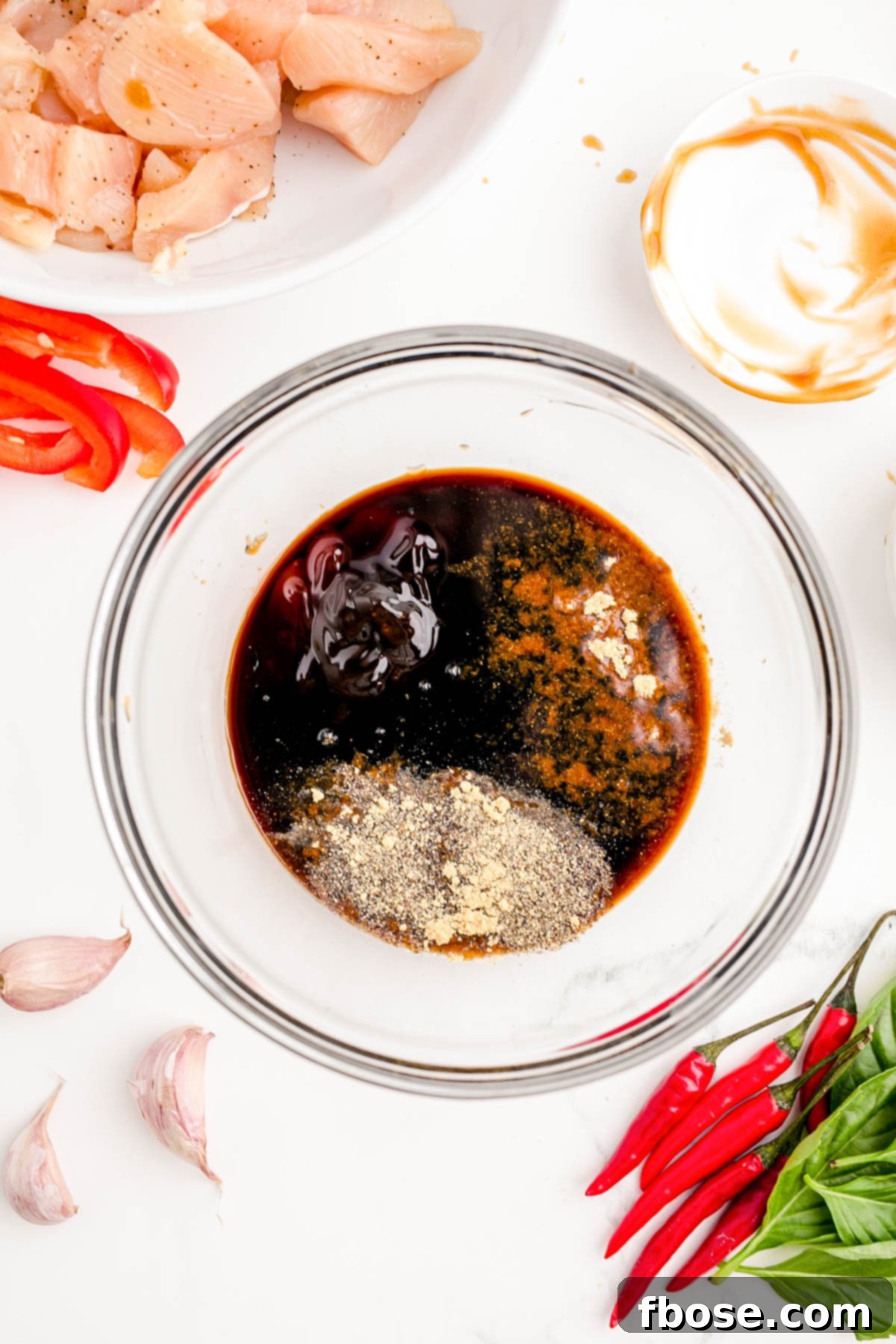
The magic of this Drunken Noodles recipe begins with its incredible sauce. A harmonious blend of soy sauce, rich oyster sauce, potent fish sauce, a touch of light brown sugar, earthy ground black pepper, and fragrant ground ginger creates a savory, sweet, and spicy concoction that will generously coat every element of your dish. This mixture is truly the heart of the Pad Kee Mao flavor profile, delivering an explosion of tastes that dance on your palate.
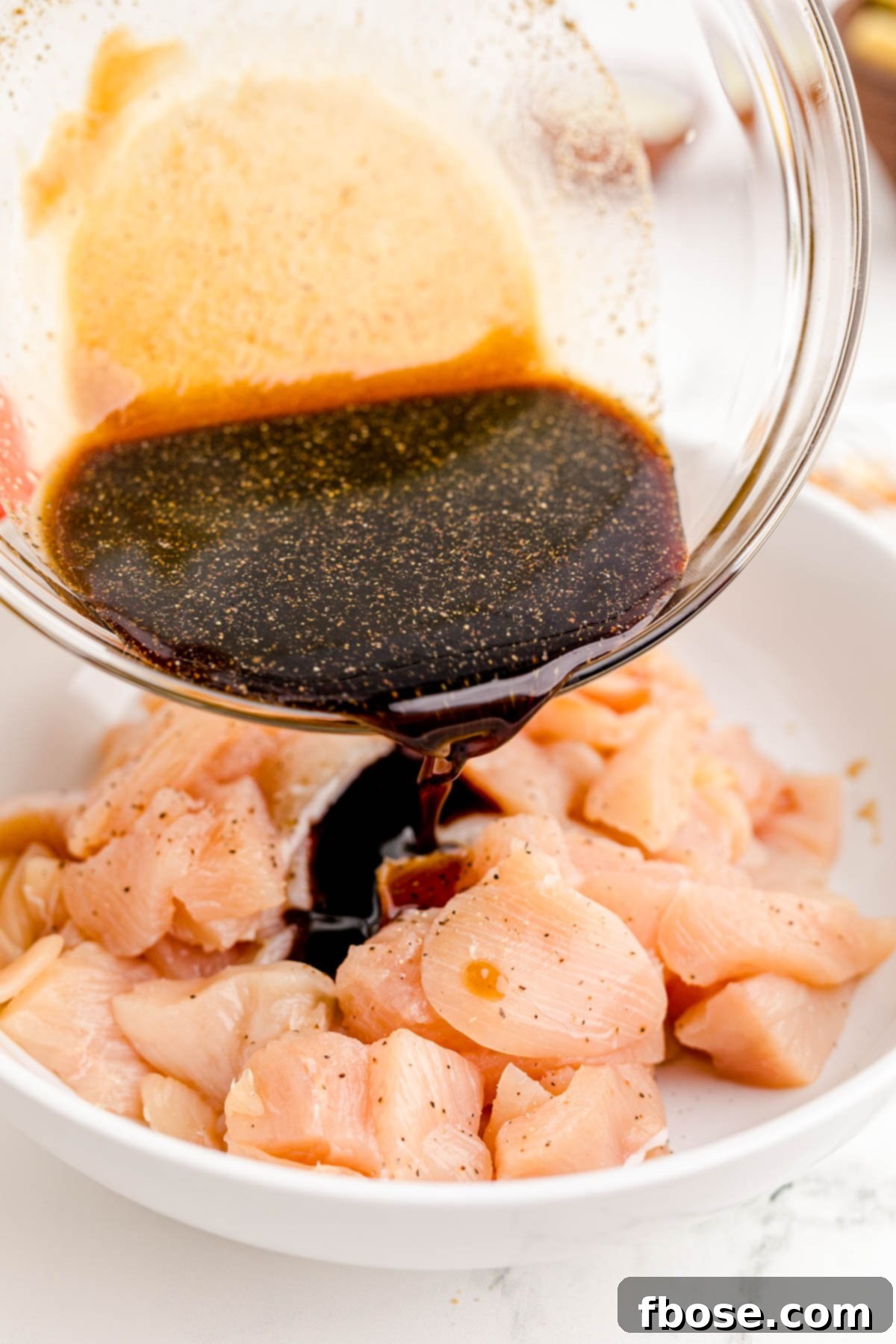
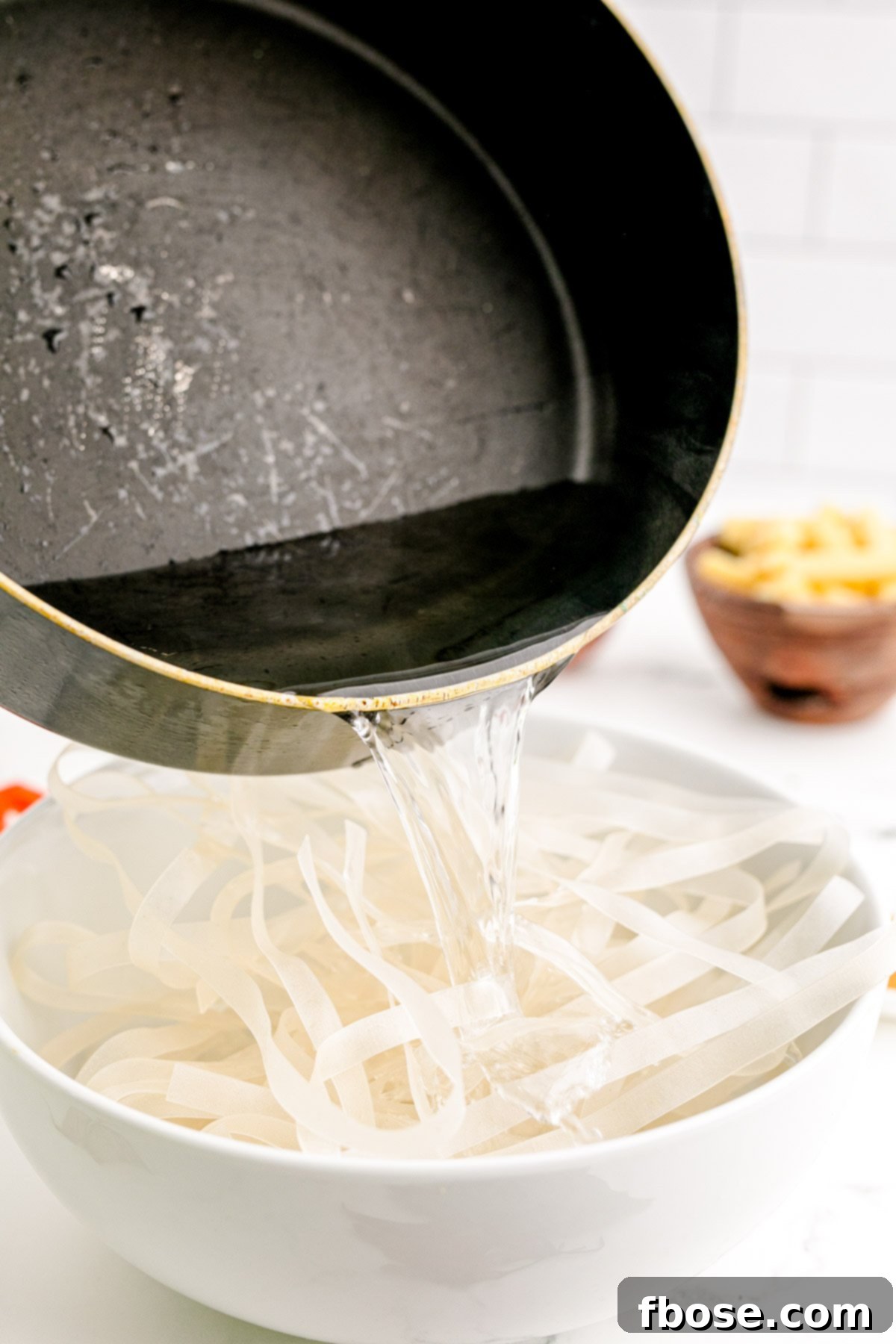
Thinly sliced chicken breasts are then lovingly marinated in a portion of this exquisite sauce, allowing the flavors to penetrate and tenderize the meat, ensuring juicy and flavorful bites. While the chicken soaks up these delicious aromas, flat, wide rice noodles are cooked to al dente perfection on the stovetop. It’s crucial not to overcook them, as they will continue to cook slightly in the wok. Once drained, a drizzle of sesame oil is added to prevent sticking and impart a subtle nutty fragrance, preparing them perfectly for the stir-fry.
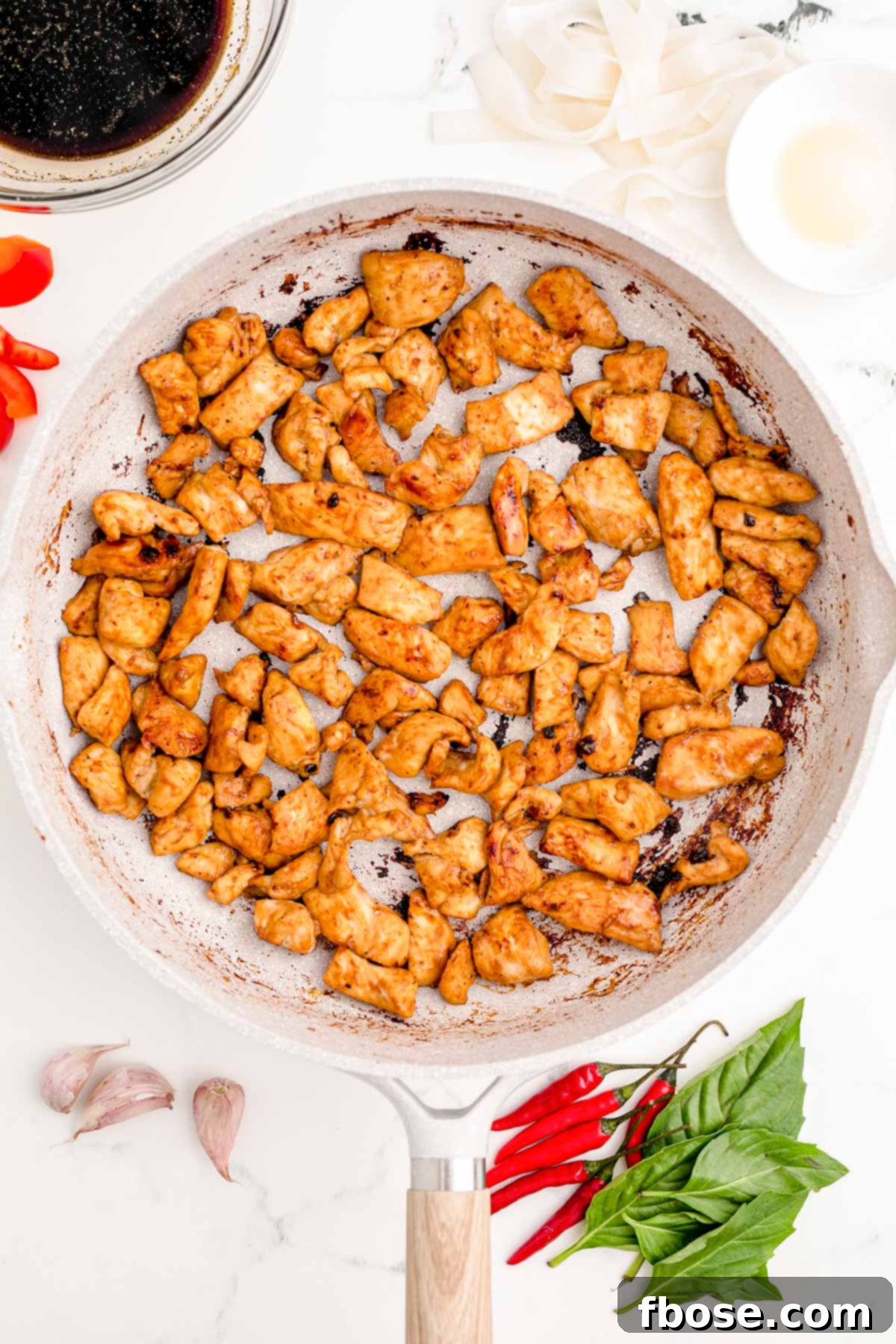
The cooking process is a swift, high-heat dance, characteristic of excellent stir-fries. The marinated chicken is quickly seared until golden brown and set aside to rest, preserving its tenderness. Then, minced garlic cloves, fiery Thai bird’s eye chili peppers, vibrant whole baby corn, thinly sliced bell pepper, crisp snow peas, and fragrant green onions are stir-fried until perfectly tender-crisp. This rapid cooking maintains their crunch and bright colors. Finally, everything comes together: the cooked chicken, the prepared noodles, and the remaining savory sauce are combined in the hot skillet, tossed until every strand is coated, gleaming, and infused with flavor. The dish is then ready to be devoured immediately!
For those harder-to-find ingredients like a specific brand of fish sauce, fresh Thai basil, or wide rice noodles, your best bet is to explore a local Asian grocery store or a well-stocked international market. These specialty stores often carry a wider variety and fresher options than conventional supermarkets. However, many larger supermarkets also now carry a surprisingly wide selection of Asian ingredients in their international aisles, so always check your regular grocery aisles first – you might be pleasantly surprised!
Mastering Homemade Drunken Noodles: A Step-by-Step Guide
Creating this iconic Thai dish at home is simpler than you might imagine, especially with a few key tips for stir-frying success. Remember, preparation (mise en place) is crucial for stir-fries, so have all your ingredients chopped, measured, and within arm’s reach before you begin cooking. This ensures a smooth and quick cooking process, preventing anything from burning.
Step 1: Craft the Signature Sauce. Begin by combining all the sauce ingredients – soy sauce, oyster sauce, fish sauce, light brown sugar, ground black pepper, and ground ginger – in a medium bowl. Whisk until well combined and the sugar is completely dissolved. Set this flavorful base aside; it’s what brings the dish to life!
Step 2: Marinate the Chicken. Place the thinly sliced chicken breast pieces (or your chosen protein like shrimp, beef, or tofu) into a separate medium bowl. Pour approximately one-third of your prepared sauce over the chicken. Stir thoroughly to ensure every piece is coated, then cover the bowl and refrigerate to marinate for at least 20-30 minutes. This step infuses the chicken with flavor and helps keep it tender and juicy during the rapid cooking.
Step 3: Prepare the Noodles. While the chicken marinates, bring a large pot of water to a rolling boil. Carefully add your flat wide dried rice noodles to the boiling water, following package instructions (typically, they just need to soak in hot water for about 10 minutes, with occasional stirring to prevent sticking). Once softened to your desired al dente texture – they should be pliable but still have a slight bite – drain them thoroughly and rinse under cold water to halt the cooking process. This prevents them from becoming mushy. Finally, toss the drained noodles with a teaspoon of sesame oil in a separate bowl to prevent them from clumping together and add a lovely aroma. Set aside.
Step 4: Cook the Chicken. Heat two tablespoons of vegetable oil in a large wok or a heavy-bottomed nonstick skillet over medium-high heat. Once the oil is shimmering, add the marinated chicken and stir-fry until it’s beautifully browned and fully cooked through. This usually takes just a few minutes given the thin slices. Remove the cooked chicken from the skillet and set it aside in a bowl. Now, increase the heat to high for the vegetables to achieve a proper stir-fry.
Step 5: Stir-Fry the Vegetables. Add the remaining two tablespoons of vegetable oil to the same skillet, now over high heat. The high heat is key for a good stir-fry, creating that desired smoky “wok hei” flavor. Introduce the minced garlic, chopped Thai bird’s eye chili (adjust quantity to desired spice level), whole baby corn (halved or quartered), sliced red bell pepper, and fresh snow peas. Stir-fry vigorously and constantly for 2 to 3 minutes, or until the vegetables are tender-crisp. Avoid overcooking to maintain their vibrant color and crunch.
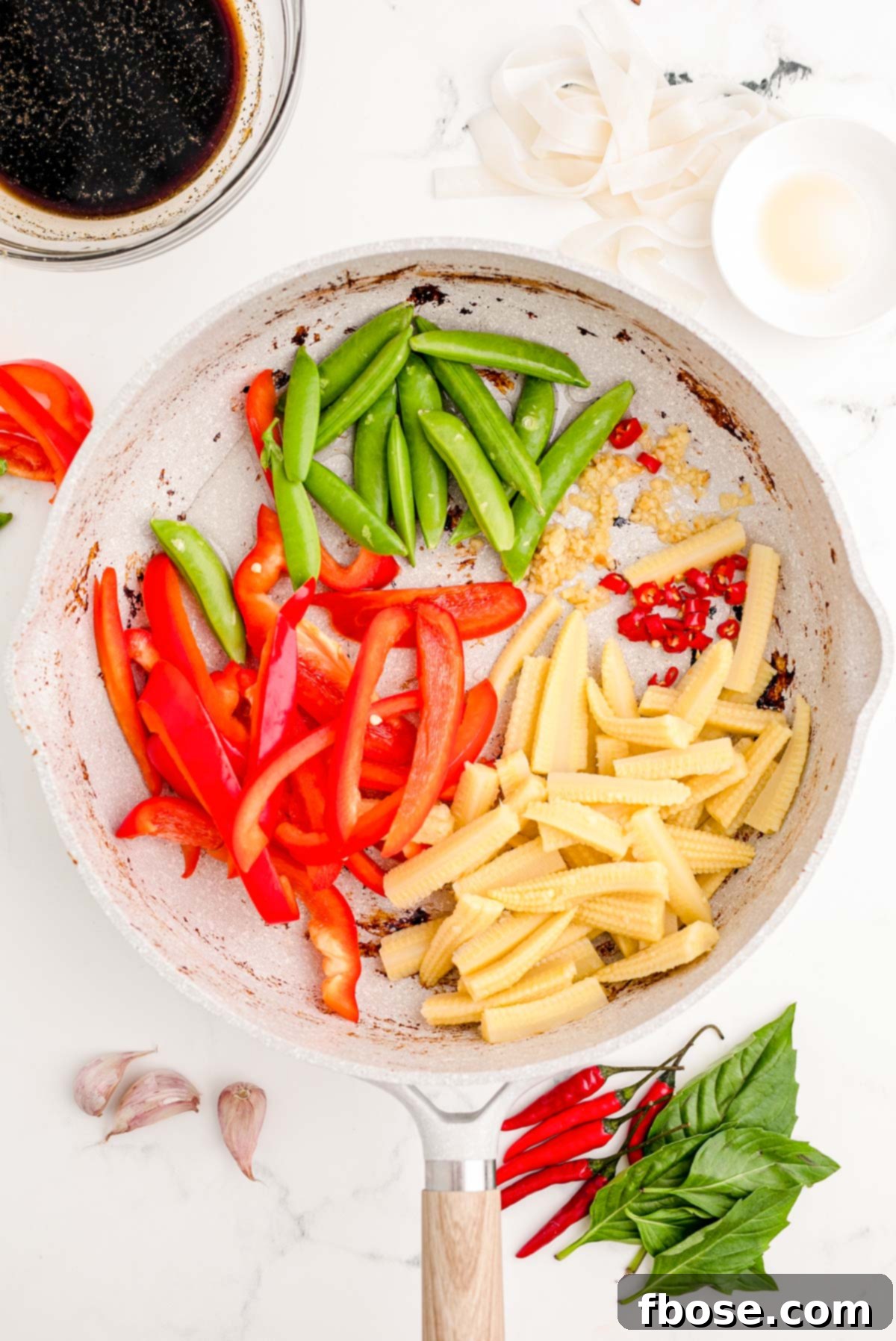
Step 6: Add Aromatics and Combine. Stir in the sliced green onions and fragrant Thai basil (torn into small pieces) into the skillet with the stir-fried vegetables. Continue to cook and stir for another minute, allowing the herbs to release their aromatic oils and infuse the dish with their distinctive fragrance. Then, return the cooked chicken to the skillet, mixing everything together gently to combine all the delicious ingredients.
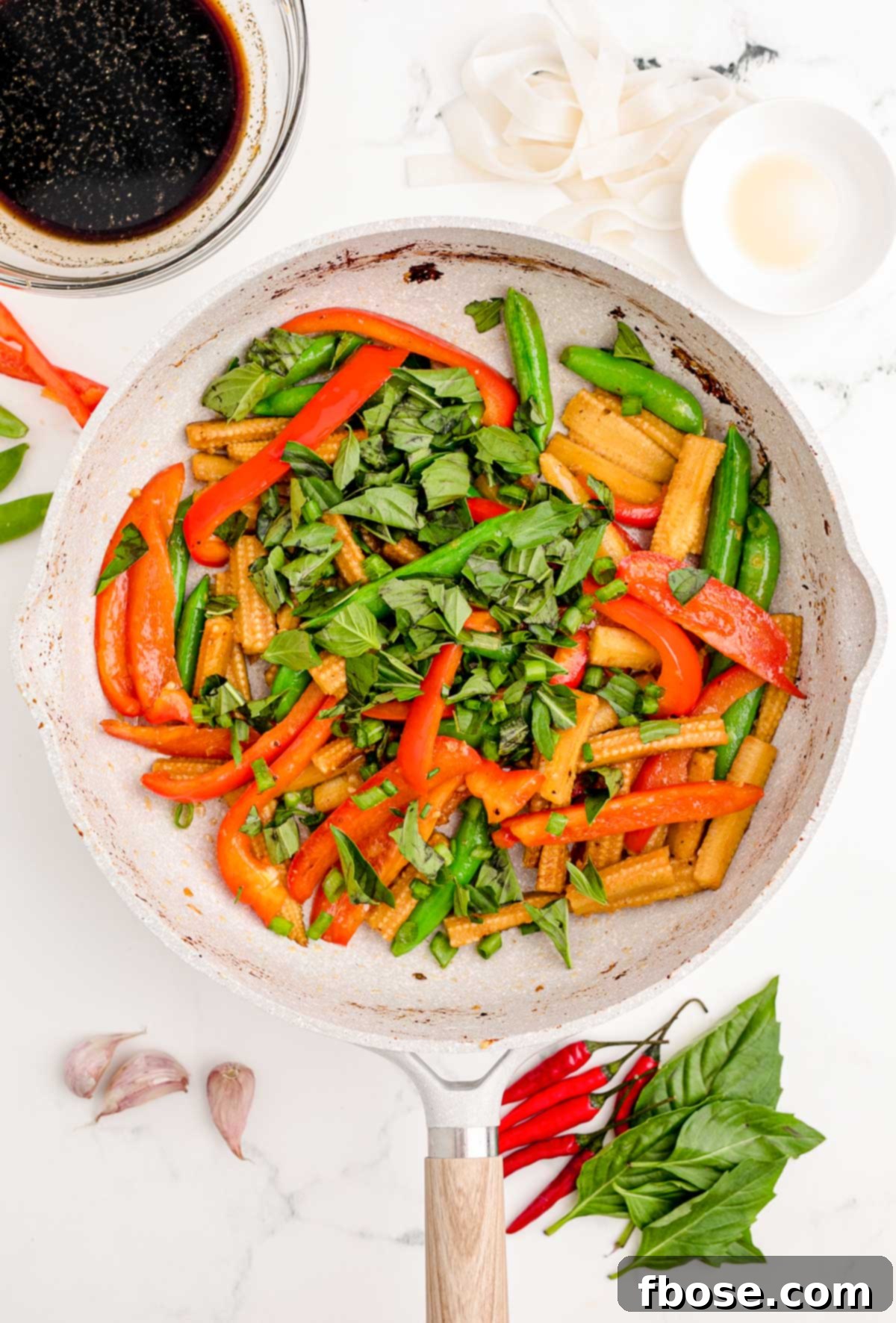
Step 7: Final Toss and Serve. Pour the remaining reserved sauce and the prepared rice noodles into the pan. Toss everything together vigorously, ensuring the noodles are thoroughly coated with the rich sauce and all ingredients are evenly distributed. Continue to cook for approximately 3-5 more minutes, or until the noodles are heated through, have absorbed the delicious flavors of the sauce, and reach your desired texture. Make sure to turn the noodles frequently to facilitate even absorption and prevent sticking.
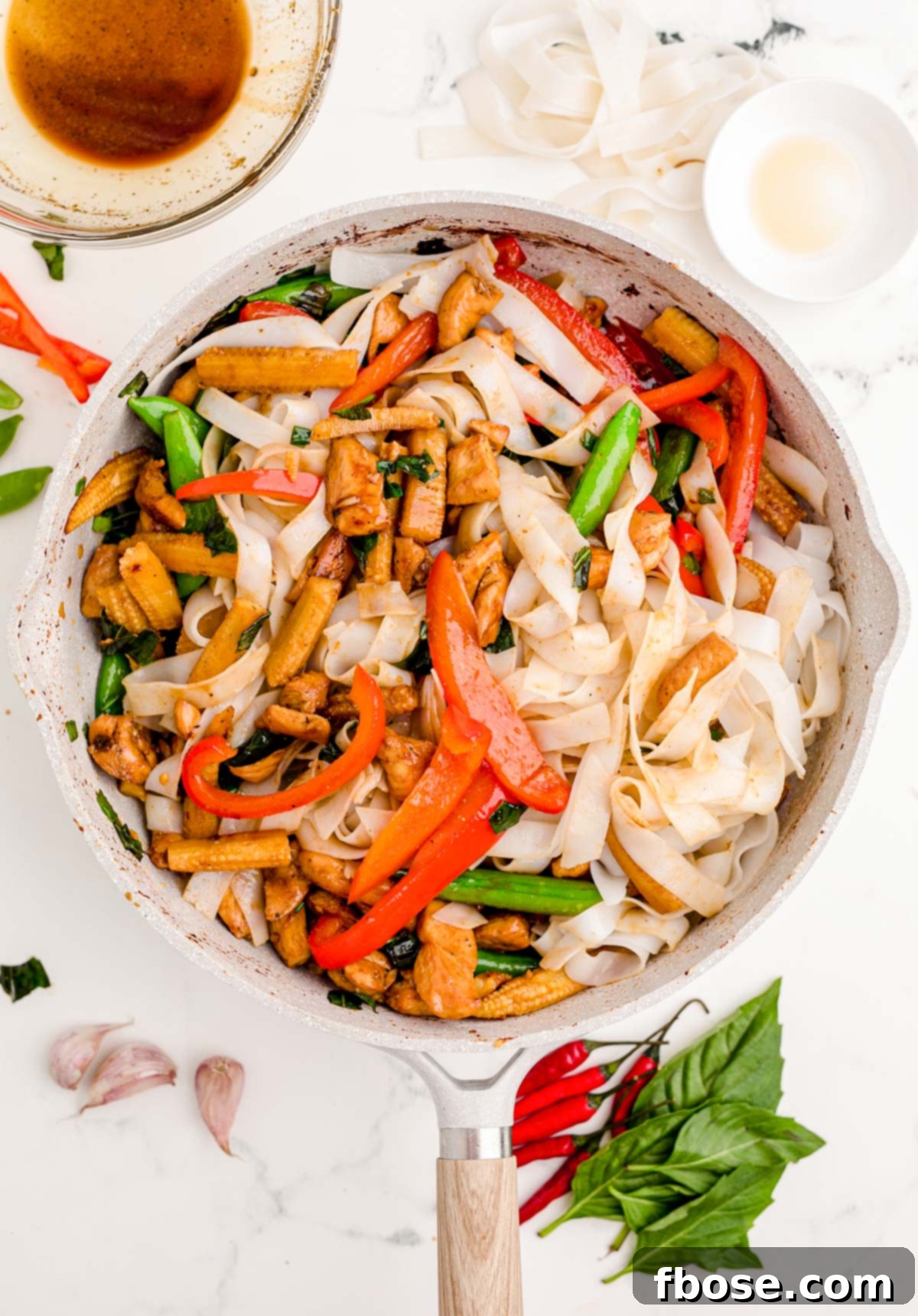
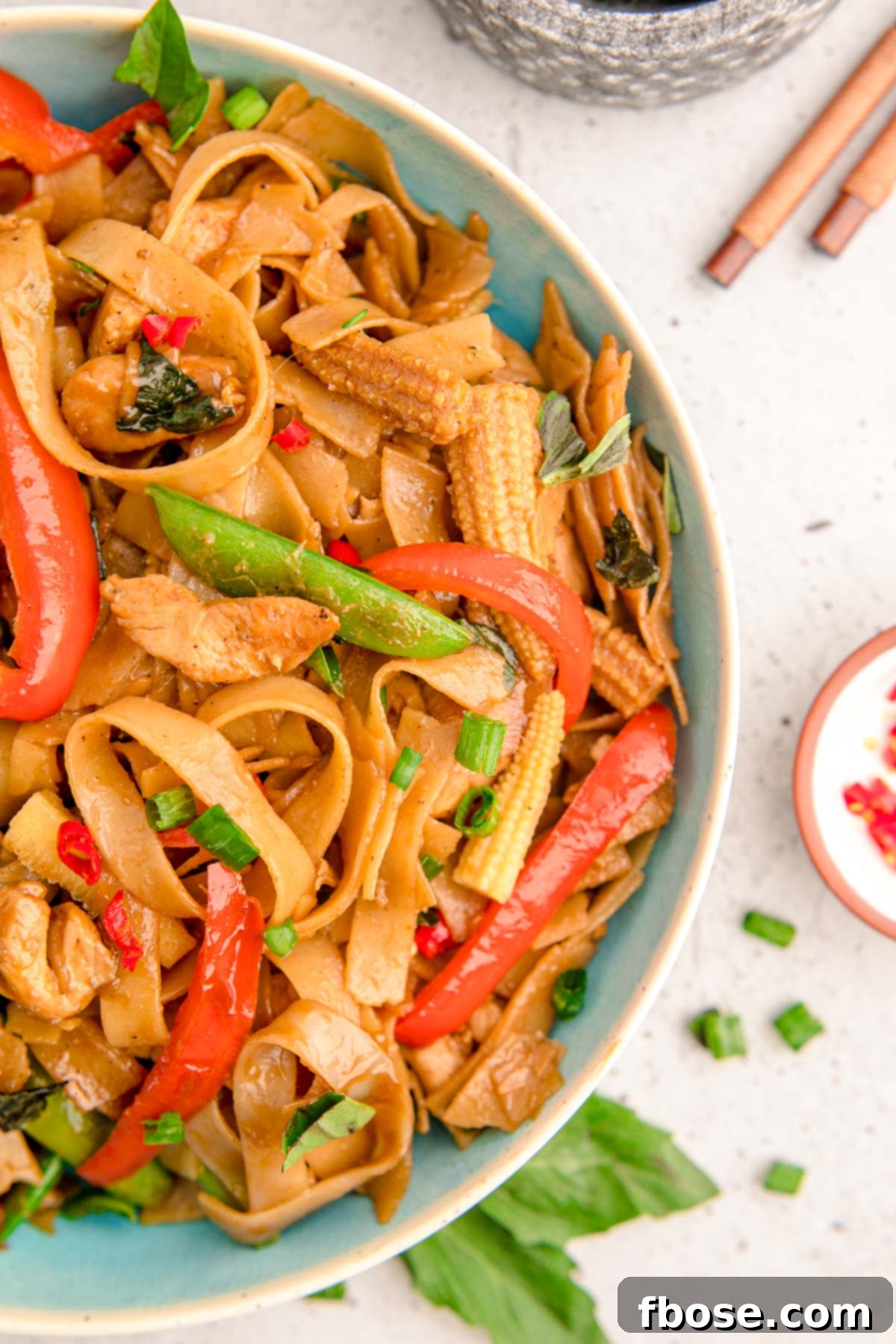
Remove the skillet from the heat immediately. Serve your homemade Drunken Noodles piping hot, garnished with additional fresh Thai basil and sliced green onions if desired for an added burst of flavor and visual appeal. Enjoy this intensely flavorful and satisfying Thai classic – a true culinary delight!
Serving Suggestions for Drunken Noodles
For the ultimate experience, serve your homemade Drunken Noodles fresh from the wok in a large, inviting bowl. The vibrant flavors and textures are best enjoyed immediately while still hot and fragrant. This robust dish pairs wonderfully with additional fresh vegetables, such as steamed or lightly stir-fried bok choy, which offers a refreshing contrast to the spicy noodles. A simple side salad with a light vinaigrette or a crisp cucumber salad can also complement the richness of the stir-fry beautifully, cutting through the heat. You can also offer lime wedges on the side for an extra zesty kick, or a sprinkle of crushed peanuts for added texture (though not traditional for Pad Kee Mao).
Storing Leftover Pad Kee Mao
Should you be lucky enough to have any leftover Thai Drunken Noodles, it’s important to store them properly to maintain their freshness and flavor. Transfer any cooled leftovers promptly into an airtight container and store it in the refrigerator. Properly stored, they will remain delicious and safe to eat for up to 3-5 days. This makes them an excellent option for meal prepping healthy and flavorful lunches throughout the week, offering convenience without compromising on taste.
Reheating Your Drunken Noodles
Reheating Drunken Noodles is straightforward, allowing you to enjoy their deliciousness even days later. For best results, I recommend microwaving them in a microwave-safe dish for 60 to 90 seconds, stirring halfway through to ensure even heating and prevent dry spots. If you prefer to use a stovetop, a quick stir-fry in a lightly oiled pan or wok over medium heat will revive the noodles and vegetables, giving them a fresh, tender-crisp texture similar to when they were first made. Add a splash of water or broth if they seem too dry.
Drunken Noodles (Pad Kee Mao) FAQs
Oyster sauce and fish sauce are foundational to authentic Thai flavors, providing deep umami and savory notes that are hard to perfectly replicate. If you need a substitute, a tablespoon of Worcestershire sauce can offer a somewhat similar savory depth, though it will alter the traditional taste profile slightly. For a vegetarian option, mushroom-based “oyster” sauce substitutes are widely available in Asian markets, and tamari or a good quality soy sauce can stand in for fish sauce, though the unique pungent umami will be missed. You could also omit them altogether, but be aware that the overall flavor of the dish will be noticeably different and less authentic.
Fresh wide rice noodles are wonderful for Drunken Noodles, offering a superior chewy texture! To prepare them for stir-frying, simply separate them gently by hand. They often come in blocks and can be a bit stiff or stuck together. If they are, place them in a colander and rinse them under warm (not hot) water for a minute or two until they soften and can be easily separated into individual strands without breaking. Be careful not to use hot water for too long, as they can become gummy or overcooked quickly.
While both Drunken Noodles (Pad Kee Mao) and Pad Thai are iconic Thai noodle dishes and both use rice noodles, they offer distinctly different taste experiences. Pad Thai is typically characterized by its sweeter, tangier, and often nuttier flavor profile, featuring tamarind, peanuts, and a less intense spice level. Drunken Noodles, on the other hand, boast a much bolder, savory, and spicy flavor, with a strong emphasis on fresh chilies and a rich, umami-packed sauce, often with a hint of bitterness from the basil. They might look similar with their wide rice noodle base, but the flavor journey of each dish is entirely unique!
Absolutely! Drunken Noodles are highly adaptable for dietary preferences. To make this dish vegetarian, simply replace the chicken with firm tofu (pressed thoroughly to remove excess water, then pan-fried until crispy), tempeh, or your favorite plant-based protein. For a fully vegan version, ensure you use a mushroom-based “oyster” sauce substitute and a vegan “fish sauce” alternative (these are often made from seaweed and fermented plant extracts and can be found in Asian specialty stores). With these swaps, the rich flavors of the sauce and fresh vegetables will still shine through beautifully, offering a satisfying plant-based meal.
The best noodles for Pad Kee Mao are wide, flat rice noodles, often labeled “rice stick noodles” or “Pad See Ew noodles.” Fresh versions are generally considered ideal for their superior chewy texture and ability to absorb the sauce, but good quality dried ones (like those specified in this recipe) work perfectly once properly rehydrated. Look for noodles that are at least 1/4 inch wide (or wider, up to 1/2 inch) to ensure they can properly absorb the robust, spicy sauce and stand up to the vigorous stir-frying process without breaking apart. The width allows them to truly capture the essence of the sauce and provide a satisfying mouthfeel.
Easily! The intense heat in Drunken Noodles primarily comes from the Thai bird’s eye chilies. To significantly reduce the spice, you can simply use fewer chilies, or omit them entirely. If you want just a hint of warmth without the intense burn, try using a very small amount of a milder chili, such as a deseeded jalapeño, or a tiny pinch of red pepper flakes instead. You can also deseed the Thai chilies before chopping them, as most of the capsaicin (the compound responsible for heat) resides in the seeds and white membranes, significantly lowering the heat level while retaining some of the chili flavor.
One of the aspects I cherish most about this Drunken Noodles recipe is its incredible efficiency – allowing me to prepare a genuinely flavorful and satisfying meal even on the busiest weeknights. If you’re looking to expand your repertoire of quick and delicious dinners, be sure to explore other fantastic meals that are ready in 30 minutes or less to enjoy with your family!
- Rasta Pasta – A vibrant and savory dish featuring penne pasta, tender chicken, colorful bell peppers, and a bold jerk seasoning blend, delivering a taste of the Caribbean in under 30 minutes.
- Air Fryer Pizzas (Made With Biscuits) – Delightfully easy and customizable pizzas, perfect for a fun family meal or a quick snack. These are incredibly simple to make and can be topped with all your favorite ingredients!
- Burger Bowls – Keto-Friendly – A fantastic low-carb option for burger lovers! Load your bowl with seasoned ground beef, a bounty of fresh vegetables like lettuce, tomatoes, and pickles, and a sprinkle of cheese, then drizzle with a homemade, flavorful sauce.
- Garlic Butter Shrimp With Zucchini Noodles – A quick, light, and incredibly healthy dinner option that’s bursting with garlicky butter flavor. This gluten-free meal comes together in minutes and appeals to everyone at the table.
- Easy Fish Tacos – A speedy and satisfying recipe utilizing crispy frozen tilapia, nestled in warm tortillas, and generously complemented by a zesty homemade fish taco sauce for an authentic and refreshing touch.
Let’s Connect and Share Your Creations!
If you’ve tried this fantastic Drunken Noodles recipe, I would absolutely love to hear about your experience! Please share your thoughts in the comments section below and consider leaving a review. Your feedback is incredibly valuable and truly makes my day!
Don’t forget to tag me – @sugarandsoulco – on Instagram and Pinterest with your beautiful photos, or better yet, join our exclusive Sugar & Soul Show-offs Community on Facebook and share them there! We love seeing your culinary adventures and invite you to participate in our fun recipe challenges!
Discover More Irresistible Asian-Inspired Recipes
-
Kenji Garlic Noodles
-
Chicken Manchurian
-
Honey Walnut Shrimp (Panda Express Copycat)
-
Orange Chicken (Panda Express Copycat)
Drunken Noodles (Pad Kee Mao)
Ingredients
Sauce
- 4 tablespoons soy sauce
- 2 tablespoons oyster sauce
- 2 tablespoons fish sauce
- 2 tablespoons light brown sugar packed
- ½ teaspoon ground black pepper
- ½ teaspoon ground ginger
Noodles
- 8 ounces flat wide dried rice noodles ¼ inch or more if you have them
- 1 teaspoon sesame oil
Stir Fry
- 2 chicken breasts chopped
- 4 Tablespoons vegetable oil divided
- 2 garlic cloves minced
- 1 Thai bird’s eye chili chopped (wear gloves or wash as soon as you’re done, and don’t touch your eyes)
- 15 ounces whole baby corn cut in half and quartered
- 1 red bell pepper sliced
- 10 snow peas
- 2 green onions sliced, plus more for garnish
- 1 cup Thai basil torn into small pieces, plus more for garnish
Instructions
-
Crucial First Step: Prep all your ingredients (chop vegetables, mince garlic, slice chicken, etc.) before you start cooking. Stir-fries cook quickly, so having everything ready (mise en place) is essential for success. This will ensure a smooth and stress-free cooking process.
-
Combine 4 tablespoons soy sauce, 2 tablespoons oyster sauce, 2 tablespoons fish sauce, 2 tablespoons light brown sugar, ½ teaspoon ground black pepper, and ½ teaspoon ground ginger in a medium mixing bowl. Whisk until the sugar is dissolved and the sauce is smooth and thoroughly combined.
-
Place the chopped 2 chicken breasts (or your chosen protein) into a separate medium bowl. Ensure the chicken pieces are thinly sliced for quick and even cooking.
-
Pour approximately one-third of the prepared sauce over the chicken, stirring well to coat each piece evenly. Cover the bowl and place it in the refrigerator to marinate for 20 to 30 minutes. This step is vital for infusing the chicken with flavor and helps keep it wonderfully tender. Reserve the remaining two-thirds of the sauce for later use.
-
While the chicken is marinating, bring a large pot of water to a rolling boil. Carefully add the 8 ounces flat wide dried rice noodles and cook according to package directions (typically, they need to soak in boiling water for about 10 minutes, stirring occasionally to prevent sticking). Once softened to your desired al dente texture – they should be pliable but still have a slight bite – drain them thoroughly and rinse them with cold water. Rinsing halts the cooking process and prevents them from becoming mushy. Finally, toss the rinsed noodles in a bowl with 1 teaspoon sesame oil to prevent them from clumping together and add a subtle nutty aroma. Set aside.
-
For best results and authentic stir-fry flavor, use a wok or a large, heavy-bottomed nonstick skillet. Heat 2 of the 4 Tablespoons vegetable oil over medium-high heat until it shimmers. Add the marinated chicken and stir-fry until it is fully cooked through and lightly browned on all sides. This typically takes 3-5 minutes, depending on the thickness of your chicken pieces. Transfer the cooked chicken to a clean bowl and set it aside. Now, increase the heat to high for the vegetables to ensure they get a proper, quick stir-fry.
-
Increase the heat to high. Add the remaining 2 tablespoons of vegetable oil to the skillet. Quickly add the prepared 2 garlic cloves, 1 Thai bird’s eye chili (adjust quantity to desired spice level, or omit for less heat), 15 ounces whole baby corn, 1 red bell pepper (sliced into thin strips), and 10 snow peas. Stir-fry constantly and vigorously for 2 to 3 minutes until the vegetables are tender-crisp, maintaining their vibrant color and fresh crunch. Avoid overcooking, as they will cook a bit more with the noodles.
-
Next, add the sliced 2 green onions and 1 cup Thai basil (torn into small pieces). Continue to cook and stir for another minute, allowing the fragrant herbs to release their aromatic oils and infuse the dish with their distinctive character. The basil should wilt slightly but retain its vibrant green color.
-
Return the cooked chicken to the skillet with the vegetables and stir to combine all ingredients evenly. Then, pour in the remaining reserved sauce and add the prepared noodles. Toss everything together vigorously, using tongs or two spatulas, until the noodles are thoroughly coated with the sauce and heated through. Continue cooking for about 3-5 more minutes, ensuring the noodles absorb the rich flavors and reach your preferred tender-chewy texture. Make sure to turn the noodles frequently to facilitate even absorption and prevent them from sticking to the pan.
-
Remove the skillet from the heat immediately. Taste and adjust seasoning if necessary (a splash more fish sauce or a pinch of sugar, perhaps). Serve your homemade Drunken Noodles piping hot, garnished with additional fresh Thai basil and sliced green onions if desired for an added burst of flavor and visual appeal. Enjoy this intensely flavorful and satisfying Thai classic – a true culinary delight that brings the best of Thai street food to your home!
Nutrition
Did You Make This Recipe?
Don’t forget to share it with me on Instagram @sugarandsoulco and follow on Tiktok @sugarandsoulco and Pinterest @sugarandsoulco for more!
Pin Recipe
Share Recipe