
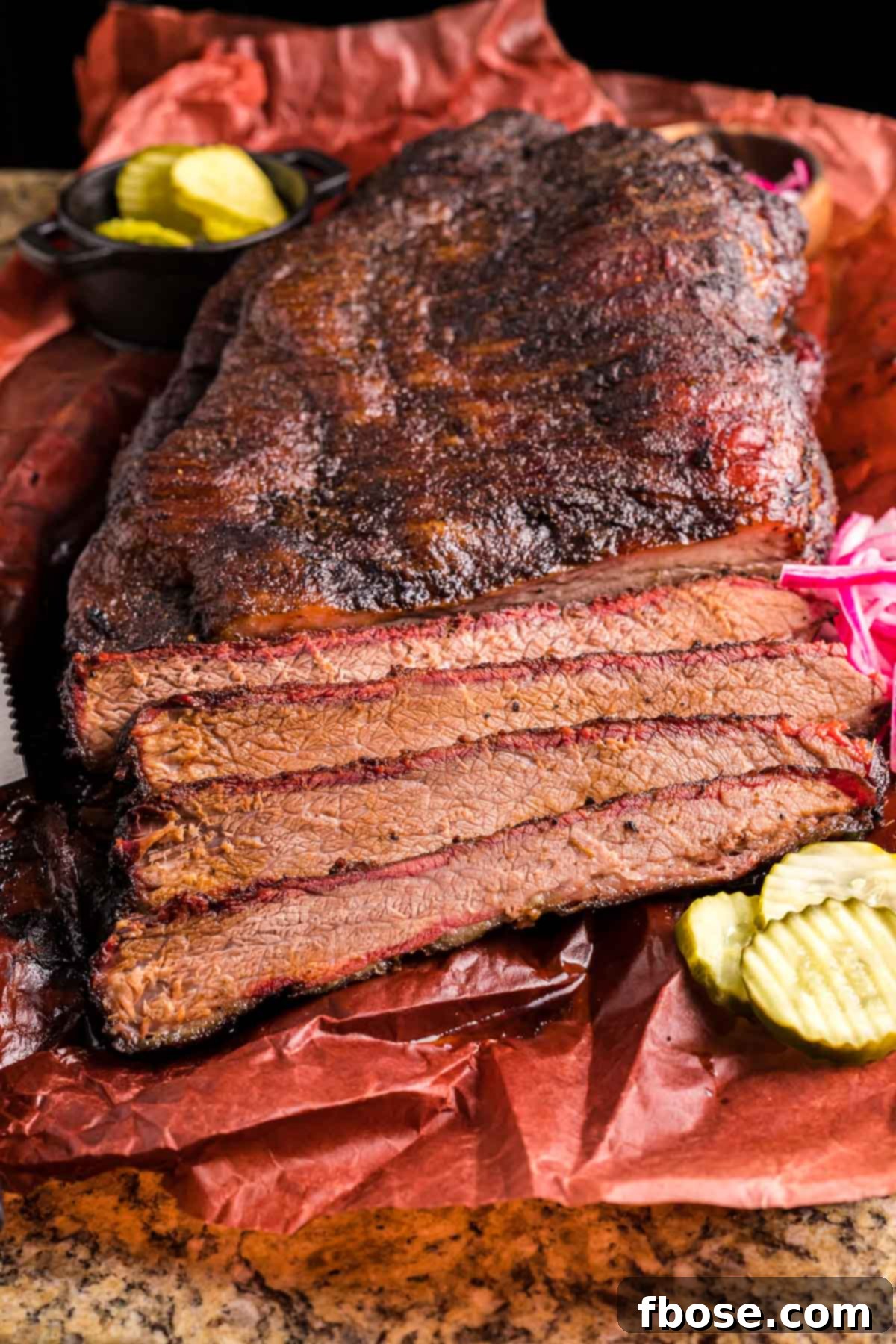
Smoked Beef Brisket is the ultimate BBQ experience, delivering incredibly tender, succulent meat infused with deep smoky flavor from a meticulously crafted dry rub. This beloved recipe transforms pantry-staple spices and seasonings into a mouthwatering crust, requiring only about an hour of active prep before your smoker takes over the patient process of creating BBQ perfection. Get ready to impress with a brisket that’s juicy, flavorful, and unforgettable!
There’s something uniquely magical about food kissed by smoke, and this beef brisket stands as a testament to that fact. The rich aroma filling your backyard signals an impending feast, promising a meal that transcends the ordinary. Just like our irresistible Smoked Mac and Cheese and savory Smoked Turkey Legs, this brisket recipe guarantees a culinary triumph.
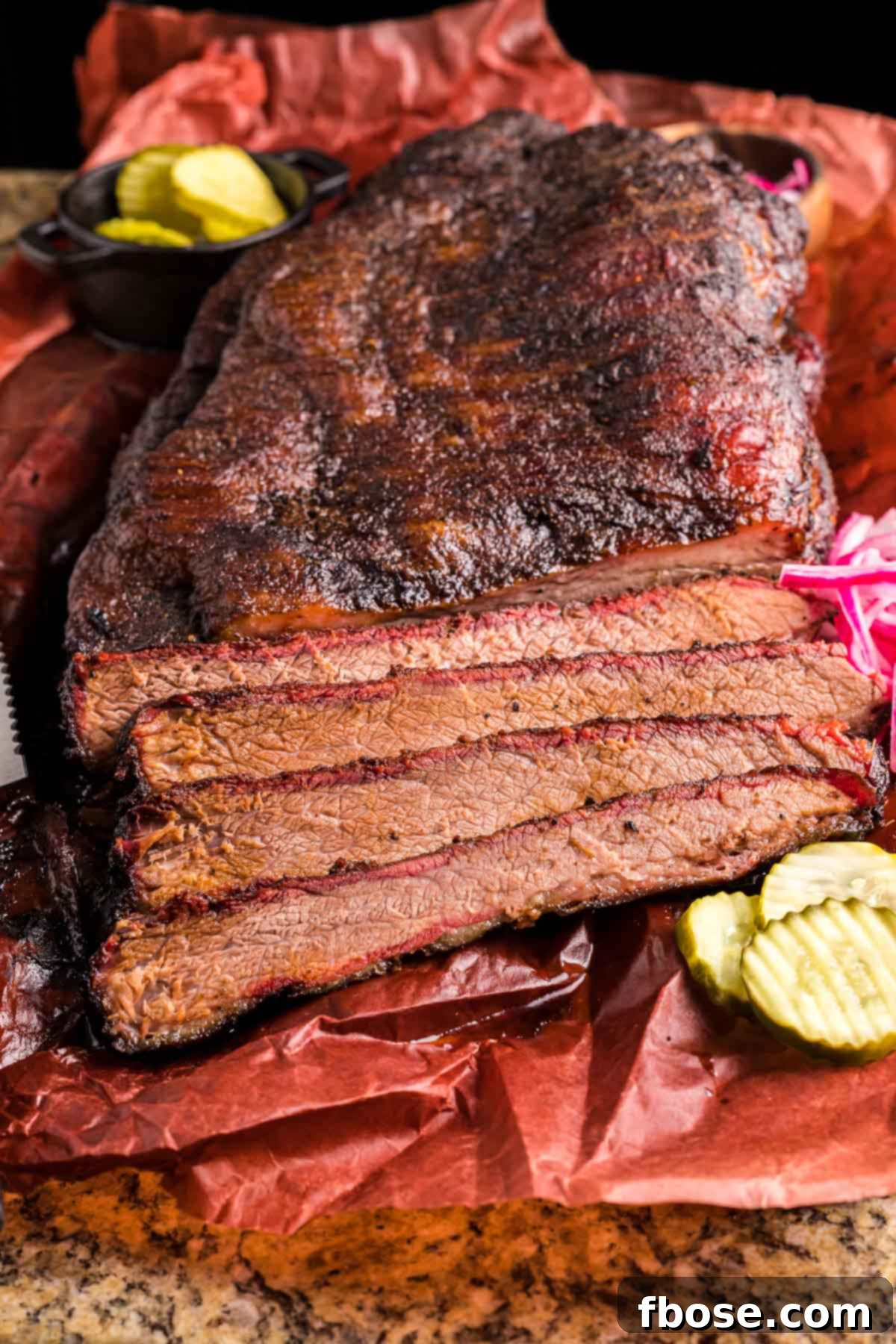
If you haven’t yet, it’s time to fire up your smoker and embark on the journey of creating this phenomenal Smoked Beef Brisket. The patient, low-and-slow cooking method results in a depth of flavor and a melt-in-your-mouth tenderness that will leave you wondering why you didn’t try it sooner. Each bite is an explosion of savory, smoky goodness, making it an ideal centerpiece for backyard cookouts, festive holiday gatherings, or simply a luxurious weekend meal at home. Prepare to be amazed!
Unveiling the Magic of Smoked Beef Brisket
Smoking a beef brisket is more than just cooking; it’s an art form that yields spectacular results when done right. This recipe focuses on maximizing both flavor and texture, ensuring every slice is a culinary delight.
Flavor Profile: Our brisket rub is a carefully balanced blend of aromatic spices, including earthy onion powder, vibrant chili powder, pungent white pepper, distinct celery seed, a gentle warmth from red pepper flakes, and the undeniable kick of dried minced garlic. This robust blend creates a savory, slightly spicy, and garlicky crust that perfectly complements the rich, smoky notes imparted by the smoker. It’s a harmonious symphony of flavors that will awaken your palate.
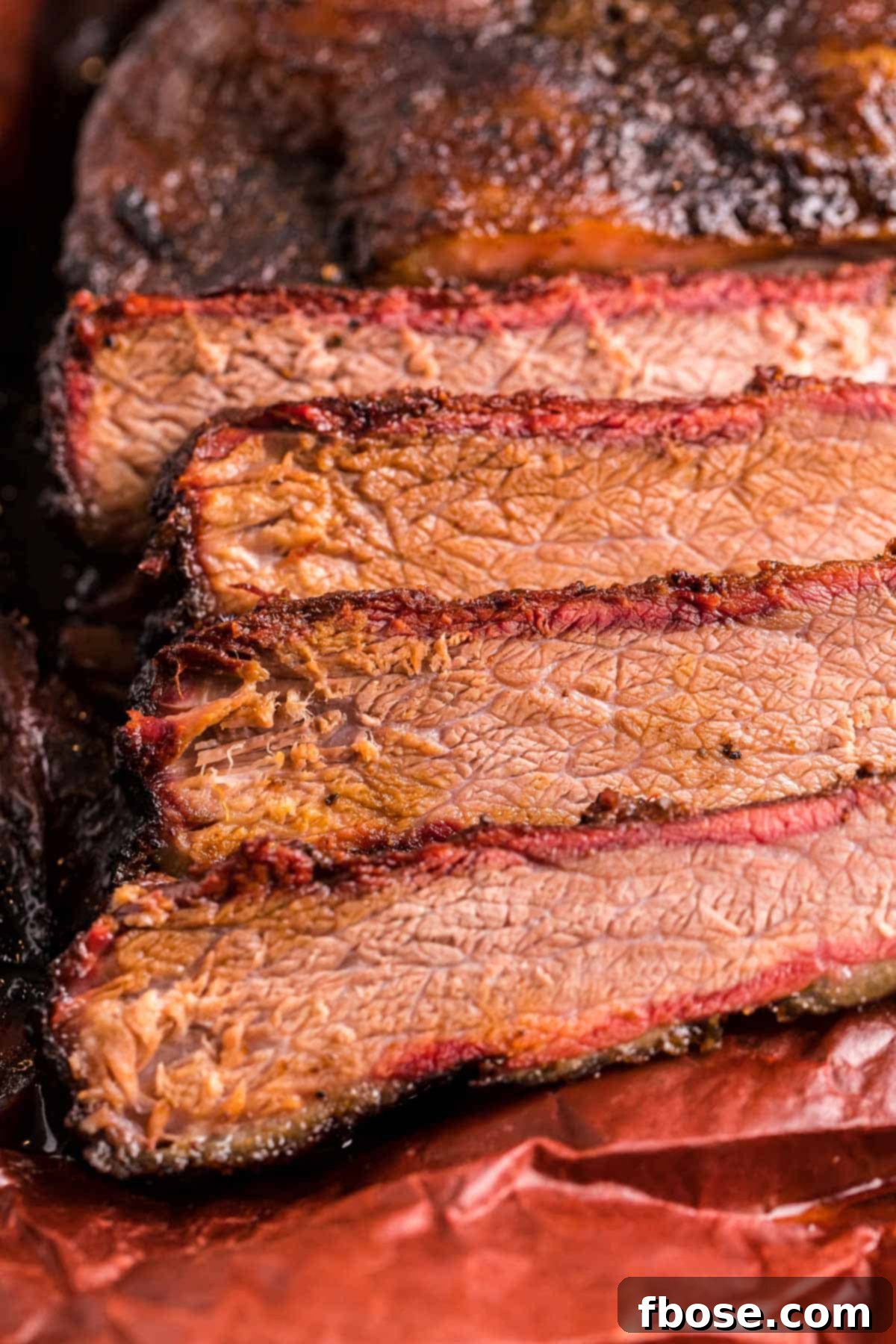
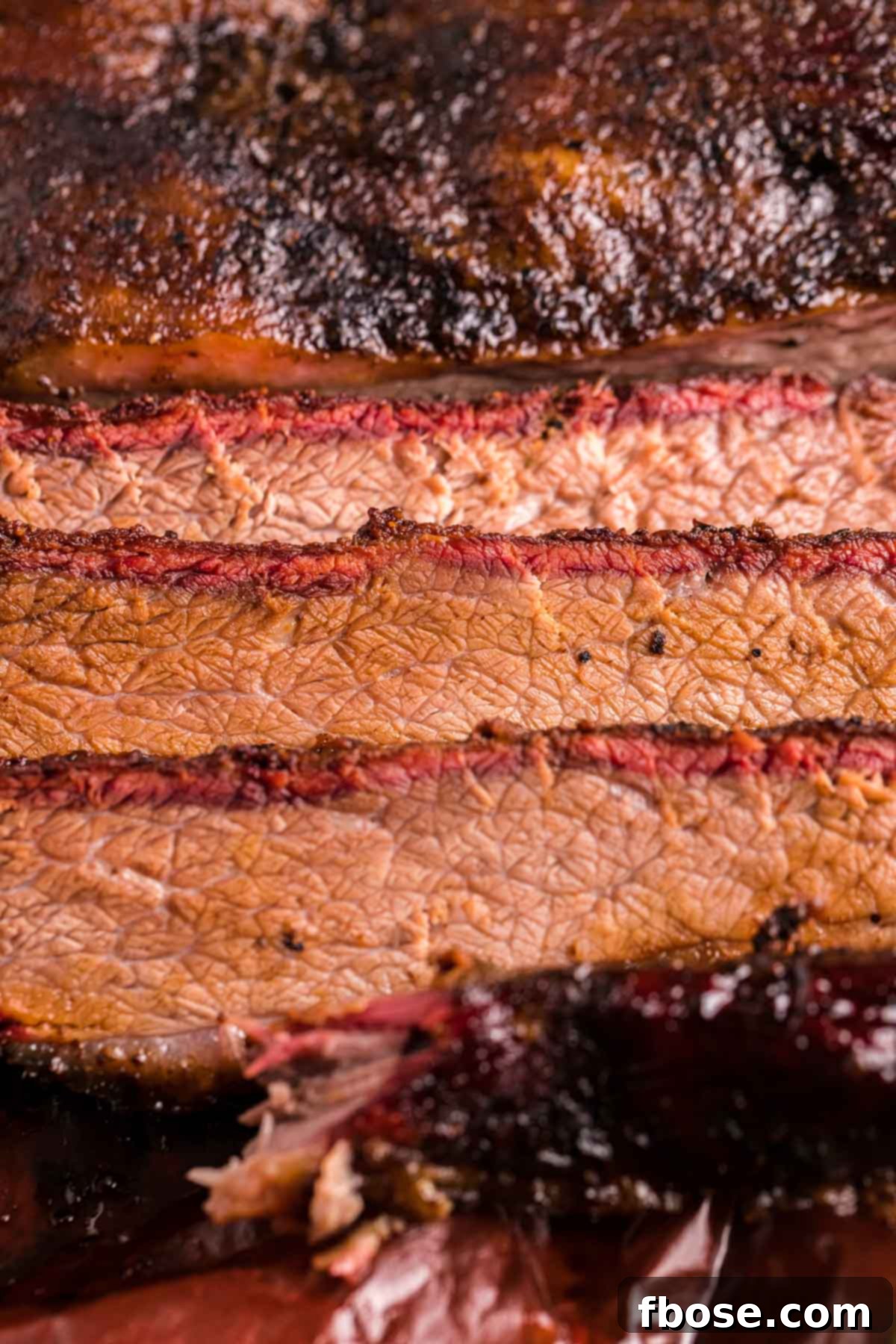
Irresistible Texture: The exterior of this smoked beef brisket develops a thin, crisp, and beautifully crusty bark – a signature characteristic of perfectly smoked meat. This flavorful crust provides a delightful contrast to the interior, which remains incredibly tender, moist, and juicy. The long, slow cooking process breaks down tough connective tissues, transforming the brisket into a fork-tender masterpiece that practically melts in your mouth.
Expert Tips for Mastering Smoked Beef Brisket
Achieving a truly exceptional smoked brisket requires attention to detail. These expert tips will guide you through each stage of the process, ensuring a tender, juicy, and flavorful result every time.
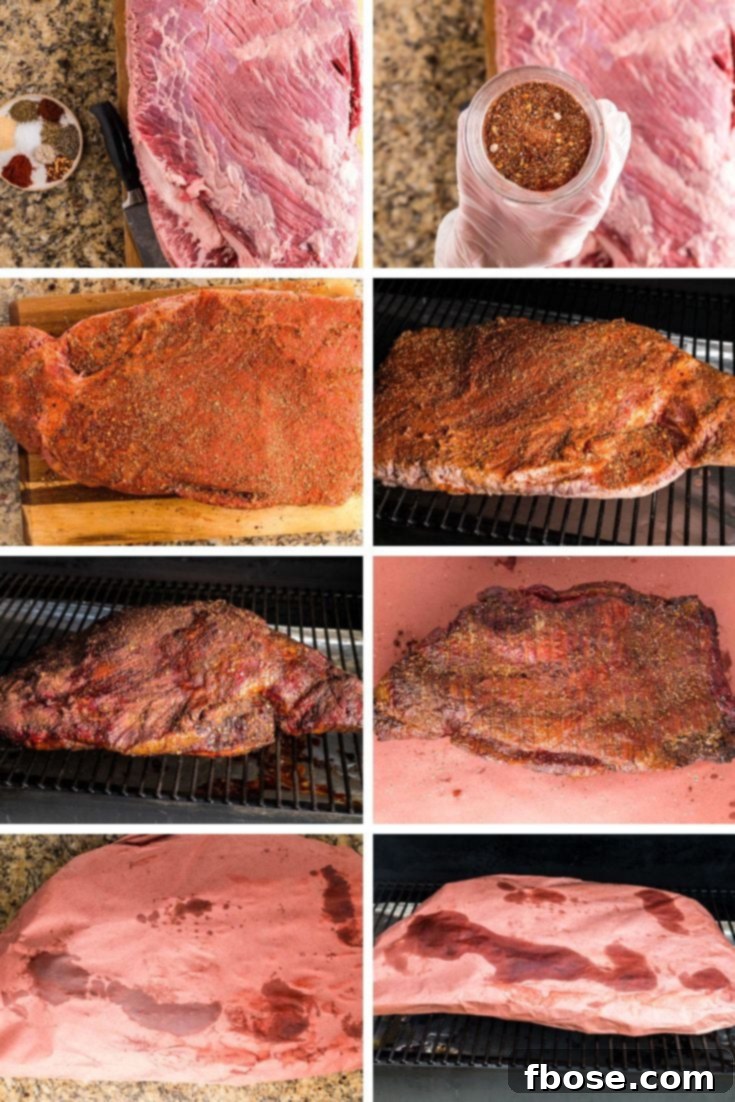
- Precision Fat Trimming: The fat cap on a brisket plays a crucial role in moisture retention and flavor. Using a sharp knife, carefully trim the majority of the thick, hard fat, aiming to leave a uniform 1/4-inch layer across the entire surface. This ensures the meat stays moist without becoming overly greasy as it slowly cooks. Trimming before smoking saves time and avoids the hassle of dealing with hot fat after the lengthy cook, allowing you to enjoy your brisket immediately upon resting. Don’t discard all the trimmed fat; some can be rendered to make tallow, perfect for enhancing other dishes.
- Crafting and Applying the Dry Rub: For an even distribution of flavor, combine all the dry rub seasonings thoroughly in a small bowl or ramekin before application. Once mixed, generously coat the entire brisket, pressing the rub into the meat to ensure it adheres well. After seasoning, let the brisket rest at room temperature for at least an hour. This crucial step allows the salt to begin penetrating the meat, enhancing flavor and tenderness, while also allowing the rub to “set,” forming a beautiful bark during smoking.
- Preparing Your Smoker: While your brisket rests, prepare your smoker for the long haul. Fill the auger generously with your chosen pellets (Hickory is highly recommended for its classic, robust smoke flavor that pairs beautifully with beef). If your smoker has a smaller capacity, plan to check and refill the pellet hopper periodically to maintain a consistent smoke and temperature. Preheat your smoker to a steady 225°F (107°C) with the lid closed for at least 15 minutes to ensure it reaches the target temperature and stabilizes before placing the brisket inside.
- The Golden Rule of Temperature, Not Time: When smoking brisket, cooking time is merely an estimate and can vary significantly based on the brisket’s size, fat content, and even ambient weather conditions. The only reliable indicator of doneness is the internal temperature of the meat, measured with a high-quality kitchen thermometer (affiliate link). Target specific internal temperatures for each phase of the cook to avoid overcooking or undercooking, ensuring perfect results every time. Insert the thermometer into the thickest part of the flat, avoiding fat pockets, for the most accurate reading.
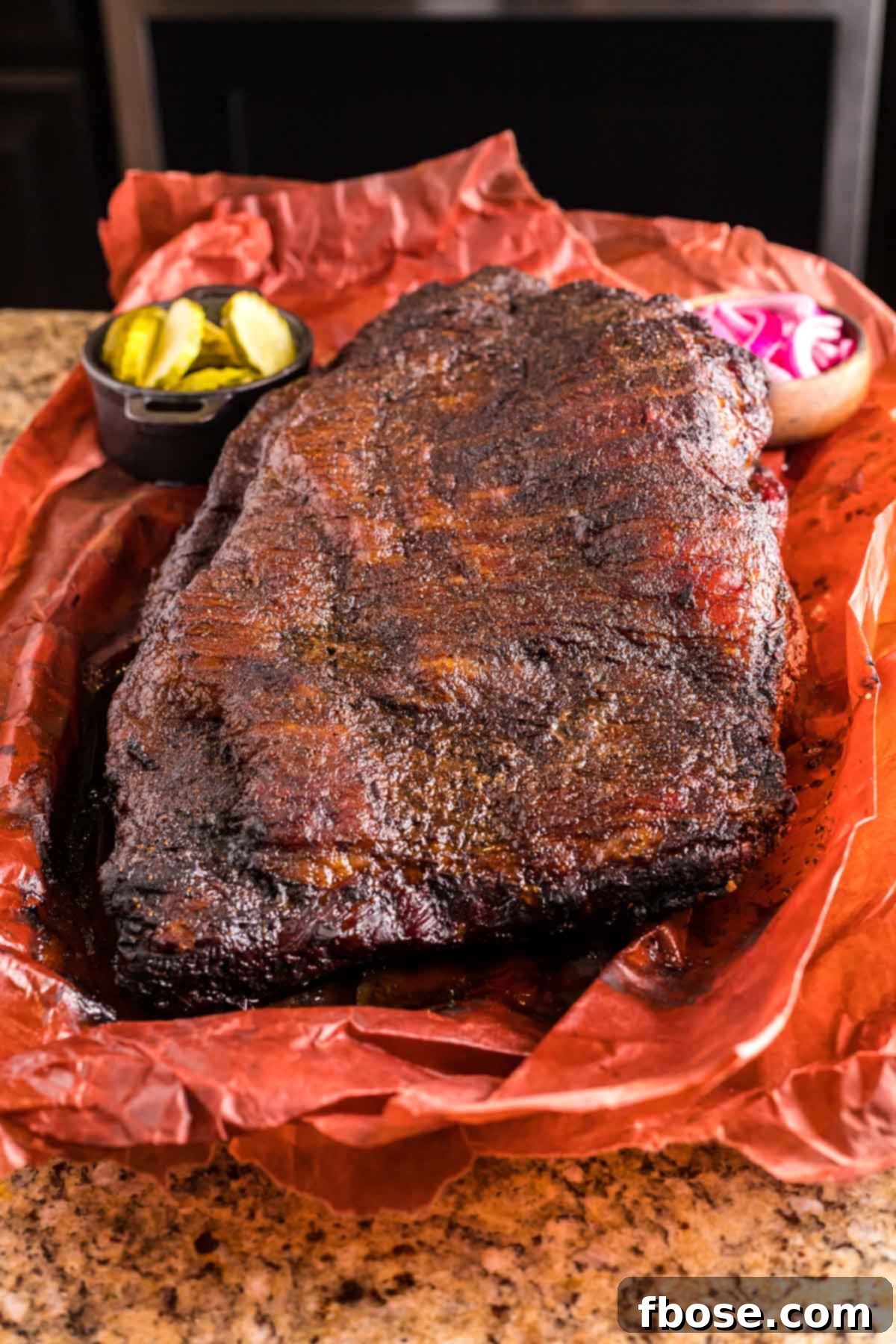
- The Power of Butcher Paper: For the second half of the smoking process, carefully wrap the brisket in unwaxed butcher paper (affiliate link). This technique, often called the “Texas Crutch,” is invaluable. Butcher paper allows the brisket to breathe, letting some smoke continue to penetrate while creating a micro-environment that steams the meat. It soaks up rendered fat and moisture, creating an insulating layer that helps push through the infamous “stall” (when the brisket’s temperature plateaus) and prevents the exterior from drying out, ensuring a moist, juicy final product while preserving the prized bark.
- The Essential Rest: Once your smoked beef brisket reaches its target internal temperature, resist the urge to slice into it immediately. Remove it from the smoker and, still wrapped in butcher paper, let it rest for at least an hour, or even up to two or three hours for larger briskets. This critical resting period allows the muscle fibers to relax and reabsorb the flavorful juices that have migrated to the center during cooking. Skipping this step will result in juices running out, leaving you with drier meat. After resting, slice the brisket thinly against the grain for maximum tenderness, and prepare to savor every bite!
For safely handling a hot, heavy brisket on and off the smoker, a sturdy pair of BBQ gloves (affiliate link) is an indispensable tool!
Perfect Pairings: What to Serve with Smoked Beef Brisket
The beauty of smoked brisket lies in its versatility, making it a star at any meal. Deciding on side dishes depends largely on the occasion you’re celebrating!
For a special holiday feast or a more formal gathering, opt for comforting and elegant sides. Creamy Best Mashed Potatoes provide a smooth contrast, while a rich Cheesy Corn Casserole adds a touch of indulgence. Don’t forget fluffy Yeast Rolls for soaking up all those delicious brisket juices.
If your smoked brisket is the star of a casual cookout or backyard BBQ, classic accompaniments are a must. Sweet and smoky Baked Beans, a crisp and tangy coleslaw, and juicy grilled corn on the cob are always crowd-pleasers. For a touch of freshness, consider seasonal Roasted Vegetables or a vibrant green salad to round out the meal.
Storing Leftover Smoked Beef Brisket
Proper storage is key to enjoying your delicious smoked brisket long after the initial meal. To keep it fresh, place any leftover smoked beef brisket in an airtight container or wrap it tightly in heavy-duty aluminum foil. Stored correctly, it will remain fresh and flavorful in the refrigerator for 3 to 4 days.
Reheating Smoked Beef Brisket for Best Results
To reheat leftover smoked beef brisket without drying it out, the best method involves gentle, moist heat. Double-wrap the brisket slices (or a whole piece) snugly in tin foil to create a steam barrier. Reheat the wrapped brisket in the oven at a low temperature, around 325°F (160°C), until it’s warmed through. Once reheated, allow it to rest at room temperature for 20 to 30 minutes before unwrapping and enjoying, allowing the juices to redistribute and ensuring maximum tenderness.
Butcher Paper vs. Tin Foil: Which is Better for Brisket?
While you can certainly use tin foil in place of butcher paper for wrapping your brisket, there’s a significant difference in the final result. Butcher paper is breathable, allowing some smoke to continue interacting with the meat and preventing the bark from becoming too soft or mushy. Tin foil, on the other hand, creates a tighter seal, which can steam the meat more intensely and trap condensation, potentially softening the bark and blocking more of the valuable smoky flavor from permeating the brisket during the wrapping phase. For a truly authentic smoked brisket experience with a great bark, butcher paper is generally preferred by pitmasters.
Ideal Internal Temperature for Perfectly Smoked Beef Brisket
For a safely cooked and exquisitely tender smoked beef brisket, the internal temperature should reach between 195°F and 205°F (90°C to 96°C) when probed in the thickest part of the flat. Beyond just temperature, pay attention to the “probe tender” test: the thermometer should slide into the meat with minimal resistance, like pushing it into warm butter. This indicates that the connective tissues have fully broken down, yielding that signature, fall-apart tenderness.
Adjusting the Recipe for Different Brisket Sizes
Absolutely! This smoked beef brisket recipe is easily adaptable for smaller cuts. The primary factor that will change is the cooking time. A general guideline for smoking brisket is to allow approximately 60 to 90 minutes per pound of meat at 225°F (107°C). Always rely on internal temperature readings with a meat thermometer rather than strictly adhering to time, as variations in brisket thickness, fat content, and smoker performance can affect cooking duration. Adjust your smoking schedule accordingly, focusing on achieving the target internal temperature and probe tenderness.
Let’s Connect!
If you’ve tried this fantastic smoked brisket recipe, please share your experience in the comments below and leave a review. Your feedback is invaluable and helps other home cooks!
Don’t forget to tag me – @sugarandsoulco – on Instagram and Pinterest with your brisket photos, or join our Sugar & Soul Show-offs Community and share them there, where you can participate in our exciting recipe challenges!
Smoked Brisket
Equipment
-
Smoker
-
Butcher Paper
-
BBQ Gloves
Ingredients
- 16 lb whole brisket
- 1 tablespoon onion powder
- ½ tablespoon chili powder
- ½ tablespoon smoked paprika
- 2 teaspoon salt
- 2 teaspoon black pepper
- 1 teaspoon white pepper
- 2 teaspoon celery seed
- 1 teaspoon red pepper flakes
- 2 teaspoon dried minced garlic
- Hickory Smoked Pellets
Instructions
-
Note: For smaller brisket portions, smoke for approximately 1 to 1½ hours per pound of meat.
-
Carefully trim the fat cap from the 16 lb whole brisket, leaving about 1/4 inch of fat for moisture.
-
In a small bowl, combine 1 tablespoon onion powder, ½ tablespoon chili powder, ½ tablespoon smoked paprika, 2 teaspoon salt, 2 teaspoon black pepper, 1 teaspoon white pepper, 2 teaspoon celery seed, 1 teaspoon red pepper flakes, and 2 teaspoon dried minced garlic to create your BBQ rub. Thoroughly rub this mixture onto all sides of the brisket. Allow the brisket to rest at room temperature for 1 hour before you begin the smoking process.
-
Ensure your smoker’s auger is filled with your desired Hickory Smoked Pellets. Preheat the smoker with the lid closed to a consistent temperature of 225°F (107°C) for 15 minutes to stabilize.
-
Place the brisket directly onto the smoker grates, fat side up. Smoke for approximately 10 hours, or until the brisket reaches an internal temperature of 165°F (74°C). Always use a reliable kitchen thermometer to check the temperature; do not solely rely on estimated cooking time as it can vary.
-
Once 165°F is reached, remove the brisket from the smoker. Carefully wrap it tightly in butcher paper and return it to the smoker. Continue smoking until the brisket reaches an internal temperature of 205°F (96°C) and feels “probe tender.” For our 16lb brisket, this secondary phase took approximately 7 hours, but actual time may vary.
-
Remove the finished brisket from the smoker and, keeping it wrapped in butcher paper, let it rest for a minimum of 1 hour (longer for larger briskets). This crucial resting period allows the juices to redistribute, ensuring a moist and tender result.
-
After resting, unwrap the brisket, slice it thinly against the grain, and serve immediately with pickled red onions and pickles, or your favorite BBQ sides. Enjoy!
Notes
- For comprehensive details on storage, reheating, butcher paper vs. foil, ideal internal temperatures, and adjusting for brisket size, please refer to the detailed sections above in the article.
Nutrition
Did You Make This Recipe?
Don’t forget to share it with me on Instagram @sugarandsoulco and follow on Tiktok @sugarandsoulco and Pinterest @sugarandsoulco for more!
Pin Recipe
Share Recipe