
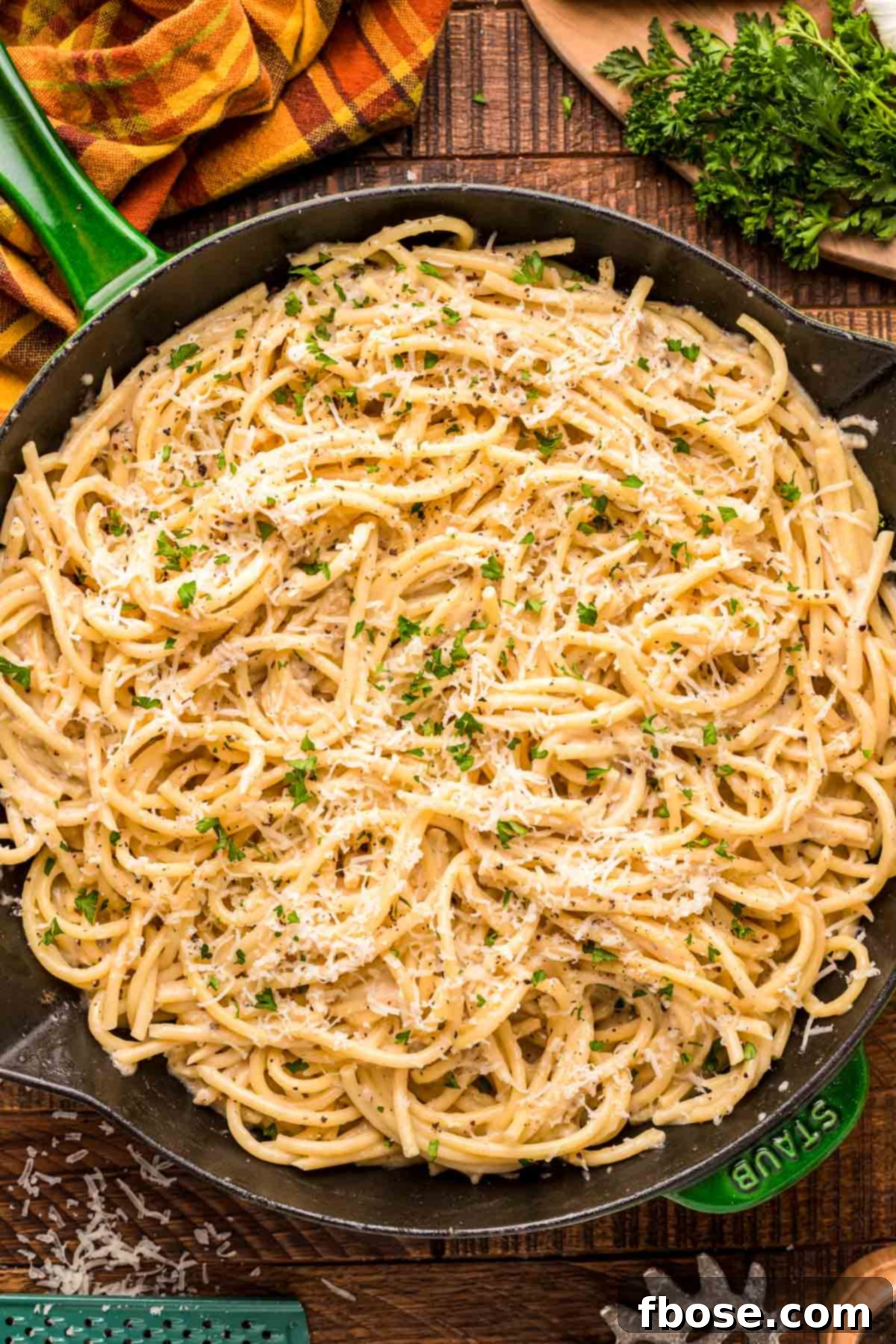
Welcome to the definitive guide for crafting an authentic and irresistible Bucatini Cacio e Pepe. This classic Italian pasta dish, a true testament to Roman culinary heritage, combines robust flavors with minimalist elegance. Made with thick bucatini pasta, two exquisite cheeses, and just a couple of other essential ingredients, this recipe promises a deeply satisfying meal that’s surprisingly quick to prepare. From start to finish, you can have this flavorful masterpiece ready to enjoy in just about 25 minutes, making it an ideal choice for a weeknight dinner or a special occasion.
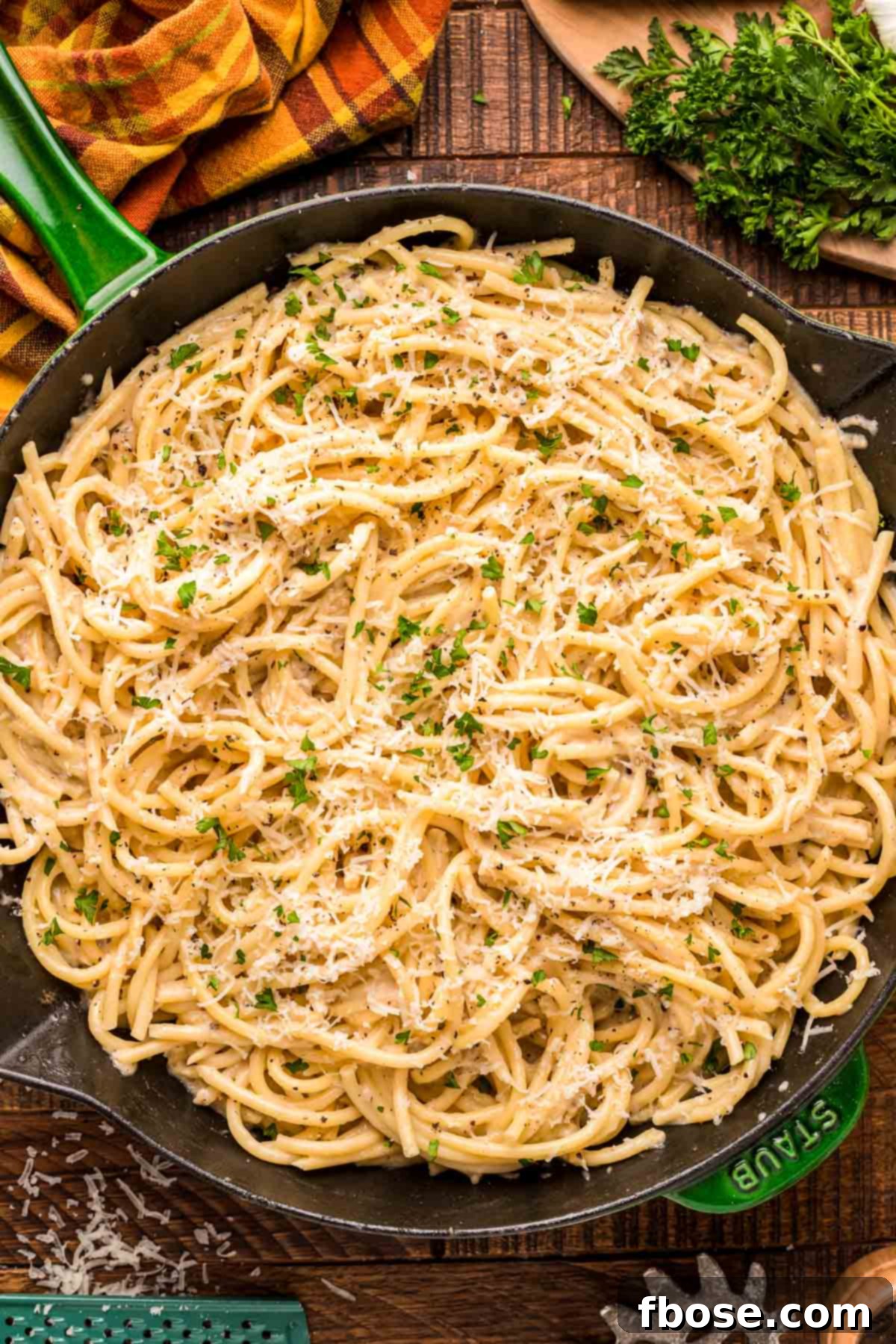
Discover the Timeless Charm of Cacio e Pepe with Bucatini
There’s an undeniable allure to Italian cuisine, and few dishes capture its essence quite like Cacio e Pepe. Translating simply to “cheese and pepper,” this iconic pasta dish is celebrated for its rich, creamy texture and incredibly robust flavor profile, achieved with minimal ingredients. While the pronunciation of “Cacio e Pepe” might seem intimidating at first, the real beauty lies in its straightforward preparation and the profound satisfaction it delivers. It’s an unforgettable recipe that will not only impress your family and friends but also make you feel like a seasoned chef in your own kitchen.
Originating from Rome, Cacio e Pepe was historically a staple for shepherds. Its ingredients – hard cheese, dried pasta, and black pepper – were easily portable and non-perishable, providing a comforting and high-energy meal after long days tending flocks. This humble beginning underscores the dish’s genius: transforming simple components into a culinary marvel through technique and a deep understanding of flavor. The magic truly unfolds as the starchy pasta water emulsifies with the grated cheeses and toasted pepper, creating a luxurious, silky sauce that clings perfectly to every strand of pasta. When prepared with bucatini, a thick, hollow spaghetti-like noodle, the experience is elevated, as the sauce finds its way into the pasta’s center, offering an explosion of flavor with every bite.
Pin This Recipe For Later
Why You’ll Love This Bucatini Cacio e Pepe Recipe
This Bucatini Cacio e Pepe recipe isn’t just about cooking; it’s about experiencing a taste of Italy right in your home. Here’s a breakdown of what makes this version truly special:
Taste Profile
Each mouthful is a symphony of flavors. The pungent, salty notes of Pecorino Romano cheese meld beautifully with the sharp, nutty undertones of Parmesan. These are perfectly balanced by the warmth and subtle spice of freshly toasted peppercorns and a hint of fragrant garlic. For an extra burst of freshness and a touch of visual appeal, consider a final sprinkle of fresh parsley, more cracked peppercorns, or additional shredded Pecorino cheese as a garnish.
Texture Sensation
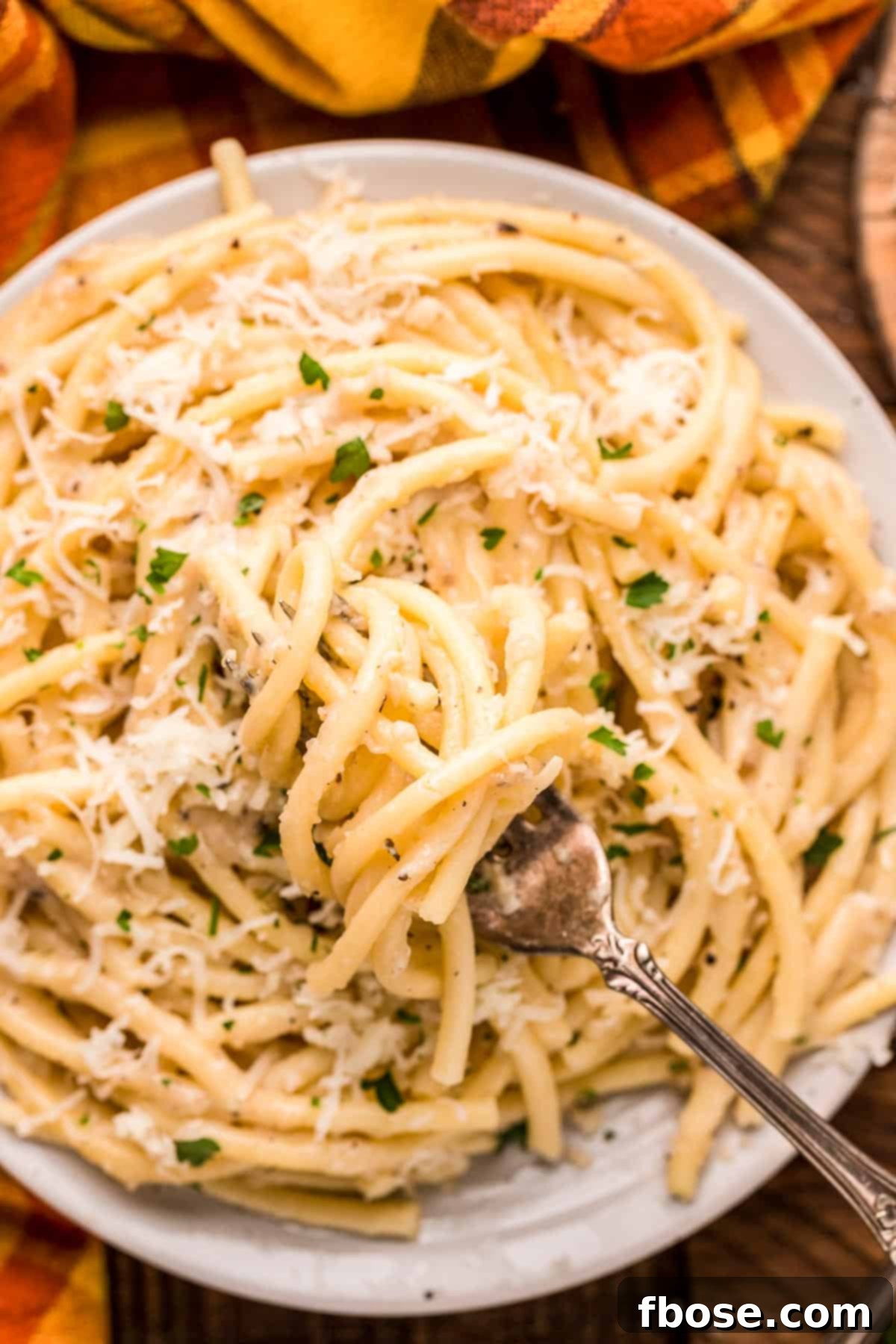
The star of the show is undoubtedly the bucatini pasta, cooked to a perfect al dente. Its unique hollow shape ensures that every strand is coated, and even filled, with the creamy, melty cheese sauce. This creates a comforting and satisfying texture that’s both hearty and smooth, making it a cozy meal you absolutely won’t want to miss. While bucatini is the traditional choice, its close cousin, spaghetti, can also be used, offering a slightly different but equally delicious experience.
Ease of Preparation
Despite its gourmet appeal, this recipe is surprisingly approachable. On a scale of 1 to 10 for difficulty, it generally sits around a 4. It’s quick, requiring only 25 minutes from start to finish, making it perfect for busy evenings. The main challenge lies in mastering the heat control to achieve the perfect emulsion for a smooth, creamy sauce. Paying close attention to the heat is key to preventing the cheese from clumping and ensuring a luscious result.
Recipe Highlights
- **Pros:** Incredibly flavorful and elegant, yet quick to make. Uses minimal, readily available ingredients.
- **Cons:** Requires careful attention to heat management to prevent a grainy or watery sauce.
- **Would I Make This Again?** Absolutely, this Cacio e Pepe recipe is a definite keeper and will surely become a regular in your rotation!
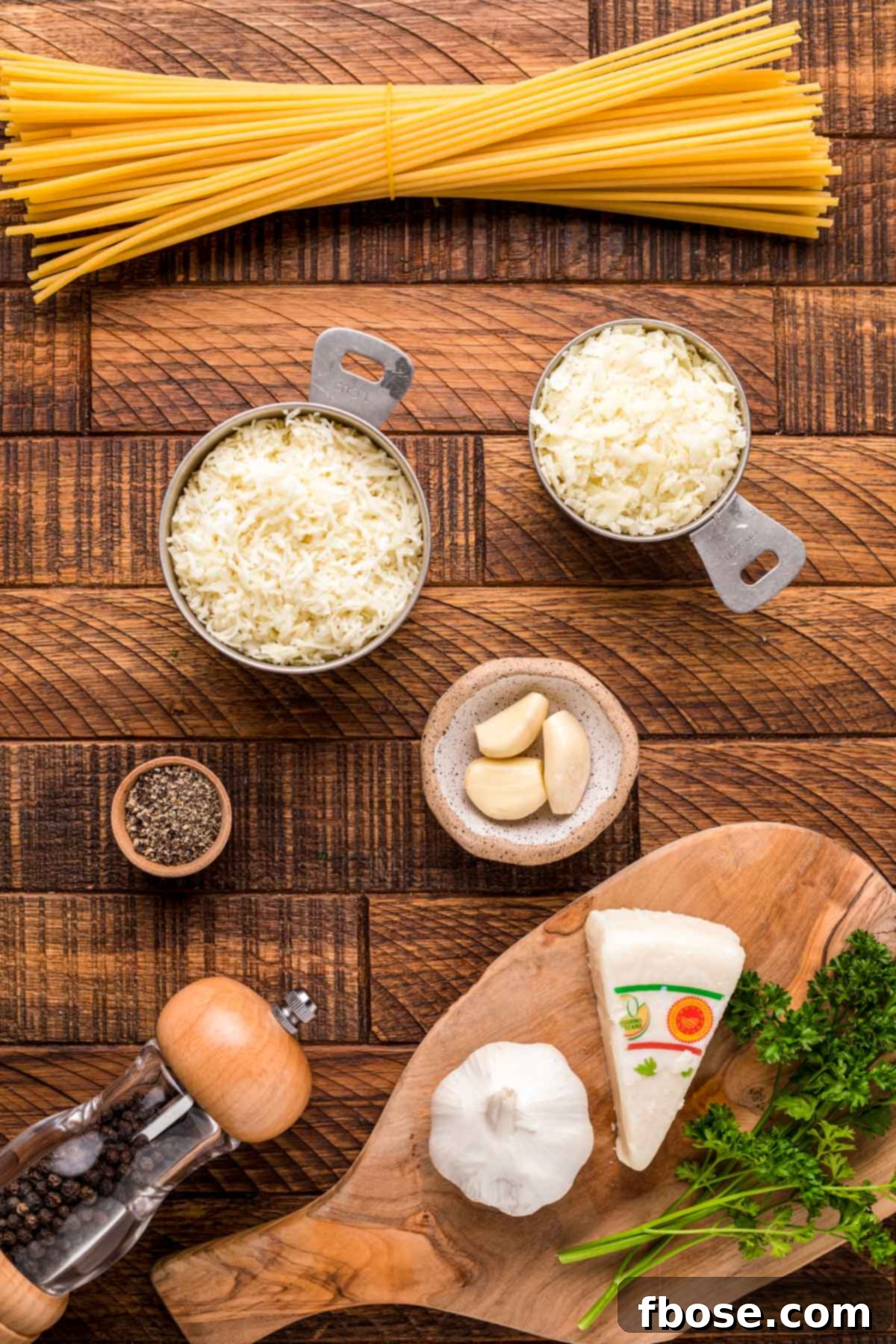
Essential Ingredients for Authentic Bucatini Cacio e Pepe
The beauty of Cacio e Pepe lies in its simplicity, making the quality of each ingredient paramount. With so few components, each one must shine and contribute perfectly to the harmonious whole.
- Bucatini Pasta: The ideal choice for this dish. Its distinctive hollow shape allows the creamy sauce to seep inside, creating a burst of flavor with every bite. Choose a high-quality, bronze-die pasta for the best texture and sauce adhesion.
- Freshly Cracked Black Peppercorns: Do not use pre-ground pepper here! Freshly cracked black pepper, preferably from a peppermill, releases a far more vibrant aroma and pungent flavor when toasted, which is crucial for the authentic taste of Cacio e Pepe.
- Garlic Cloves: Grated garlic adds a subtle, fragrant warmth without overpowering the delicate balance of cheese and pepper. It melts seamlessly into the sauce, enhancing its depth.
- Freshly Grated Pecorino Romano Cheese: This is the cornerstone cheese of Cacio e Pepe. Pecorino Romano is a hard, salty sheep’s milk cheese with a distinctively sharp and tangy flavor. Always grate it fresh from a block; pre-grated cheeses often contain anti-caking agents that hinder proper emulsification and can lead to a grainy sauce.
- Freshly Grated Parmesan Cheese (Parmigiano Reggiano): While Pecorino Romano provides the classic Roman bite, a touch of freshly grated Parmesan adds a beautiful depth of umami and helps to mellow the sharpness of the Pecorino, creating a more balanced and complex flavor profile. Like Pecorino, grate it fresh for the best results.
- Fresh Chopped Parsley: (For garnish) While optional, a sprinkle of fresh parsley adds a pop of color and a fresh, herbaceous note that brightens the rich pasta.
- Additional Cracked Peppercorns: (For garnish) A final flourish of black pepper enhances the visual appeal and adds an extra layer of peppery kick.
- Shredded Pecorino Cheese: (For garnish) More cheese on top never hurts! A light sprinkle of extra Pecorino at serving offers another layer of texture and reinforces the signature cheesy flavor.
Mastering the Art of Bucatini Cacio e Pepe: Step-by-Step Guide
Creating a truly magnificent Bucatini Cacio e Pepe is all about timing and technique. Follow these steps carefully to achieve that coveted creamy, glossy sauce.
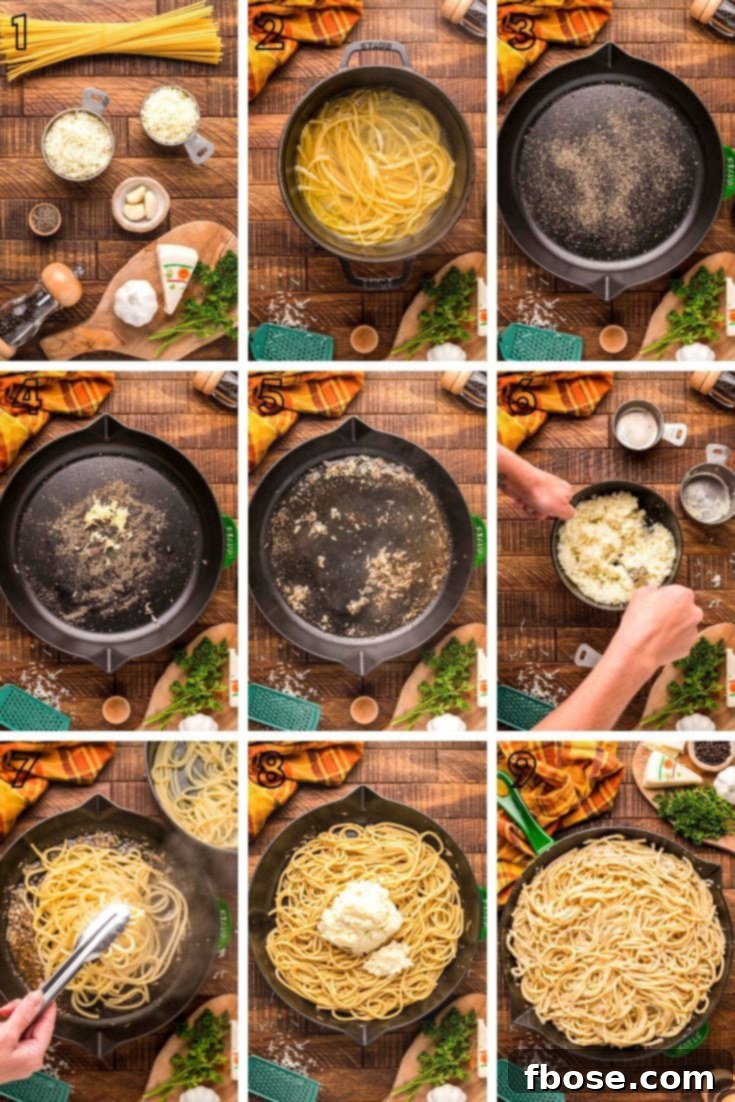
- Prepare Your Pasta: Begin by bringing 4 cups of generously salted water to a vigorous rolling boil in a large pot. Add 1 lb of bucatini pasta and cook according to package directions, typically for about 9 minutes, or until al dente. Crucially, do not drain the pasta water! This starchy liquid is the secret to your creamy sauce.
- Toast the Pepper & Sauté Garlic: While the pasta cooks, heat a large frying pan over medium heat. Add 2 teaspoons of freshly cracked peppercorns to the dry pan and toast them for approximately 2 minutes. This crucial step releases the pepper’s deep, aromatic oils and enhances its flavor significantly, forming the pungent base of your sauce. Immediately after toasting, grate 3 garlic cloves directly into the pan. Stir well and cook for about 1 minute until the garlic becomes fragrant. Grating the garlic ensures it melts into the sauce quickly and smoothly.
- Create the Pepper Base: Pour about ½ cup of the hot, starchy pasta water into the frying pan with the toasted pepper and garlic. The water will sizzle and steam, deglazing the pan and infusing the liquid with the intense flavors. Stir vigorously to combine.
- Prepare the Cheese Emulsion: In a separate heat-proof bowl, combine 1 cup of freshly grated Pecorino cheese and ½ cup of freshly grated Parmesan cheese. Add about ¼ cup of hot pasta water to the cheeses. Stir continuously and quickly until the cheeses begin to melt and form a smooth, thick, and creamy paste-like sauce. This pre-emulsion step is vital for preventing clumping and ensuring a silky final sauce. Adjust the amount of pasta water as needed to achieve a spreadable consistency.
- Combine Pasta with Pepper Sauce: Using tongs, transfer the al dente bucatini directly from the pasta water into the frying pan with the pepper and garlic mixture. Add another ½ cup of pasta water to the pan. Continue to stir the bucatini for approximately 3 minutes. This allows the pasta to finish cooking and absorb the flavors of the pepper and garlic while releasing more starch into the liquid, which is essential for the final emulsification. Turn off the heat but keep the pan on the burner to retain some warmth.
- Emulsify the Cheese Sauce: Add the prepared cheese paste from your bowl into the pasta in the frying pan. Stir and toss vigorously and continuously, using the residual heat of the pan and the remaining pasta water to melt the cheese and coat every strand of bucatini evenly. The key here is quick, constant movement to create a perfectly smooth, creamy, and glossy sauce. If the sauce appears too thick or sticky, add a tablespoon of pasta water at a time until the desired consistency is achieved. If it seems too watery, continue stirring quickly off the heat until it thickens slightly.
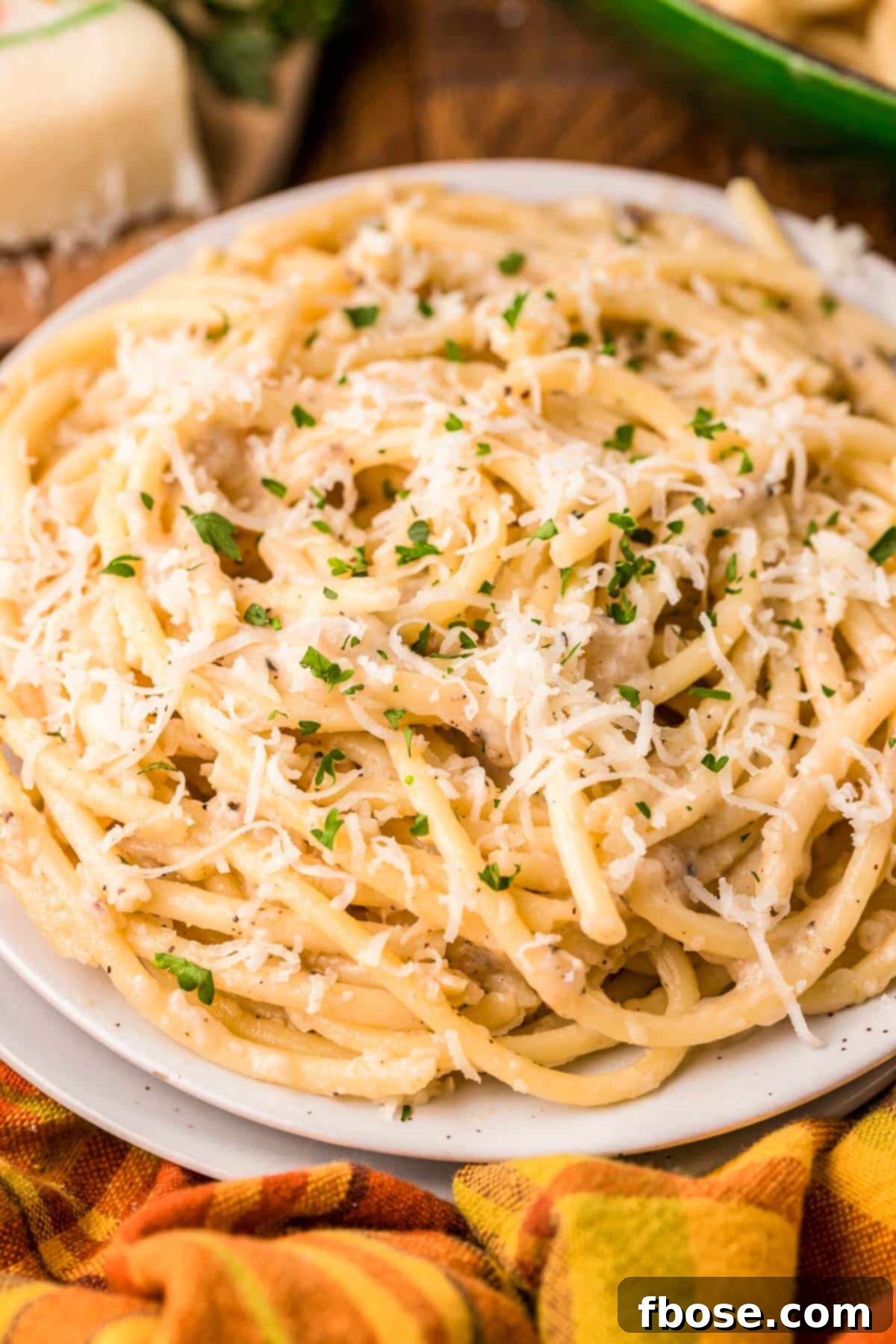
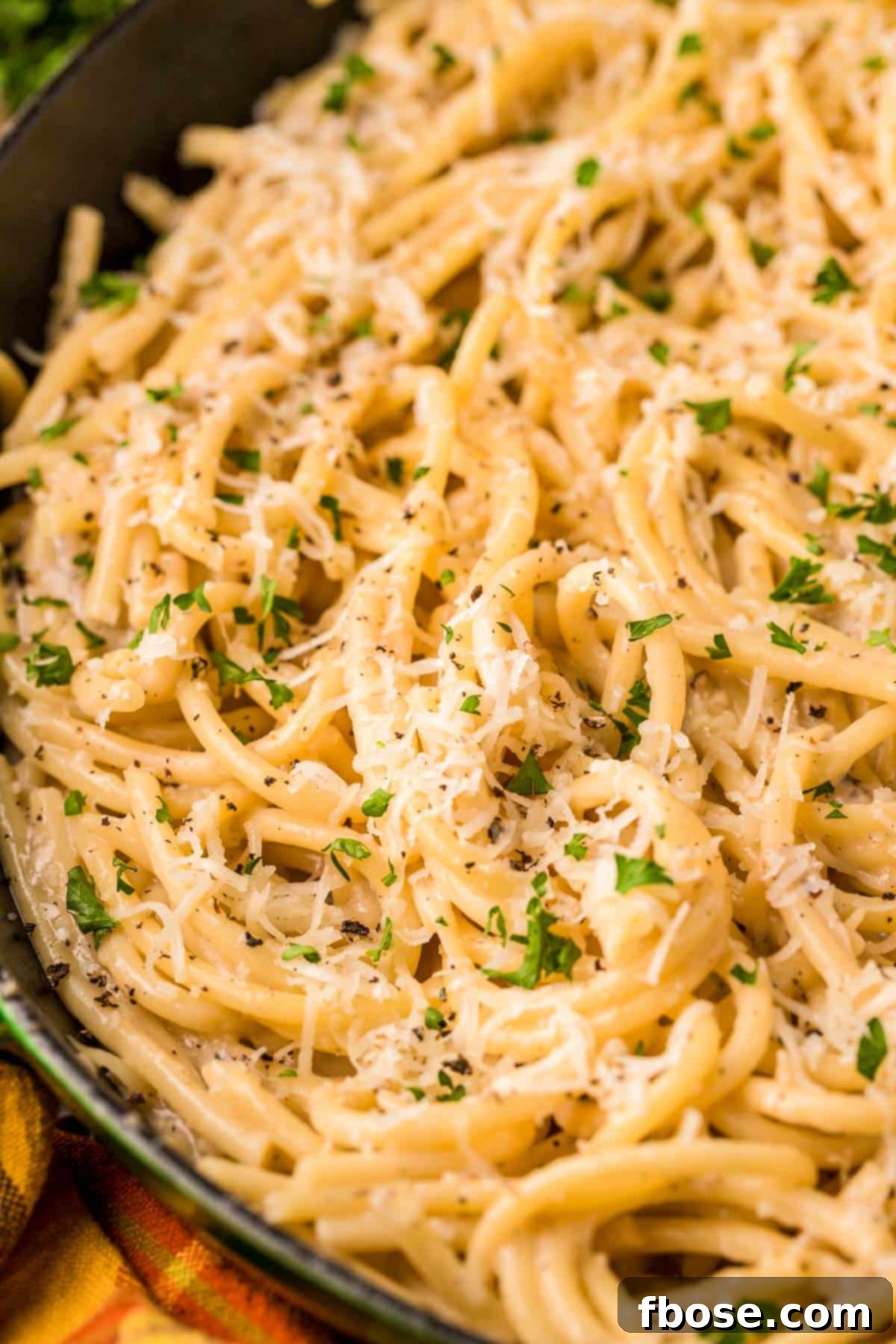
- Garnish and Serve: Plate your Bucatini Cacio e Pepe immediately. Garnish generously with freshly chopped parsley, additional cracked peppercorns for extra zing, and a sprinkle of shredded Pecorino cheese. Serve hot and enjoy!
Rebecca’s Expert Tips for a Flawless Cacio e Pepe
While the ingredients are simple, the technique for Cacio e Pepe requires a bit of finesse. These tips will help you achieve a restaurant-quality dish every time.
- Work Quickly and Prepare Ahead: This recipe moves at a rapid pace, especially during the crucial emulsification stage. To ensure success, have all your equipment (frying pan, pot, tongs, grater, mixing bowl) ready and all ingredients pre-measured and within arm’s reach. Grate your cheeses and garlic before you even start boiling the pasta. This preparation is essential for reacting quickly and preventing the cheese from clumping.
- Never Drain Your Pasta Water: The starchy water leftover from cooking your pasta is liquid gold for Cacio e Pepe. It’s not just water; it’s an emulsion agent! The starches released from the pasta are key to creating that wonderfully creamy, glossy sauce. Keep a ladle or a measuring cup handy to easily add small amounts as needed. Without this starchy water, your sauce simply won’t emulsify correctly, resulting in a thin or clumpy texture.
- Toast the Pepper for Maximum Flavor: This isn’t just an optional step; it’s a traditional and vital part of an authentic Cacio e Pepe. Toasting the freshly cracked black peppercorns in a dry hot pan awakens their essential oils, deepening their flavor and aroma exponentially. This creates a much more complex and satisfying peppery kick than simply adding raw pepper. Don’t skip this step – it truly makes a difference.
- Master the Heat Control: Heat is arguably the most critical element in achieving a perfect Cacio e Pepe. When combining the pasta with the cheese emulsion, the temperature of both the pasta water and the frying pan must be just right. Too much heat will cause the cheese to seize and become stringy or oily, while too little heat will prevent it from melting and emulsifying, leading to a watery and clumpy sauce. The ideal is to work quickly off the direct heat, using the residual warmth of the pan and the hot pasta to create a smooth, luscious sauce. If it starts to clump, try removing it from the burner entirely and stirring furiously, adding tiny splashes of hot pasta water.
- Embrace the Power of Dual Cheeses: While some traditionalists insist on only Pecorino Romano, using both Pecorino Romano and Parmesan (Parmigiano Reggiano) offers the best flavor profile. Pecorino brings that characteristic sharp, salty, and tangy Roman punch, while Parmesan introduces a rich, nutty umami and a smoother melting quality, balancing the intensity and adding complexity. Always grate both cheeses fresh from the block right before using them for optimal texture and emulsification.
- Use a Wide Skillet: A wide, shallow frying pan or skillet is ideal for tossing the pasta and sauce. This provides a larger surface area, allowing the pasta to cool slightly as you toss, which helps in preventing the cheese from clumping and promotes better emulsification of the sauce.
Storing and Reheating Your Bucatini Cacio e Pepe
While Cacio e Pepe is undoubtedly at its peak when enjoyed fresh off the stove, you might find yourself with delicious leftovers. The sauce does tend to thicken and can sometimes separate upon cooling, making the dish taste best on the day it’s made. However, we certainly don’t want any of this incredible pasta to go to waste!
To store leftovers, transfer the cooled Bucatini Cacio e Pepe to an airtight container and refrigerate it promptly. It will keep well in the fridge for up to 3 days. When reheating, the key is to do so gently and potentially with a little extra liquid. Reheat portions in a pan over low heat, adding a splash of water or even milk (if you prefer a richer sauce) to help loosen the pasta and re-emulsify the sauce. Stir constantly until warmed through, being careful not to overheat and cause the cheese to separate. While it won’t be exactly the same as freshly made, it will still be a comforting and delicious meal.
Complement Your Cacio e Pepe with Delicious Sides
This Bucatini Cacio e Pepe dish is incredibly satisfying and filling on its own. For a quick lunch, I often enjoy it just as it is. However, for a more complete dinner experience, pairing it with a few well-chosen sides can elevate the meal. Here are some ideas to perfectly complement the rich, peppery pasta:
- Artisan Bread: A crusty loaf of homemade Parmesan Garlic Bread is always a go-to. It’s perfect for soaking up any extra luscious sauce on your plate, ensuring no drop of flavor goes to waste. A simple baguette with good olive oil also works wonderfully.
- Fresh Vegetables: To balance the richness of the pasta, fresh, lightly cooked vegetables are an excellent choice. Sautéed zucchini or asparagus spears, roasted cauliflower florets with a sprinkle of herbs, or baked eggplant slices would all offer a delightful contrast in texture and flavor. These can add a vibrant freshness and a dose of nutrients to your meal.
- Lean Meats: If your family prefers a protein alongside their pasta, consider lighter meat options. Flavorful Skillet Baked Pork Chops, grilled chicken breast, baked salmon, or even classic meatballs (perhaps with a lighter tomato sauce to avoid competing with the Cacio e Pepe) would pair nicely without overwhelming the main dish.
- Crisp Salads: A light, refreshing salad is fantastic for cutting through the richness of Cacio e Pepe. Opt for a simple green salad with a bright vinaigrette, or a Caprese salad with fresh tomatoes, mozzarella, and basil. The acidity and crunch provide a welcome contrast to the creamy pasta, cleansing the palate between bites.
Explore More Delightful Pasta Recipes:
If you loved this Bucatini Cacio e Pepe, you might enjoy exploring other fantastic pasta dishes:
- That Viral Ditalini Pasta – A quick 15-minute savory dish smothered in a creamy, buttery sauce!
- Kenji Garlic Noodles – Packed with mouthwatering, creamy, garlic deliciousness, ready in a flash!
- American Chop Suey – A hearty, comforting classic that brings the whole family to the table!
- Anna Paul’s Turkish Pasta – Features savory ground beef, bold spices, and a sweet paprika butter drizzle!
- Easy Homemade Hamburger Helper – A delicious homemade rendition of the beloved store-bought classic!
Did You Make This Recipe?
If you’ve tried this recipe, please leave a review in the comments below. I love hearing from you! Don’t forget to tag me – @sugarandsoulco – on Instagram and Pinterest with your photos, or join our Sugar & Soul Show-offs Community and share them there.
Bucatini Cacio E Pepe
Ingredients
- 1 lb bucatini pasta (thick Spaghetti)
- 2 teaspoon fresh cracked peppercorn (from the peppermill)
- 3 garlic cloves (grated)
- 1 cup fresh grated Pecorino cheese
- ½ cup fresh grated Parmesan cheese
- Fresh chopped parsley (for garnish)
- Cracked peppercorn (for garnish)
- Shredded Pecorino cheese (for garnish)
Instructions
- You will want to work quickly to prepare this recipe. Bring 4 cups of salted water to a rolling boil. Add the bucatini and cook for 9 minutes. Do not drain the pasta.
1 lb bucatini pasta
- Meanwhile, heat a large frying pan over medium heat. Add cracked pepper to the pan and roast for 2 minutes. After 2 minutes, grate the garlic cloves into the pan and stir. Cook until fragrant, about 1 minute. Toasting the pepper releases the flavor and aroma of the peppercorn into this dish. This is the traditional way to prepare the dish and will serve as the base of the sauce. The grated garlic melts into the sauce and is a quicker way to cook the garlic.
2 teaspoon fresh cracked peppercorn, 3 garlic cloves
- Add ½ cup of the pasta water to the frying pan and stir well. The water will boil and steam once poured into the pan.
- Next, grate the pecorino and parmesan cheeses into a bowl. Add ¼ cup of hot pasta water to the cheese and stir. Stir until the cheese is slightly melted and smooth. This will be the creamy sauce the pasta is served in.
1 cup fresh grated Pecorino cheese, ½ cup fresh grated Parmesan cheese
- Use tongs to remove the bucatini from the pasta water and add it to the frying pan with the pepper and garlic. Add ½ cup of pasta water and stir. Continue to stir the bucatini for 3 minutes. The pasta will finish cooking during this time and stirring helps to evenly cook it while infusing with the pepper. Turn off the heat but keep the pan on the burner.
- Add the cheese to the pasta. Stir and mix well to melt the cheese and evenly coat the pasta.
- Garnish with fresh chopped parsley, additional pepper, and pecorino cheese.
Fresh chopped parsley, Cracked peppercorn, Shredded Pecorino cheese
Notes
- Work Quickly! This recipe moves quickly so it’s best to be prepared by having your equipment out and ingredients pre-measured.
- Do Not Drain! Do not drain the water from cooking the pasta! That starchy water is used throughout the recipe to complete the creamy, yummy sauce!
- Toast The Pepper! Toasting the pepper is the traditional way to prepare this recipe. Doing so releases the flavor and aroma of the peppercorn into this dish!
- Heat! Heat is one of the most important parts of this recipe! Not enough and the dish won’t turn out how it’s intended to.
- How To Store Leftovers: Since the sauce does tend to thicken up when stored, I find this dish tastes best when enjoyed the same day it’s made. However, we also don’t want leftovers to go to waste! Therefore, you can store leftovers in an airtight container in the fridge. Then eat them up within 3 days!
- Why Is Mine Watery? If your dish turned out watery, then the heat was likely the culprit. When combining the ingredients, you want the right amount of heat in the pasta water and frying pan. Not enough heat and the cheese clumps up, leaving your dish watery!
Nutrition
Did You Make This Recipe?
Don’t forget to share it with me on Instagram @sugarandsoulco and follow on Tiktok @sugarandsoulco and Pinterest @sugarandsoulco for more!
Pin Recipe
Share Recipe