
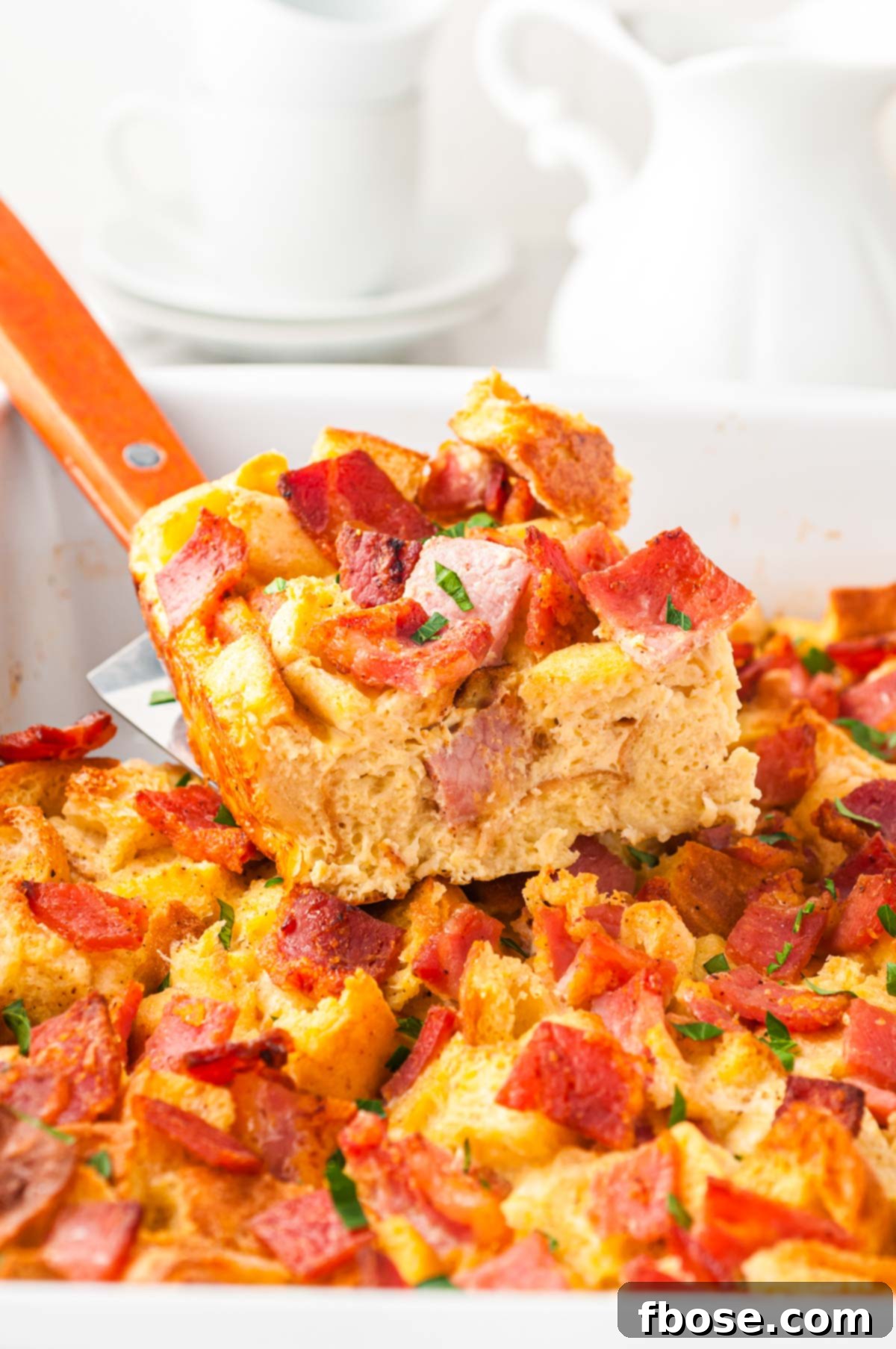
Eggs Benedict Casserole is the ultimate solution for serving a luxurious, crowd-pleasing breakfast or brunch without the usual fuss. Imagine tender English muffins layered with savory Canadian bacon, all bathed in a rich, spiced egg-milk mixture, then baked to golden perfection. The grand finale? A generous drizzle of creamy, homemade Hollandaise sauce that elevates every bite into a gourmet experience. This delightful casserole transforms a typically time-consuming dish into an effortlessly elegant meal, making it ideal for holiday gatherings, special occasions, or simply a leisurely weekend brunch.
Forget the juggling act of perfectly poached eggs and temperamental sauces. This easy breakfast casserole version lets you enjoy all the classic flavors of Eggs Benedict with minimal effort. What’s even better? You can prepare it the day before, allowing flavors to meld beautifully overnight. Simply pop it in the oven in the morning, whip up the fresh Hollandaise, and serve! It pairs wonderfully on its own, or alongside crispy bacon strips, a vibrant fresh fruit salad, or your favorite breakfast sausage.

Why Choose an Eggs Benedict Casserole? The Ultimate Brunch Solution
Traditional Eggs Benedict, while undeniably delicious, is known for being a bit of a culinary challenge. Achieving perfectly poached eggs and a smooth, emulsified Hollandaise sauce requires precision and timing that can be daunting, especially when cooking for a group. This is precisely where the **Eggs Benedict Casserole** shines as a brilliant alternative.
This make-ahead breakfast casserole eliminates the need for individual plating and last-minute scrambling. By baking all the core components together, you get consistent flavor and texture in every serving. It’s the ideal choice for large family brunches, holiday breakfasts like Christmas or Easter, or any occasion where you want to impress your guests without spending the entire morning in the kitchen. The ease of preparation and the ability to assemble it the night before makes it an absolute game-changer for stress-free entertaining.

Key Ingredients for the Perfect Eggs Benedict Casserole
Crafting this incredible casserole starts with selecting the right components. Each ingredient plays a crucial role in delivering the signature Eggs Benedict experience in casserole form.
The Heart of the Casserole: English Muffins, Canadian Bacon, and Egg Custard
The foundation of our casserole is built upon sturdy yet soft English muffins. When cut into pieces, they absorb the rich egg mixture, becoming wonderfully tender and flavorful during baking. For the meat, we opt for chopped Canadian bacon. Its lean, smoky flavor is a hallmark of classic Eggs Benedict and pairs perfectly with the other elements. Unlike regular bacon, Canadian bacon (which is typically a lean cut from the back of the pig, similar to ham) offers a less greasy texture and distinct taste that stands up well in a casserole.
The liquid component that brings everything together is a luscious egg mixture. Made with fresh eggs, whole milk, and a carefully balanced blend of spices including ground mustard, paprika, garlic powder, salt, and black pepper, this custard not only binds the ingredients but also infuses every bite with a savory, aromatic depth. As the casserole bakes, the muffins soak up this mixture, transforming into a tender, custardy base that’s full of spiced and smoky flavor.

The Crown Jewel: Homemade Hollandaise Sauce
No Eggs Benedict — casserole or traditional — is complete without a velvety Hollandaise sauce. Our homemade version is surprisingly simple to make and tastes infinitely better than any store-bought alternative. It’s a harmonious blend of rich egg yolks, bright lemon juice, pungent ground mustard, and a touch of salt and paprika, all emulsified with warm melted butter. This creates a smooth, creamy, and slightly tangy sauce that beautifully complements the savory casserole. The final step in this recipe is a generous drizzle of this golden sauce over each warm piece of the casserole just before serving, providing that iconic richness and finish.
While the casserole itself can be made ahead, the Hollandaise sauce is best prepared fresh, right before serving. This ensures its optimal temperature, texture, and vibrant flavor, truly making your Eggs Benedict Casserole a standout dish.

How To Master Eggs Benedict Casserole: Step-by-Step Guide
Making this impressive breakfast casserole is easier than you think! Follow these detailed steps to ensure a perfect, flavorful dish every time.
- Prepare Your Baking Dish: Begin by lightly greasing a 13×9-inch baking dish. This prevents sticking and ensures easy serving.
- Whisk the Egg Custard: In a large mixing bowl, combine the fresh eggs, whole milk, ground mustard, paprika, garlic powder, kosher salt, and ground black pepper. Whisk vigorously until all ingredients are thoroughly blended and the mixture is smooth. This ensures even flavor distribution.
- Layer the Foundation: Arrange half of your cut English muffin pieces evenly across the bottom of the prepared baking dish. These will form the delicious base.
- Add the Canadian Bacon: Sprinkle half of the chopped and cooked Canadian bacon over the English muffin layer. Ensure even distribution for flavor in every bite.
- Repeat the Layers: Create a second layer by repeating steps 3 and 4 with the remaining English muffins and Canadian bacon. This layering technique helps the egg mixture penetrate thoroughly.
- Pour and Soak: Carefully pour the whisked egg mixture over the entire layered casserole. Make sure the English muffins are fully submerged and have a chance to absorb the liquid.
- Chill for Flavor (and Structure!): Cover the dish and refrigerate for at least 1 hour. Ideally, chill it overnight. This crucial step allows the English muffins to fully soak up the egg mixture, resulting in a tender, custardy texture and preventing a dry casserole.
- Bake to Golden Perfection: When ready to bake, preheat your oven to 350°F (175°C). Uncover the casserole and bake for approximately 50 minutes, or until the top is golden brown and a toothpick inserted into the center comes out clean. If it jiggles, give it a few more minutes.
- Prepare the Hollandaise Sauce (Fresh is Best!): While the casserole bakes, prepare your Hollandaise. Melt the butter until hot. In a tall glass or blender, combine the egg yolks, fresh lemon juice, ground mustard, kosher salt, and paprika.
- Emulsify for Creaminess: Using an immersion blender (or a regular blender/food processor), begin blending the egg yolk mixture. Slowly, in a thin, steady stream, pour the hot melted butter into the running blender. Continue blending until the sauce is thick, creamy, and perfectly emulsified. It should have a smooth, glossy consistency.
- Serve with a Flourish: Once baked, remove the casserole from the oven and let it rest for a few minutes. Slice into individual portions, drizzle generously with the warm, homemade Hollandaise sauce, and optionally garnish with fresh chopped parsley for a burst of color and flavor.

The Curious Origin: How Did Eggs Benedict Get Its Name?
Like many culinary classics, the exact origin story of Eggs Benedict is shrouded in a bit of mystery and delightful legend. While no one is entirely sure of its precise beginnings, two popular theories offer fascinating glimpses into its possible birth:
One widely cited account suggests the dish was first created in the 1860s at the iconic Delmonico’s Restaurant in Manhattan. The story goes that a regular patron, a Mrs. LeGrand Benedict, found herself bored with the standard lunch offerings and challenged the chef to whip up something entirely new and different. The result was a dish featuring poached eggs, ham, Hollandaise, and toasted English muffins – essentially the foundation of what we know today.
Another compelling theory places the invention a little later, in the 1890s. This version attributes the dish to a Wall Street broker named Lemuel Benedict. According to his account, he was suffering from a particularly severe hangover at the Waldorf Hotel and, seeking a cure, ordered “buttered toast, poached eggs, crisp bacon, and a hooker of hollandaise.” The maître d’, Oscar Tschirky, was so impressed by this specific combination that he perfected it, replacing the toast with English muffins and bacon with ham (or Canadian bacon), and soon added it to the hotel’s breakfast and lunch menus as “Eggs Benedict.” Regardless of which tale holds the truth, one thing is certain: the creation of Eggs Benedict was a stroke of breakfast genius that has delighted palates for over a century.

Preparation Prowess: Can You Make Eggs Benedict Casserole Ahead of Time?
Absolutely, and this is one of its greatest advantages! The Eggs Benedict Casserole is an ideal make-ahead brunch recipe, perfect for freeing up your morning. You can assemble the entire casserole – English muffins, Canadian bacon, and the egg mixture – in your baking dish, cover it tightly, and refrigerate it overnight. This allows the English muffins ample time to soak up the savory egg custard, ensuring a moist and flavorful result when baked. When you’re ready to bake, simply pull it from the refrigerator, let it sit at room temperature for about 15-20 minutes while your oven preheats, and then bake as directed. You might need to add a few additional minutes to the baking time if it’s going directly from the fridge to the oven.
However, a crucial tip for peak flavor: the Hollandaise sauce should always be made fresh just before serving. While the casserole base is sturdy enough for overnight chilling, the delicate emulsion of Hollandaise can break if made too far in advance or reheated. Its warm, creamy texture and vibrant tang are best enjoyed right after preparation, providing a fresh contrast to the baked casserole.
Is Eggs Benedict Casserole a Healthy Choice?
The term “healthy” can be subjective, especially when it comes to rich breakfast dishes. Traditional Eggs Benedict, with its poached eggs, butter-laden Hollandaise, and often high-fat ham, is generally considered an indulgent treat. However, this casserole version offers a few subtle differences that might make it a relatively “healthier” option for some, particularly when compared to other sweet breakfast alternatives.
Firstly, this casserole uses whole milk in its egg mixture rather than cream, which can slightly reduce the overall fat content without sacrificing richness. It also provides a substantial amount of protein from the eggs and Canadian bacon, which helps keep you feeling full and satisfied longer, potentially preventing overeating later in the day. Compared to sugary breakfast recipes like pastries or sugary cereals, the Eggs Benedict Casserole contains very little added sugar.
For those looking to lighten it further, consider using skim or low-fat milk, a leaner ham instead of Canadian bacon, or increasing the amount of fresh vegetables like spinach or asparagus layered into the casserole. While still a decadent dish, it’s a balanced option that delivers rich flavor with nutritional benefits that many sweeter breakfasts lack. Enjoy it in moderation as part of a balanced diet!

More Irresistible Breakfast & Brunch Recipes
If you loved this Eggs Benedict Casserole, you’ll surely want to explore more delicious ways to start your day or host a memorable brunch. Here are some of our other favorite breakfast and brunch recipes that are sure to please any palate:
- Italian Eggs In Purgatory – Experience fried eggs simmering in a savory, homemade tomato sauce – a uniquely delicious and comforting dish.
- Sheet Pan Egg In A Hole – This recipe takes the classic “egg in a hole” to the next level, offering the easiest way to make it for a crowd on a single sheet pan.
- Cheesy Tater Tot Breakfast Casserole – Indulge in a hearty, comforting casserole loaded with crispy tater tots, melty cheese, and savory bacon.
- Cinnamon Roll Casserole – Transform your favorite sweet treat into a lazy breakfast sensation, easily prepared right in your slow cooker for minimal effort.
- Bacon Onion Spinach Quiche – A timeless brunch staple that combines the savory goodness of bacon, sweet onions, and fresh spinach in a creamy, flaky crust, surprisingly simple to prepare.
Join Our Culinary Community!
If you’ve tried this delightful Eggs Benedict Casserole recipe, we’d absolutely love to hear from you! Please share your thoughts and let us know how you liked it in the comments section below, and don’t forget to leave a review. Your feedback inspires us!
We also invite you to connect with us on social media! Tag us – @sugarandsoulco – on Instagram and Pinterest with your beautiful photos of this dish. For more cooking fun and to join our exclusive recipe challenges, become a part of our Sugar & Soul Show-offs Community on Facebook!

Eggs Benedict Casserole
Rebecca Hubbell
Breakfast
American, French
15 minutes
50 minutes
1 hour
2 hours 5 minutes
Servings
12
people
Ingredients
Casserole:
- 2 cups Canadian bacon chopped and cooked
- 6 English muffins cut into 1-inch pieces
- 10 large eggs
- 2 cups whole milk
- 1 teaspoon ground mustard
- ½ teaspoon paprika
- ½ teaspoon garlic powder
- 1 teaspoon kosher salt
- ½ teaspoon ground black pepper
Hollandaise Sauce:
- 4 large egg yolks
- 2 tablespoons lemon juice
- 1 teaspoon ground mustard
- ½ teaspoon kosher salt
- ½ teaspoon paprika
- ½ cup salted butter melted
- Fresh parsley chopped – for garnish
Instructions
Casserole:
-
Grease a 13×9-inch baking dish and set aside.
-
In a large bowl, whisk together the eggs, milk, mustard, paprika, garlic powder, salt, and pepper until well blended.
-
Place half of the English muffin pieces in the bottom of the prepared baking dish.
-
Sprinkle half of the chopped, cooked back bacon over the top of the English muffins.
-
Repeat the English muffin and bacon layers once more.
-
Pour the egg mixture over the top of the bacon and English muffins.
-
Allow the dish to sit in the refrigerator for at least 1 hour before baking.
-
When ready to bake, preheat the oven to 350°F and bake for 50 minutes or until a toothpick comes out clean when inserted into the center of the casserole.
Hollandaise Sauce:
-
Melt the butter, either in a microwave or in a small saucepan on the stovetop.
-
Use an immersion blender, regular blender, or food processor to blend together the egg yolks, lemon juice, mustard, salt, and paprika.
-
With the blender running, slowly stream the hot butter into the egg mixture until it emulsifies.
-
Drizzle the warm hollandaise sauce over slices of the casserole just before serving and sprinkle with fresh chopped parsley if desired.
Notes
- The casserole can be made the day before and left in the refrigerator overnight ready to bake for breakfast in the morning.
Nutrition
Carbohydrates: 17g |
Protein: 17g |
Fat: 17g |
Saturated Fat: 8g |
Cholesterol: 246mg |
Sodium: 920mg |
Potassium: 284mg |
Fiber: 1g |
Sugar: 2g |
Vitamin A: 669IU |
Vitamin C: 1mg |
Calcium: 94mg |
Iron: 1mg