

Elevate your St. Patrick’s Day celebration with this authentic Corned Beef and Cabbage recipe, a cherished Irish-American tradition that promises unparalleled flavor and tenderness. This guide will walk you through the essential process of brining your own brisket for 7 to 10 days, infusing it with a symphony of savory spices, resulting in a melt-in-your-mouth experience that is both rich in history and taste. Forget store-bought shortcuts and embrace the reward of homemade perfection.

Homemade Corned Beef and Cabbage: A Culinary Tradition
As St. Patrick’s Day approaches, many of us begin to dream of a hearty, comforting meal that truly embodies the spirit of Irish-American heritage. For countless families, that meal is none other than Corned Beef and Cabbage. While often considered an Irish national dish, its prominent place in St. Patrick’s Day celebrations actually has a fascinating history rooted in the experiences of Irish immigrants in America. This recipe isn’t just about cooking; it’s about connecting with a tradition and creating an incredibly flavorful dish from scratch.
If you’ve ever wondered why corned beef became such a St. Patrick’s Day staple, you’re not alone. The tradition, surprisingly, didn’t originate in Ireland itself. In 19th-century Ireland, beef was a luxury, primarily consumed by the wealthy or reserved for export. The common Irish diet often featured salted pork, a more affordable and accessible meat. However, when Irish immigrants arrived in the United States, they found that salted pork was unexpectedly expensive, while beef, particularly brisket, was much more readily available and cheaper, often thanks to Jewish delis that specialized in cured meats. This economic reality, coupled with a desire to recreate familiar tastes and traditions in their new home, led to the adoption of corned beef as a festive alternative to their traditional pork dishes for holidays like St. Patrick’s Day. It became a symbol of Irish-American identity, a culinary bridge between two worlds.

Today, continuing this tradition at home is a rewarding experience, and this recipe guides you through making your own corned beef from start to finish. While it requires a bit of foresight and patience due to the brining process, the actual hands-on preparation is surprisingly minimal. The real magic happens over 7 to 10 days as your brisket transforms, absorbing rich flavors and becoming incredibly tender, far surpassing any pre-packaged alternative.
The Art of Brining: Crafting Your Own Corned Beef
The secret to truly exceptional corned beef lies in the brine. Brining is a centuries-old technique of preserving and flavoring meat using a salt-water solution, often enhanced with spices. For corned beef, this curing process is what gives the brisket its characteristic pink hue, distinct salty-savory taste, and succulent texture. When you make your own, you have complete control over the quality of ingredients and the depth of flavor.
Our homemade brine is a carefully balanced blend of water, kosher salt, granulated sugar, and a selection of aromatic spices: garlic, whole cloves, bay leaves, and cinnamon sticks. Each ingredient plays a crucial role. The kosher salt and pink curing salt are essential for the curing process, tenderizing the meat and imparting that signature “corned” flavor. The sugar provides a subtle sweetness that perfectly offsets the saltiness, creating a more complex and rounded profile. Finally, the spices infuse the brisket with a warm, savory aroma that defines this classic dish.

The time commitment for brining—7 to 10 days—is absolutely critical for achieving the best results. This extended period allows the brine to penetrate deeply into the muscle fibers, breaking them down and infusing every inch of the brisket with flavor. While this might sound like a long time, the actual effort involved is quite low. Once the brine is prepared and the brisket is submerged, it simply rests in your refrigerator, requiring only occasional rotation to ensure even curing. This hands-off approach makes the process surprisingly manageable, even for busy home cooks who plan ahead.
Essential Tips for Success
Making corned beef from scratch is a labor of love, but these insights will ensure your efforts are richly rewarded:
- The “Holy Trinity” for Flavor: You might notice that celery, carrots, and onions are added during the cooking process but are typically discarded afterwards. These vegetables, often referred to as the “Holy Trinity” in many cuisines, serve primarily to impart a foundational layer of aromatic flavor to the cooking liquid, which then infuses into the beef. While they will be very soft and mushy after extended simmering, you’re certainly welcome to eat them if you enjoy their tender texture.
- Patience with Brining Time: The 7 to 10 days of brining is truly non-negotiable for optimal flavor and texture. Anything less than 5 or 6 days will result in a less flavorful and potentially less tender brisket. If you find yourself short on time, don’t despair! You can still use the cooking instructions in this recipe with a high-quality, pre-brined store-bought brisket to enjoy a delicious St. Patrick’s Day meal.
- Choosing Your Brisket: The cut of brisket makes a difference. Look for the “flat” end of the brisket, also known as the “first cut.” This leaner portion has less fat, which allows the brine to penetrate more effectively and ensures more even cooking. While the fattier “point” cut can also be used, it might require slightly longer brining and could yield a less uniform texture.
- The Indispensable Pink Curing Salt: This ingredient, also known as Prague Powder #1, is vital and should *never* be skipped or substituted with regular table salt or even Pink Himalayan Salt. Pink curing salt contains sodium nitrite, which is responsible for giving corned beef its characteristic pink color, distinct flavor, and, most importantly, inhibiting the growth of harmful bacteria. It can be hard to find in regular grocery stores, so it’s best to order it online or check specialty butcher shops.
- Understanding Sodium Levels: While the nutrition label might show high sodium, it’s important to note that a significant portion of the salt from the brine is discarded with the liquid after curing and cooking. The actual sodium content in the cooked meat is considerably lower, typically ranging between 1200 and 2000 mg per serving. This is still a salty dish, but less extreme than the brine’s initial composition suggests.
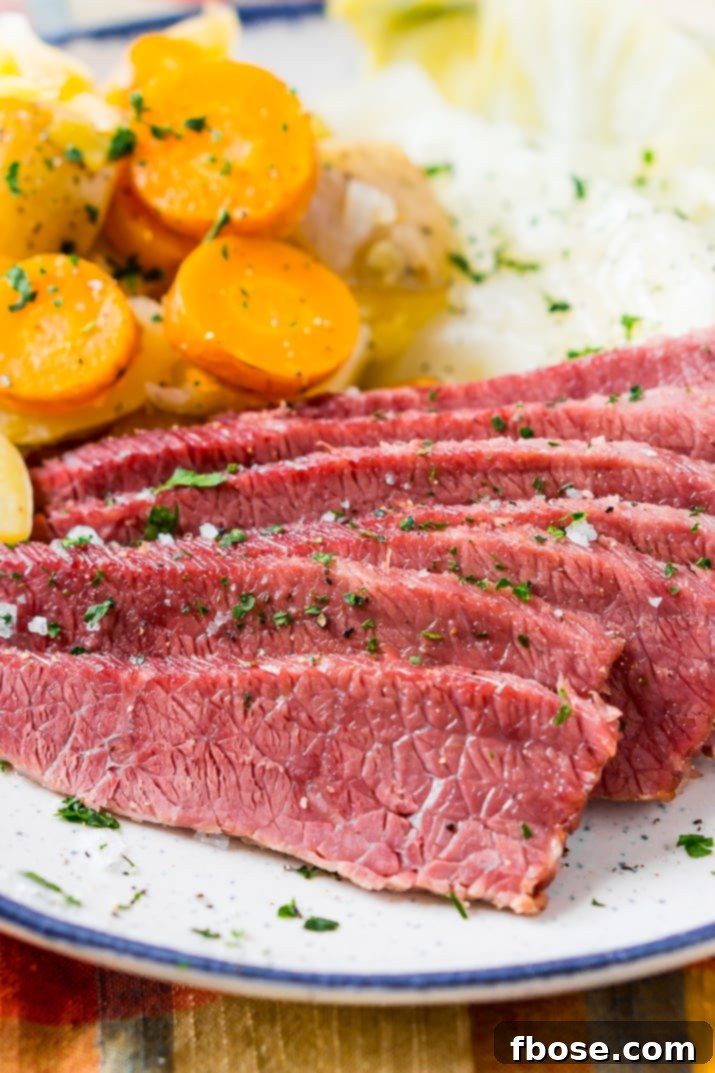
Cooking Your Tender Corned Beef and Cabbage
Once your brisket has completed its lengthy brine bath, the final cooking process is straightforward and yields incredibly satisfying results. The goal is to gently simmer the meat until it reaches peak tenderness, allowing it to become exceptionally juicy and flavorful.
Begin by thoroughly rinsing the brined brisket under cold water to remove any excess salt from the surface. Place the rinsed meat into a large pot with the sliced celery, onion, and carrots. Add enough fresh water to completely cover all the ingredients. Bring the pot to a boil, then reduce the heat to a gentle simmer, covering the pot. Let it cook for approximately 1 hour and 45 minutes, checking periodically and adding more water if needed to keep the meat submerged. This slow simmering ensures the brisket breaks down and becomes fork-tender.
After this initial cooking period, add the quartered or eighths of cabbage to the pot. Continue to simmer for another 45 minutes, or until the cabbage is tender but still retains a slight bite. Once cooked, use tongs to carefully remove the corned beef and cabbage from the pot. Allow the remaining pot contents – the cooking liquid and discarded vegetables – to cool before safely discarding them.
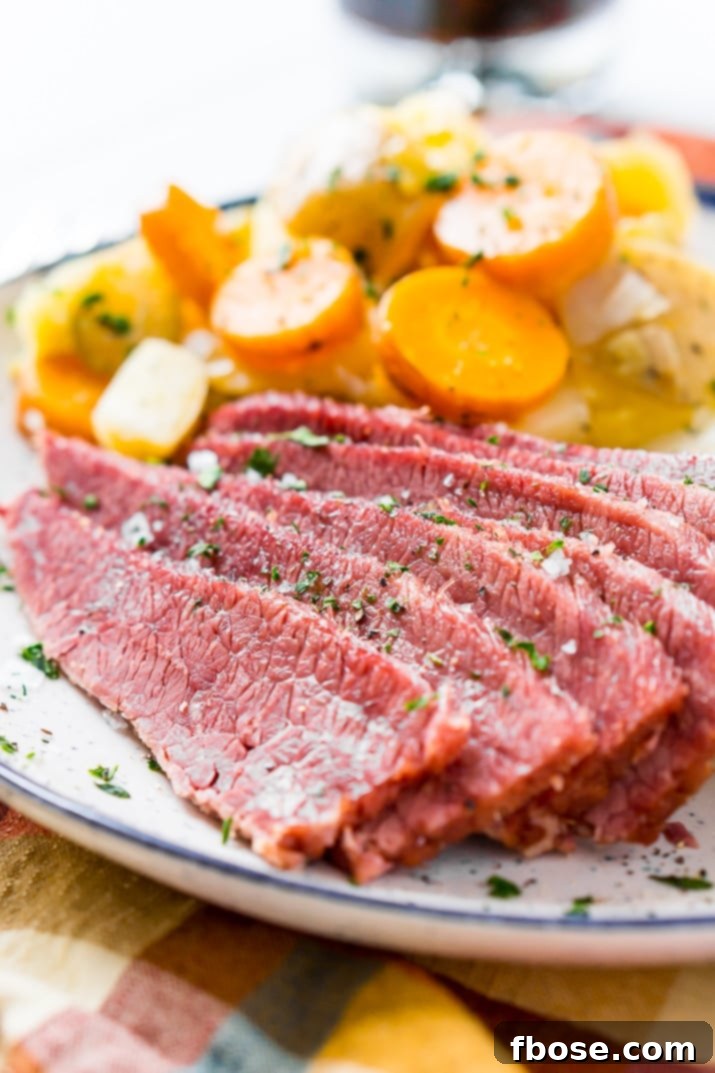
Serving and Savoring Your St. Patrick’s Day Feast
The moment you’ve been waiting for! Slice the tender corned beef against the grain into thin, manageable pieces. Serve immediately alongside the perfectly cooked cabbage. For a truly complete Irish-American experience, pair it with classic side dishes such as creamy mashed potatoes, or perhaps even a rich Irish Fried Cabbage and Bacon for an extra layer of flavor. Don’t forget a slice of wholesome soda bread to soak up any delicious juices. This combination makes for the ultimate St. Patrick’s Day comfort food, satisfying both hunger and tradition.
Beyond the Holiday: Creative Corned Beef Leftovers
One of the best things about making a large batch of corned beef is the incredible leftovers! Corned beef is incredibly versatile and can be transformed into a variety of delicious meals that extend the celebration well beyond St. Patrick’s Day. Here are some fantastic ideas to make the most of your culinary efforts:
- Classic Corned Beef Hash: A breakfast (or dinner) favorite! Combine shredded or diced corned beef with cubed potatoes, sautéed onions, and a touch of seasoning. Pan-fry until crispy, then top with a perfectly fried or poached egg. It’s a savory, satisfying dish that’s incredibly easy to prepare.
- The Ultimate Reuben Sandwich: This deli classic is a must-make. Layer thinly sliced corned beef on rye bread with Swiss cheese, sauerkraut, and a generous dollop of Russian dressing. Grill until the cheese is melted and the bread is toasted, creating a warm, gooey, and irresistible sandwich.
- Corned Beef Sliders: For a smaller, shareable option, pile shredded corned beef onto slider buns with a hint of Swiss cheese and a dab of mustard or Russian dressing. Perfect for parties or a quick snack.
- Corned Beef Tacos or Quesadillas: Give your leftovers a creative twist by using the shredded meat in tacos with your favorite toppings or pressed into cheesy quesadillas. The savory flavor of corned beef pairs surprisingly well with Mexican-inspired spices.
- Soups and Stews: Add diced corned beef to a hearty potato and vegetable soup or a rich beef stew for an extra layer of robust flavor.
- Corned Beef and Guinness Pie: For a more elaborate dish, incorporate your leftover corned beef into a savory pie, perhaps with a rich Guinness gravy and a flaky pastry crust.
Making your own Corned Beef and Cabbage is a truly rewarding endeavor that allows you to fully embrace the rich history and delicious flavors of this beloved Irish-American tradition. The patience required for brining pays off with an unbelievably tender and savory brisket that will become the star of your St. Patrick’s Day feast, creating lasting memories with family and friends. And with so many delightful ways to enjoy the leftovers, you’ll be savoring the taste of Ireland for days to come!
Recipe: Homemade Corned Beef and Cabbage
This recipe yields 12 servings of succulent, homemade corned beef and tender cabbage.

Rating: 5 out of 5 stars (based on 2 votes)
Author: Rebecca Hubbell
Course: Main Course
Cuisine: Irish
Prep Time: 7 days (for brining)
Cook Time: 2 hours 30 minutes
Total Time: 7 days 2 hours 30 minutes
Servings: 12 people
Summary
This Corned Beef and Cabbage recipe is a classic Irish dinner perfect for St. Patrick’s Day! The meat is brined for 7 to 10 days in savory spices and the brisket becomes tender and flavorful once cooked.
Ingredients
Brine
- 12 cups water
- 1 cup kosher salt
- 3 teaspoons pink curing salt (Prague Powder #1)
- 1/2 cup granulated sugar
- 4 Bay leaves
- 6 whole cloves
- 2 cinnamon sticks
- 2 cloves garlic, smashed
Other Ingredients
- 4 lb brisket, halved
- 2 stalks celery, sliced
- 1 onion, sliced
- 2 carrots, sliced
- 1 head cabbage, quartered or eighths
Instructions
Brine Preparation
- In a large pot, combine the water, kosher salt, pink curing salt, and granulated sugar. Bring the mixture to a boil, stirring until all the sugar and salt have completely dissolved. Once dissolved, remove from heat and allow the brine to cool completely to room temperature.
- Divide the bay leaves, whole cloves, cinnamon sticks, and smashed garlic cloves evenly between two gallon-sized Ziploc bags.
- Place one piece of brisket into each bag. Carefully ladle the cooled brine into the bags, ensuring that the meat is fully submerged and no part is exposed to air. This is crucial for proper curing.
- Place the sealed bags in a 9×13-inch pan or similar container in case of any leaks. Store in the refrigerator for 7 to 10 days before cooking. Check the bags daily for any leaks and rotate them every two days to ensure even brining.
Cooking the Corned Beef and Cabbage
- Once the brining process is complete, remove the brisket from the bags and rinse it thoroughly under cold water to wash off excess salt and spices.
- Place the rinsed brisket into a large pot with the sliced celery, onion, and carrots. Add enough fresh water to cover all the ingredients. Bring the liquid to a boil, then reduce the heat to a gentle simmer. Cover the pot and cook for 1 hour and 45 minutes, checking periodically and adding more water if needed to keep the meat submerged.
- Add the quartered or eighths of cabbage to the pot. Continue to boil (or simmer gently) for another 45 minutes, or until the cabbage is tender.
- Using tongs, carefully remove the cooked corned beef and cabbage from the pot. Allow the remaining pot contents (the vegetables and cooking liquid) to cool to room temperature before discarding them.
- Slice the corned beef against the grain into desired thickness and serve immediately with the tender cabbage. Save any delicious leftovers for future meals like corned beef hash or Reuben sandwiches.
Notes
- You’re probably wondering why the recipe includes celery, carrots, and onions but they get discarded at the end of the cooking process. Well, these are considered the Holy Trinity of cooking and are primarily used to add flavor to the beef. Of course, no one will stop you from eating them if you’d like, but they will be very mushy.
- Yes, the 7 to 10 days really is necessary for the best flavor. You might be able to get away with 5 or 6 days, but I wouldn’t do any less than that. If you didn’t plan ahead, you can still use the cooking section of this recipe with a storebought brisket.
- When it comes to brisket, not all cuts are created equal, look for the flatter end of the brisket, this will have less fat, will brine better, and will cook more evenly.
- The Pink Curing Salt or Prague Powder is a very important part of the recipe and shouldn’t be skipped. This is not the same as Pink Himalayan Salt. It may be hard to find in your local grocer so I recommend ordering it online.
- Sodium levels in this recipe are high but are not as high as the nutrition labels says. Most of the salt will be discarded with the brine and there’s actually between 1200 and 2000 mg of sodium per serving in the meat.
Nutrition
Calories: 288kcal | Carbohydrates: 13g | Protein: 32g | Fat: 11g | Saturated Fat: 3g | Cholesterol: 93mg | Sodium: 9577mg | Potassium: 627mg | Fiber: 2g | Sugar: 10g | Vitamin A: 75IU | Vitamin C: 27.9mg | Calcium: 58mg | Iron: 3.4mg
Did You Make This Recipe?
If you’ve tried this recipe, please leave a review in the comments below. I love hearing from you! Don’t forget to tag me – @sugarandsoulco – on Instagram and Pinterest with your photos, or join our Sugar & Soul Show-offs Community and share them there.
Don’t forget to share it with me on Instagram @sugarandsoulco and follow on Tiktok @sugarandsoulco and Pinterest @sugarandsoulco for more!
Rate this Recipe |
Pin Recipe |
Share Recipe