
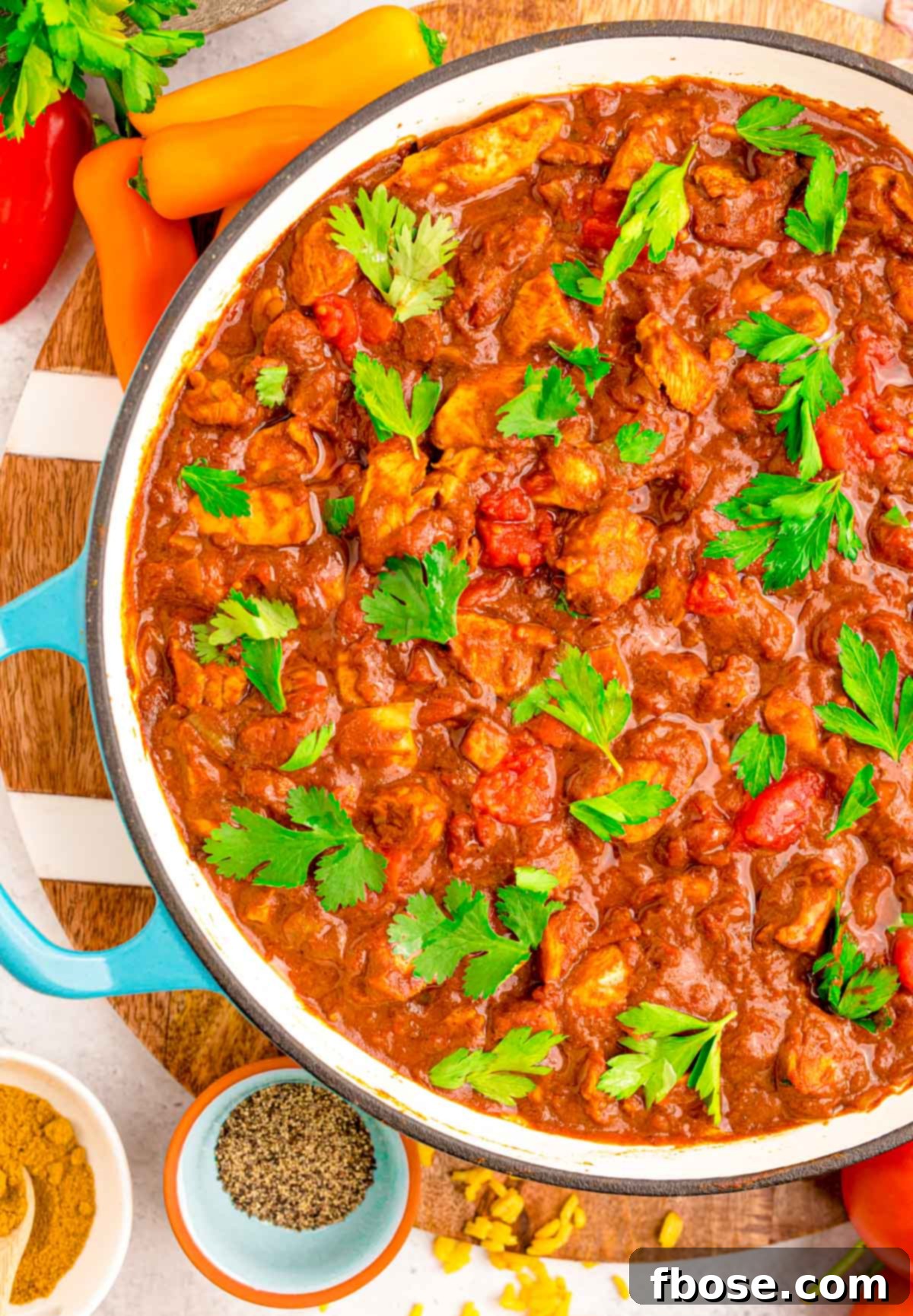
Ignite your taste buds with this authentic Madras Curry, a vibrant Indian dish renowned for its bold flavors and comforting heat. This recipe features succulent chunks of tender chicken breast bathed in a creamy, deep red sauce that promises an exhilarating culinary journey. Best of all, it requires just 10 minutes of prep, making it perfect for a weeknight dinner or an impressive weekend feast!
If you’re a fan of rich and aromatic Indian cuisine, you’ll also adore our Easy Chicken Tikka Masala. Both this Madras Chicken Curry and our Tikka Masala are brimming with mouthwatering spices, offering delightful homemade alternatives to your favorite takeout.
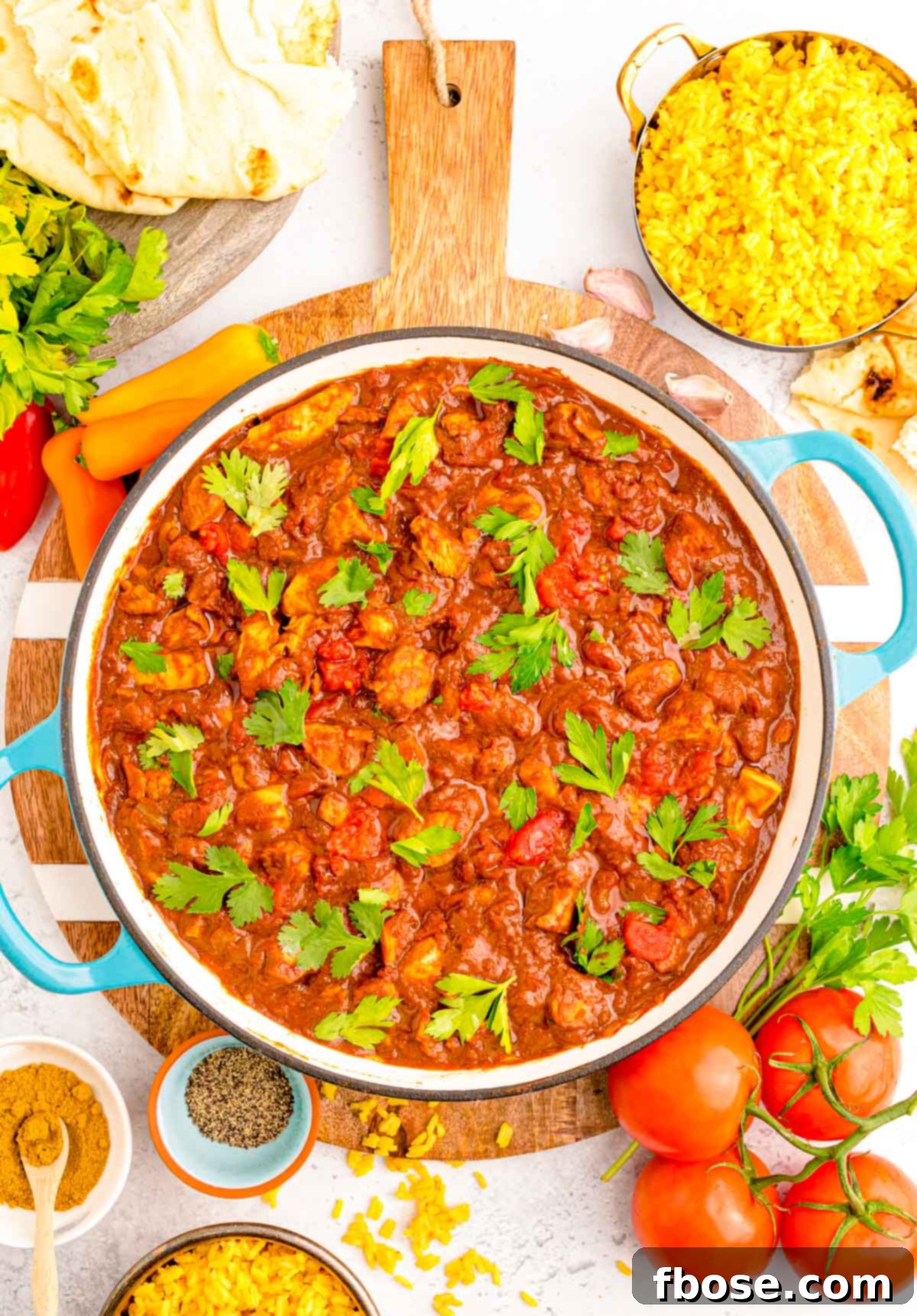
Authentic Madras Chicken Curry: A Fiery and Flavorful Indian Delight
Prepare to surprise your palate with the robust and delicious flavors of this Madras Curry! The luscious coconut milk and tangy tomato-based sauce perfectly cradle tender pieces of chicken, infused with a medley of aromatic spices that are eager to awaken your senses. This Chicken Madras style curry is a celebrated classic, cherished for its distinctive fiery kick. While its spice level is notable, I often balance the heat by serving it alongside fluffy steamed rice or warm, pillowy naan bread.
This recipe ensures you’ll experience that authentic Indian spice profile typically found only in dishes from your favorite Indian restaurants, all from the comfort of your own kitchen. It’s a testament to how easily you can bring the exotic flavors of South India right to your dining table.
Why This Madras Curry Recipe Will Become Your New Favorite
Our Madras Chicken Curry isn’t just another meal; it’s a culinary experience designed for convenience, flavor, and personalization. Here’s why you’ll fall in love with it:
- Customizable Heat Levels: Don’t let the reputation for spice deter you! This recipe is incredibly adaptable. You can effortlessly adjust the heat to perfectly suit your preference, ensuring everyone at the table enjoys this flavorful dish. Scroll down for detailed tips on how to dial the spice up or down.
- Versatile Protein Options: While chicken breast is traditional, this Madras curry base is wonderfully versatile. Easily swap out the chicken for beef, lamb, or even firm white fish to create delicious variations like Beef Madras or Lamb Madras. Each adaptation brings its unique texture while soaking up the rich curry flavors.
- Effortless One-Pan Cooking: Say goodbye to piles of dirty dishes! This flavor-packed meal comes together in a single pan or Dutch oven, minimizing cleanup and maximizing your enjoyment. It’s the perfect solution for a hearty meal without the dreaded kitchen mess.
- Delicious Meatless Alternative: Looking for a vegetarian option? This curry can be easily transformed into a satisfying plant-based meal. Simply exchange the meat for hearty chickpeas, cubes of butternut squash, potatoes, or florets of cauliflower. These ingredients absorb the rich curry sauce beautifully, offering a wholesome and incredibly flavorful vegetarian experience.
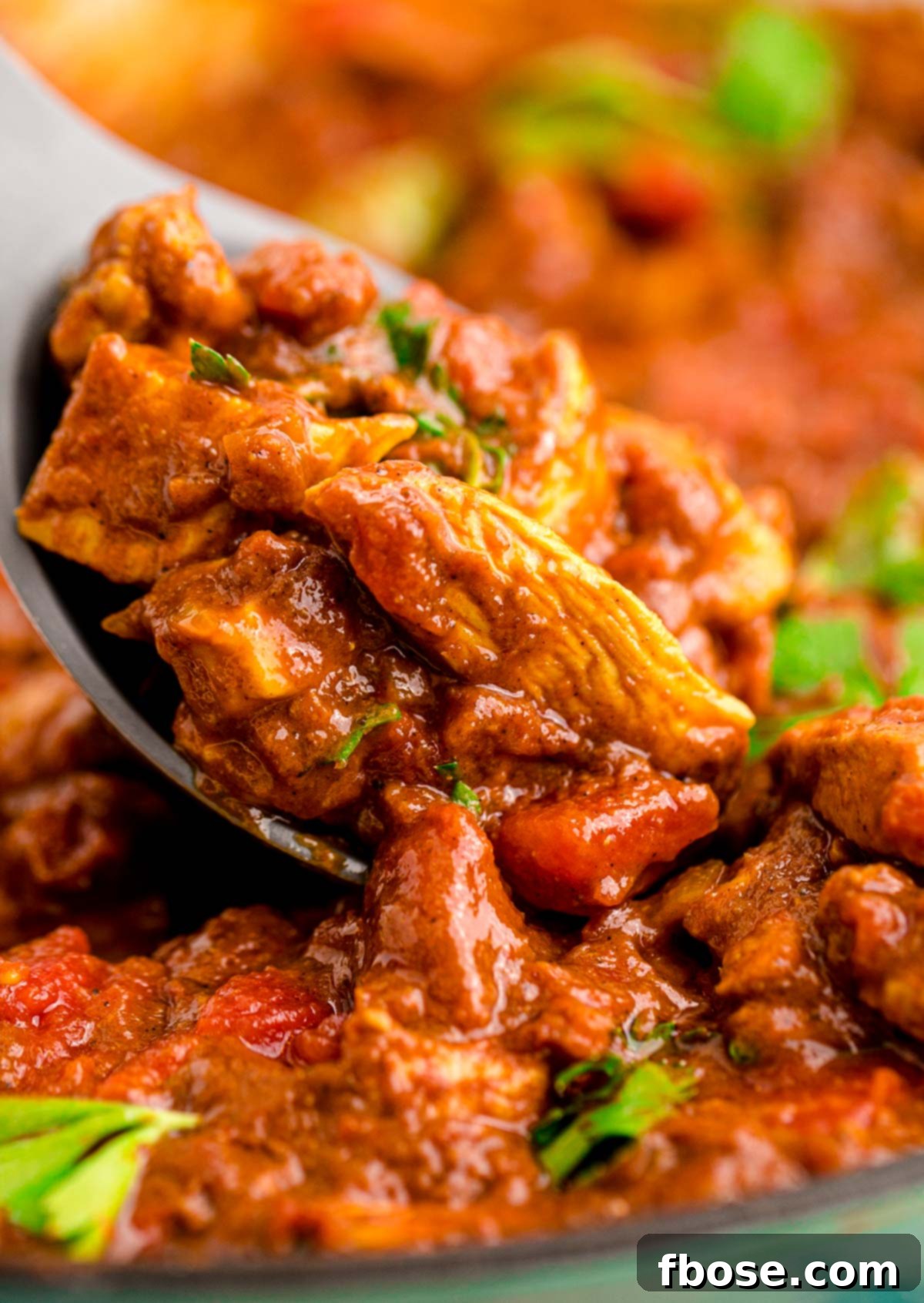
The Rich History and Flavor Profile of Madras Curry
Madras Curry, originating from the South Indian city of Chennai (formerly Madras), is a staple in Indian cuisine, particularly celebrated in British Indian restaurants. Unlike some milder curries, Madras is known for its distinctive fiery taste and its vibrant, deep red hue, which comes from the generous use of chilies and sometimes tomatoes or paprika. Its flavor profile is a harmonious blend of heat, tang, and aromatics, often featuring a base of coconut milk for richness, balanced with tomatoes for acidity, and a complex array of spices.
Historically, Indian cuisine spread globally through trade and migration, with Madras curry becoming a popular adaptation in Western countries, appealing to those who appreciate a more intense spice experience. While there are countless regional variations across India, the “Madras” style curry is typically characterized by its bolder, spicier notes compared to a creamy Korma or a milder Pasanda. Our recipe captures this essence, bringing that authentic, robust flavor directly to your kitchen.
Essential Ingredients for Your Madras Curry
Despite its profound flavor, this Madras Curry recipe is surprisingly straightforward to prepare, using ingredients readily available in most pantries or local grocery stores. To begin your culinary adventure, you’ll start with foundational aromatics: onions, finely diced to melt into the sauce, and garlic cloves, freshly minced for maximum pungency. Chicken breasts are then expertly cut into bite-sized chunks, ensuring they cook evenly and absorb every drop of the exquisite sauce.
The journey to flavor truly begins when the onions and garlic are gently sautéed in a Dutch oven, laying the aromatic groundwork. Following this, an exquisite blend of spices is introduced, each playing a crucial role in developing the signature taste of this dish. You’ll need:
- Madras Curry Powder: The star of the show, providing the characteristic heat and complex flavor. Ensure you choose a high-quality powder for the best results.
- Ground Ginger: Adds a warm, pungent, and slightly sweet undertone that complements the other spices.
- Chili Powder: Contributes to the deep red color and intensifies the heat. Adjust to your desired spice level.
- Ground Black Pepper: A foundational spice that adds sharpness and a subtle layer of heat.
- Sweet Smoked Paprika: Delivers a beautiful red color and a delightful smoky sweetness that deepens the curry’s profile.
- Ground Cinnamon: Imparts a warm, sweet, and woody aroma, a hallmark of many Indian curries.
- Cayenne Pepper: This is where a significant portion of the fiery kick comes from. Use judiciously based on your heat preference.
- Ground Cloves: Offers a strong, sweet, and aromatic flavor that adds depth and complexity to the spice blend.
Many of these spices are likely already gracing your pantry shelves, a testament to the accessibility of this recipe. The key exception, of course, is the specific Madras Curry Powder, which is essential for capturing that authentic flavor profile.
The final, perhaps surprising, ingredient to round off this list is granulated sugar. Its inclusion is strategic, serving to beautifully balance the rich, spicy, and tangy notes of the dish. Furthermore, the amount of sugar can be slightly increased to help mellow the heat, allowing for even greater control over the curry’s intensity.
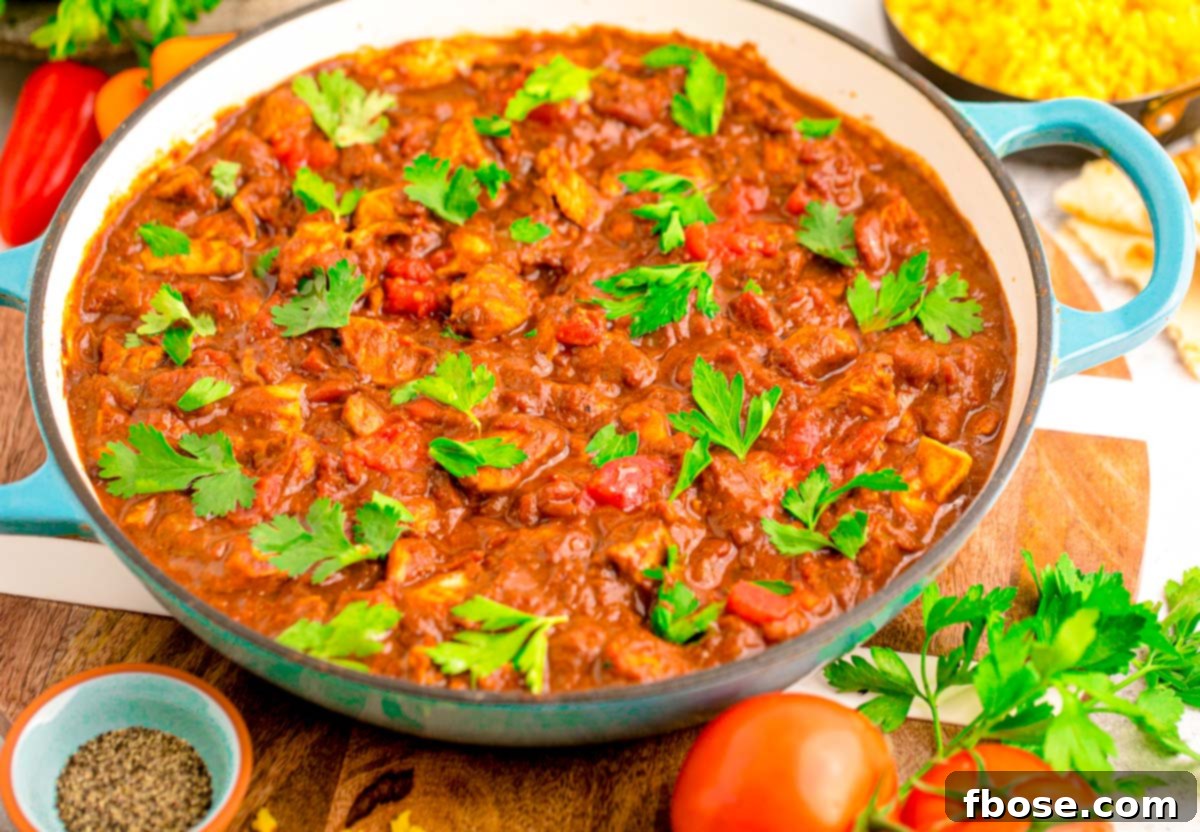
Step-by-Step Guide: Crafting Your Perfect Madras Chicken Curry
Creating this flavorful Madras Chicken Curry is a rewarding process. Follow these detailed steps to achieve a perfectly balanced and aromatic dish:
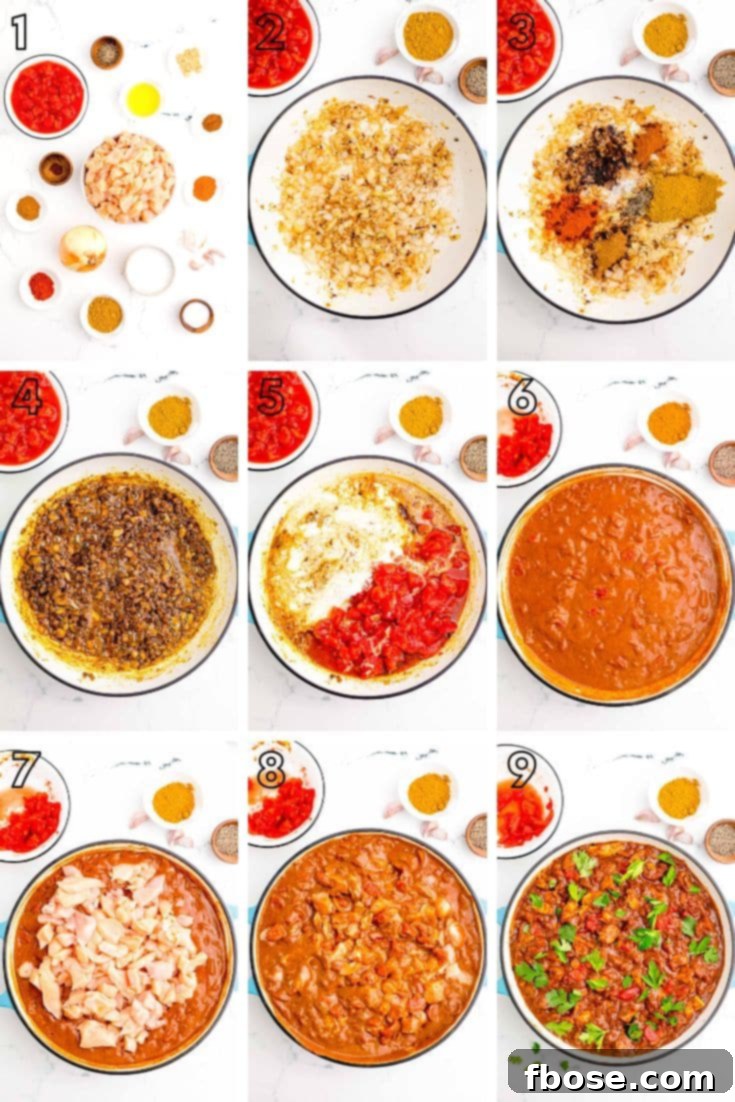
- Sauté Aromatics: Begin by heating the oil in a sturdy Dutch oven over low heat. Add the diced onion and gently sauté for about 5 minutes, or until the onions turn translucent and slightly softened, releasing their natural sweetness.
- Toast Spices: Introduce the minced garlic and all the dry spices (Madras curry powder, ginger, chili powder, black pepper, smoked paprika, cinnamon, cayenne pepper, ground cloves, and granulated sugar) to the Dutch oven. Continue to cook for another 5 minutes, stirring frequently to prevent the garlic from burning. This crucial step, known as “toasting,” helps to unlock and deepen the aromatic flavors of the spices. If the mixture appears too dry, a small splash of additional oil can be added. Allow this fragrant mixture to simmer gently for a minute, stirring occasionally.
- Add Liquids: Increase the heat to medium. Carefully stir in the diced tomatoes (including their liquid) and the creamy coconut milk. Mix thoroughly until all ingredients are well combined, creating the base of your rich curry sauce.
- Thicken the Sauce: Bring the mixture to a gentle simmer and allow it to cook uncovered for approximately 15 minutes. During this time, the liquid will naturally reduce and thicken considerably, concentrating the flavors into a robust sauce.
- Cook Chicken: Gently fold in the chunks of chicken breast, ensuring each piece is thoroughly coated in the fragrant sauce. Cover the Dutch oven with a lid and let it cook for 10 minutes, allowing the chicken to begin cooking and absorb the flavors.
- Finish Cooking: After 10 minutes, remove the lid and continue to cook the curry for another 10 minutes, or until the chicken is completely cooked through and tender. Cooking uncovered at this stage helps to further thicken the sauce and intensify the flavors.
- Serve with Accompaniments: Your homemade Madras Chicken Curry is now ready to be enjoyed! Serve it warm with traditional Indian breads like Naan Bread, fluffy basmati rice, or your favorite side dishes.
Serving Suggestions and Perfect Pairings
A well-made Madras Curry is a feast for the senses, and pairing it with the right accompaniments can elevate the experience even further. Here are some popular and delightful serving suggestions:
- Basmati Rice: The classic choice! Its fragrant, fluffy grains are perfect for soaking up every drop of the rich curry sauce. Consider adding a pinch of saffron or a few cardamom pods to the cooking water for an extra aromatic touch.
- Naan Bread: Warm, soft, and slightly chewy, naan bread is ideal for scooping up the curry. Garlic naan or butter naan adds another layer of flavor.
- Raita: A cooling yogurt-based condiment, often mixed with cucumber, mint, and spices. Raita provides a refreshing contrast to the curry’s heat and creaminess.
- Mango Chutney: The sweet and tangy flavors of mango chutney beautifully complement the spice of the Madras curry, adding a delicious fruity element.
- Fresh Cilantro: A sprinkle of freshly chopped cilantro (coriander) as a garnish not only adds a burst of fresh flavor but also brightens the dish visually.
- Lime Wedges: A squeeze of fresh lime juice just before serving can add a zesty brightness that cuts through the richness of the curry.
- Vegetable Sides: Consider serving a simple side of steamed or sautéed green beans, spinach, or cauliflower to add more nutrition and textural variety.
Experiment with these pairings to find your perfect Madras Curry meal combination!
Mastering Your Madras Curry: Expert Tips & Variations
Elevate your Madras Curry from delicious to extraordinary with these expert tips and creative variations:
- Marination for Flavor: For even more tender and flavorful chicken, consider marinating the chicken chunks in a mixture of plain yogurt and a pinch of Madras curry powder, ginger, and garlic for at least 30 minutes, or even overnight in the refrigerator. This helps tenderize the meat and infuse it with deeper flavor before cooking.
- Enhancing the Sauce: If you desire an even richer, thicker sauce, you can add a tablespoon of tomato paste along with the diced tomatoes. For extra creaminess, a swirl of heavy cream or a dollop of full-fat Greek yogurt can be stirred in at the very end of cooking (off the heat) to prevent curdling.
- Spice Control: Beyond reducing cayenne and Madras curry powder, you can also add a pinch of sugar or a spoonful of plain yogurt to the finished dish to temper excessive heat. Serving with a generous portion of plain rice or cooling raita also helps.
- Alternative Proteins:
- Beef or Lamb Madras: Cut stewing beef or lamb into 1-inch cubes. Brown the meat thoroughly before adding the onions and spices. Cook for a longer period (up to 1-2 hours) until the meat is fork-tender, adjusting liquid as needed.
- Fish or Shrimp Madras: For a quick-cooking variation, add firm white fish chunks (like cod or snapper) or shrimp during the last 5-10 minutes of simmering, until just cooked through. Be careful not to overcook seafood.
- Adding Vegetables: Boost the nutritional content and volume by incorporating vegetables. Cubed potatoes or sweet potatoes can be added with the chicken, while spinach, bell peppers, or green peas can be stirred in during the last 10 minutes of cooking.
- Fresh Curry Leaves: If you can find them, sautéing a few fresh curry leaves with the onions adds an unparalleled authentic South Indian aroma and flavor.
Frequently Asked Questions About Madras Curry
How Do I Store Leftover Chicken Curry?
Leftover Madras Chicken Curry stores beautifully! Place any cooled leftovers in an airtight container and refrigerate for up to 4 days. For longer storage, this curry freezes exceptionally well. Transfer it to freezer-safe containers and enjoy within 3 months. When reheating from frozen, thaw overnight in the refrigerator or use a defrost setting, then gently warm on the stovetop or in the microwave until heated through, adding a splash of water or coconut milk if needed to restore consistency.
What’s The Difference Between Madras Curry And Chicken Tikka Masala?
Both are incredibly popular Indian curries, but their differences lie primarily in their spice blends and overall flavor profiles. Madras Curry is known for its bold, spicy, and often tangy notes, deriving its heat from various chilies and its depth from a blend typically including Madras curry powder, ginger, garlic, and sometimes tamarind or fenugreek. Chicken Tikka Masala, on the other hand, is generally milder, creamier, and has a rich, slightly sweet, and smoky flavor. Its characteristic spice blend often includes turmeric, coriander, cumin, cardamom, and garam masala, with a base of tomatoes and cream or yogurt for its signature luxurious sauce. While Madras brings the heat, Tikka Masala offers a more mellow, aromatic richness.
How Can I Decrease The Spice In This Recipe?
Controlling the spice level in this dish is remarkably easy, allowing you to tailor it to your family’s preferences. To reduce the heat, simply decrease the amount of Madras curry powder and cayenne pepper specified in the recipe. For a milder version, you can even swap out Madras curry powder for a regular, milder curry powder and omit the cayenne pepper entirely. Another effective trick is to add half a can of tomato paste along with the diced tomatoes, and an additional tablespoon or two of granulated sugar. Both tomato paste and sugar help to cut down the perceived heat and balance the flavors, making the curry more approachable for those sensitive to spice.
What Can I Use If I Don’t Have Any Sweet Smoked Paprika?
If sweet smoked paprika isn’t available, you can substitute it with regular paprika if you have that on hand. While regular paprika lacks the smoky nuance, it will still contribute to the color and a mild sweetness. If you don’t have any paprika at all, feel free to omit it from the recipe. The curry will still be wonderfully flavorful thanks to the other robust spices.
When Cooking This Dish Can I Just Add The Spices In With The Liquid Ingredients?
While technically possible, a significant portion of the deep, complex flavor in this Madras Curry comes from the crucial step of toasting the spices in oil before adding any liquids. This process, often referred to as blooming or tempering, awakens their essential oils, intensifying their aroma and taste. If you skip this step and add the spices directly with the liquid ingredients, your curry will still be enjoyable, but it may lack the depth and richness of flavor that proper spice toasting provides. For the best possible outcome, we highly recommend not skipping this vital aromatic step.
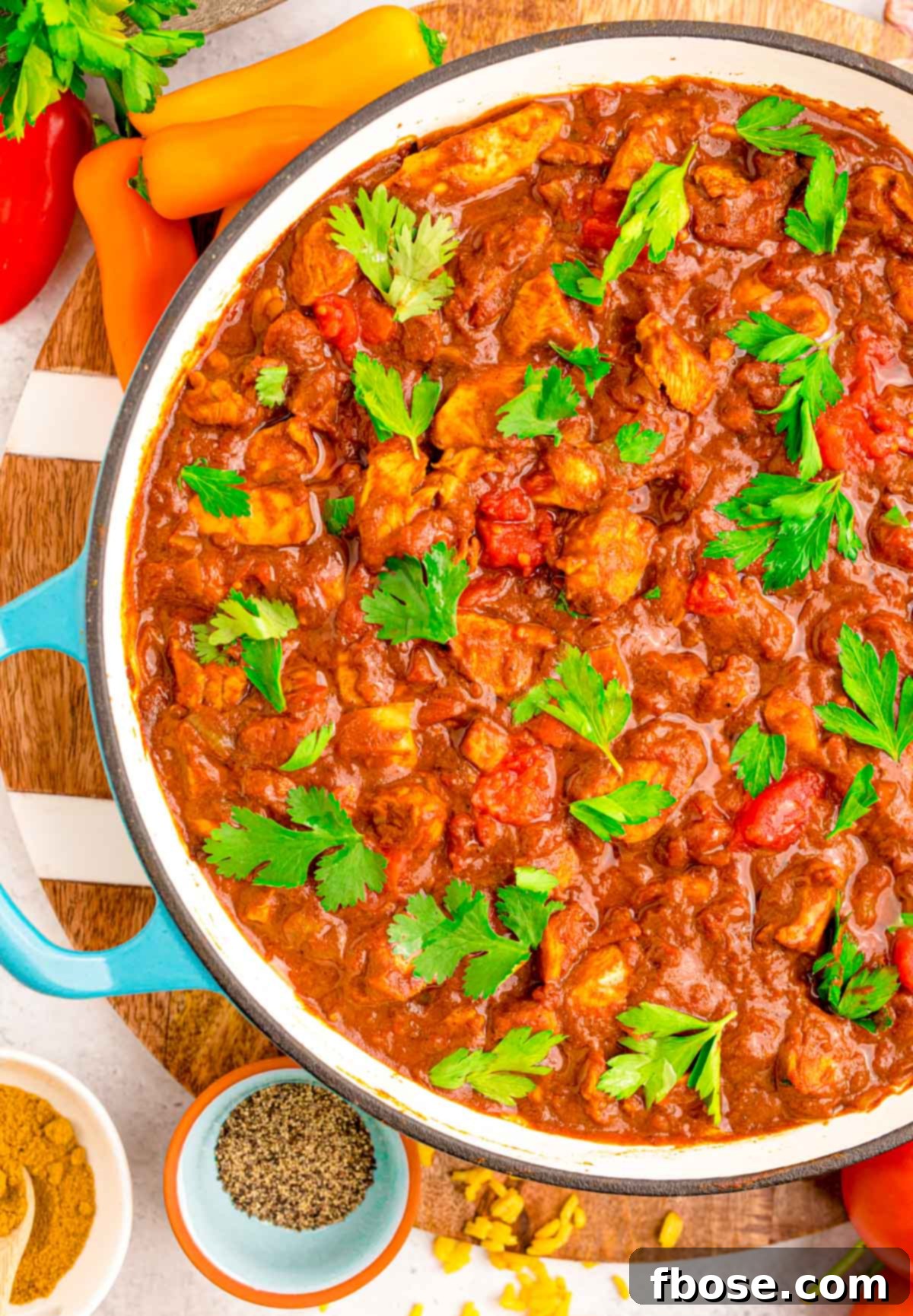
This Madras Curry offers a fantastic way to transform ordinary chicken breasts into a mouthwatering, flavor-packed meal. If you have extra chicken on hand, here are more delicious recipes to explore:
- Bourbon Chicken: A “Better Than Takeout” recipe featuring tender chicken chunks smothered in a sweet and savory homemade bourbon sauce – incredibly addictive!
- Creamy Tuscan Chicken: A truly family-friendly meal that’s both elegant and on the table in just 30 minutes, featuring sun-dried tomatoes and spinach in a luscious cream sauce.
- Ranch Chicken and Rice Casserole: An incredibly easy one-dish meal that requires only 6 ingredients, perfect for a comforting weeknight dinner.
Madras Curry Recipe Card
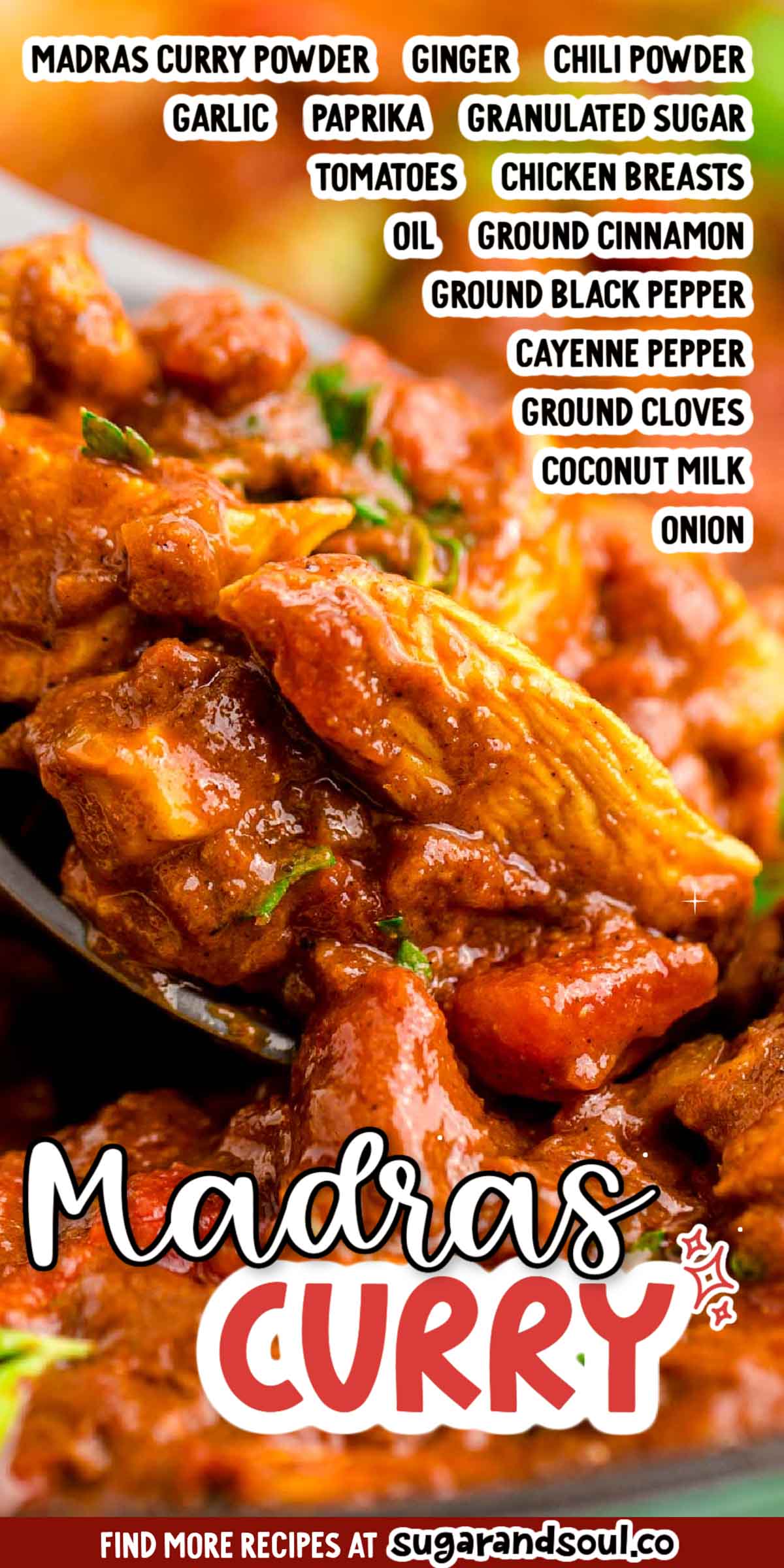
Madras Curry
Rebecca Hubbell
Dinner
Indian
10 minutes
45 minutes
55 minutes
4 people
Equipment
- Dutch Oven
- Measuring spoons
- Garlic press
- Can opener
Ingredients
- 2 Tablespoons oil
- 1 medium onion, diced
- 4 cloves garlic, pressed or minced
- 1 tablespoon Madras curry powder
- 1 tablespoon granulated sugar
- ½ teaspoon ground ginger
- ½ teaspoon chili powder
- ½ teaspoon sweet smoked paprika
- ½ teaspoon ground black pepper
- ½ teaspoon ground cinnamon
- ¼ teaspoon ground cloves
- ¼ teaspoon cayenne pepper
- 1 (28 oz.) can diced tomatoes (don’t drain)
- 1 (14 oz.) can coconut milk
- 4 chicken breasts, cut into chunks
Instructions
- Heat 2 Tablespoons oil in a Dutch oven on low heat. Add 1 medium onion (diced) and cook for 5 minutes until translucent.
- Add 4 cloves garlic (pressed or minced), 1 tablespoon granulated sugar, and the spices (1 tablespoon Madras curry powder, ½ teaspoon ground ginger, ½ teaspoon chili powder, ½ teaspoon sweet smoked paprika, ½ teaspoon ground black pepper, ½ teaspoon ground cinnamon, ¼ teaspoon ground cloves, ¼ teaspoon cayenne pepper) and cook for another 5 minutes, stirring frequently to prevent the garlic from burning. If this mixture becomes dry as you are combining, you can add a bit more oil. Allow this to simmer and bubble for a minute while occasionally stirring.
- Increase to medium heat and add 1 (28 oz.) can diced tomatoes (undrained) and 1 (14 oz.) can coconut milk to the pan and stir until combined.
- Allow this to simmer for 15 minutes so that the liquid thickens quite a bit.
- Add 4 chicken breasts (cut into chunks) and stir to coat them. Cover the pan and cook for 10 minutes. Then remove the cover and cook for another 10 minutes, or until the chicken is cooked through.
Notes
- Storage: Store any leftovers in the refrigerator in an airtight container for up to 4 days. For longer storage, freeze in an airtight container for up to 3 months.
- Madras Curry vs. Chicken Tikka Masala: While both are popular Indian curries, Madras is spicier and often more tangy, featuring a distinct chili-based blend. Tikka Masala is typically creamier, milder, and aromatic, using spices like turmeric, coriander, cumin, cardamom, and garam masala.
- Adjusting Spice: To decrease heat, reduce Madras curry powder and cayenne pepper. You can also substitute Madras curry powder with regular curry powder, omit cayenne, and add an extra tablespoon of sugar or half a can of tomato paste.
- Sweet Smoked Paprika Substitute: Use regular paprika or omit it entirely if unavailable.
- Toasting Spices: While you can add spices with liquids, toasting them first in oil significantly enhances their flavor and aroma, contributing to a richer curry. It is highly recommended not to skip this step.
Nutrition
Did You Make This Recipe?
Don’t forget to share it with me on Instagram @sugarandsoulco and follow on Tiktok @sugarandsoulco and Pinterest @sugarandsoulco for more!
Pin Recipe
Share Recipe
If you’ve tried this recipe, please let me know how you liked it in the comments below and leave a review. I love hearing from you!
Don’t forget to tag me – @sugarandsoulco – on Instagram and Pinterest with your photos or join our Sugar & Soul Show-offs Community and share them there, where you can join our recipe challenges!