
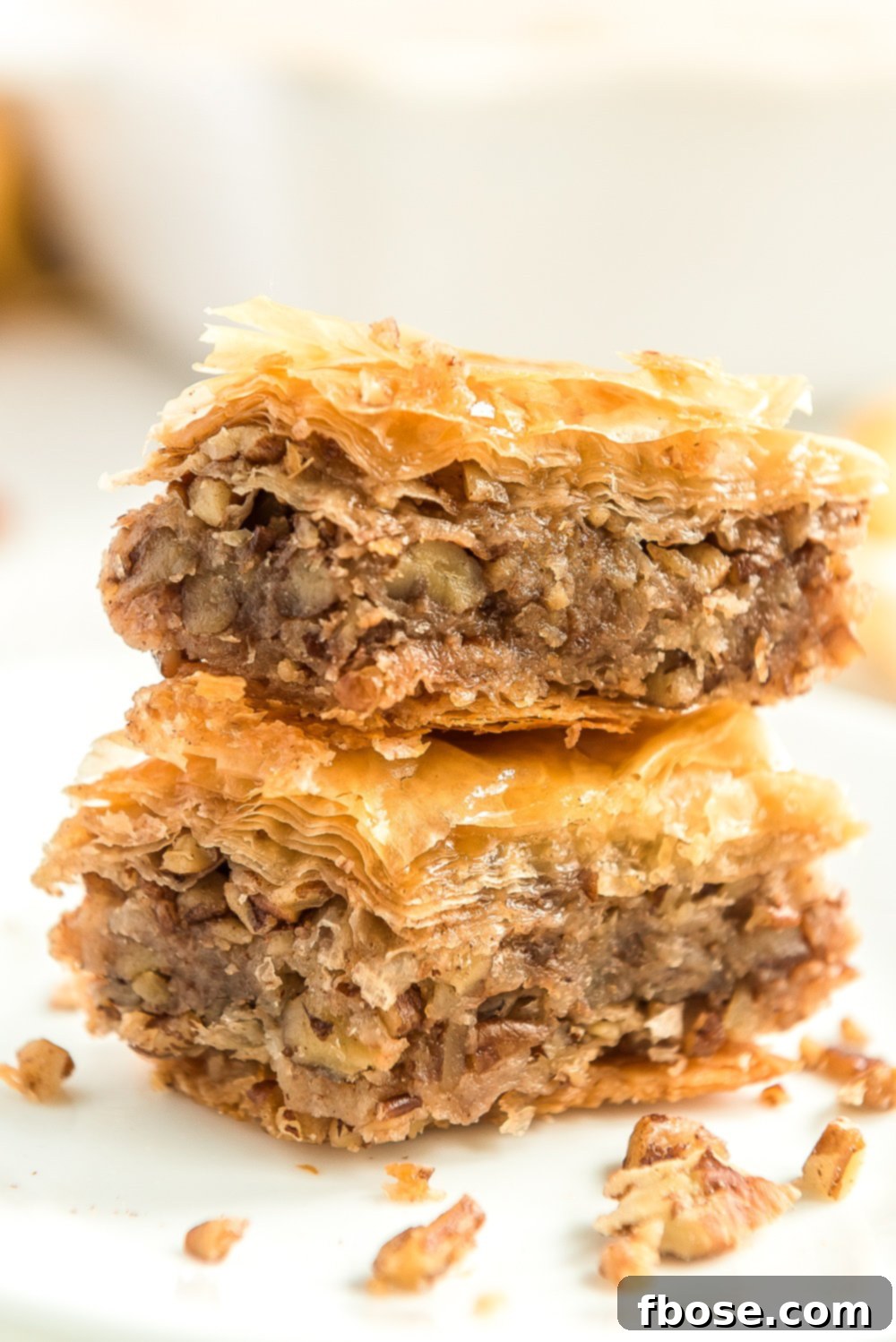
This simple yet classic **Baklava recipe** offers an irresistible symphony of flavors and textures, featuring delicate layers of crisp phyllo dough, a rich blend of cinnamon and chopped nuts, all generously drenched in a fragrant honey syrup. A truly enchanting dessert, Baklava promises to captivate every palate with its sweet, sticky, and utterly satisfying indulgence.
Baklava is an exceptional dessert for any occasion, especially holidays. Its rich, sweet profile makes it a festive addition to gatherings, perfect for sharing with loved ones. Beyond serving it fresh, consider adding pieces of this delightful pastry to a homemade treat tin alongside other festive favorites like **Snowball Cookies** and **Gingerbread Pecans**. This not only makes for a thoughtful gift but also introduces friends and family to the magic of homemade Baklava.
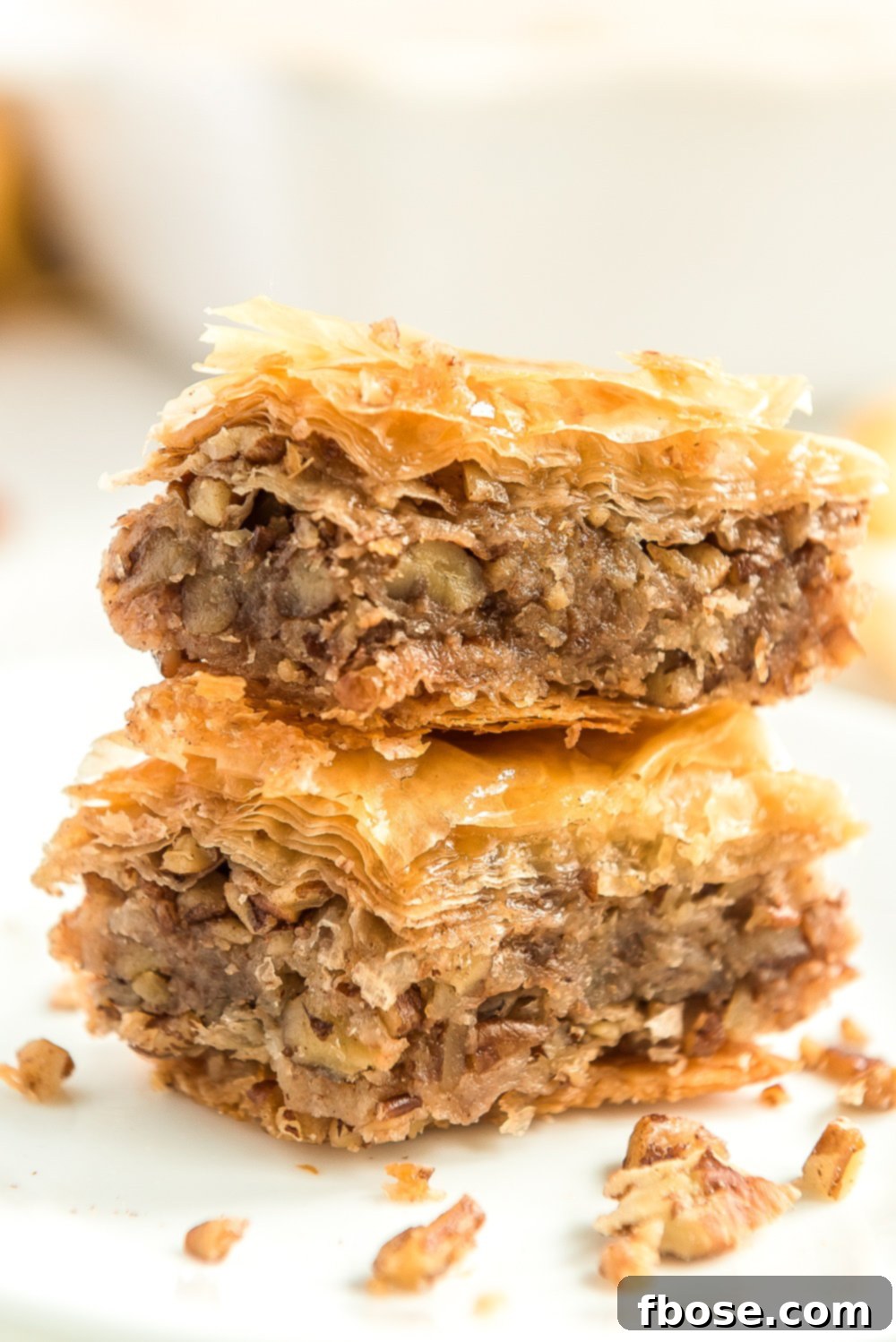
Experience the Dreamy Delight of Homemade Baklava
There’s a palpable excitement that comes with preparing Baklava from scratch. This isn’t just any dessert; it’s Baklava – a culinary masterpiece that evokes warmth, tradition, and pure bliss. For many, the mere mention of its name conjures images of sweet, flaky perfection, and embarking on the journey to create it at home is a rewarding experience.
My first encounter with Baklava remains a vivid memory, nearly two decades ago when I was just a child. My mother and I had stopped at a local pizza shop, and there, on the counter, sat an unusual pastry. It was glistening, layered, and looked incredibly sticky – precisely the kind of treat that promises pure decadence. My mom, seeing my fascination, identified it as Baklava and, to my absolute delight, bought me a piece. This was a significant moment; growing up, such indulgent treats were rare luxuries, making that $3 piece of Baklava feel like a treasure beyond measure. The unforgettable taste and the gesture of love cemented Baklava in my heart as more than just a dessert.
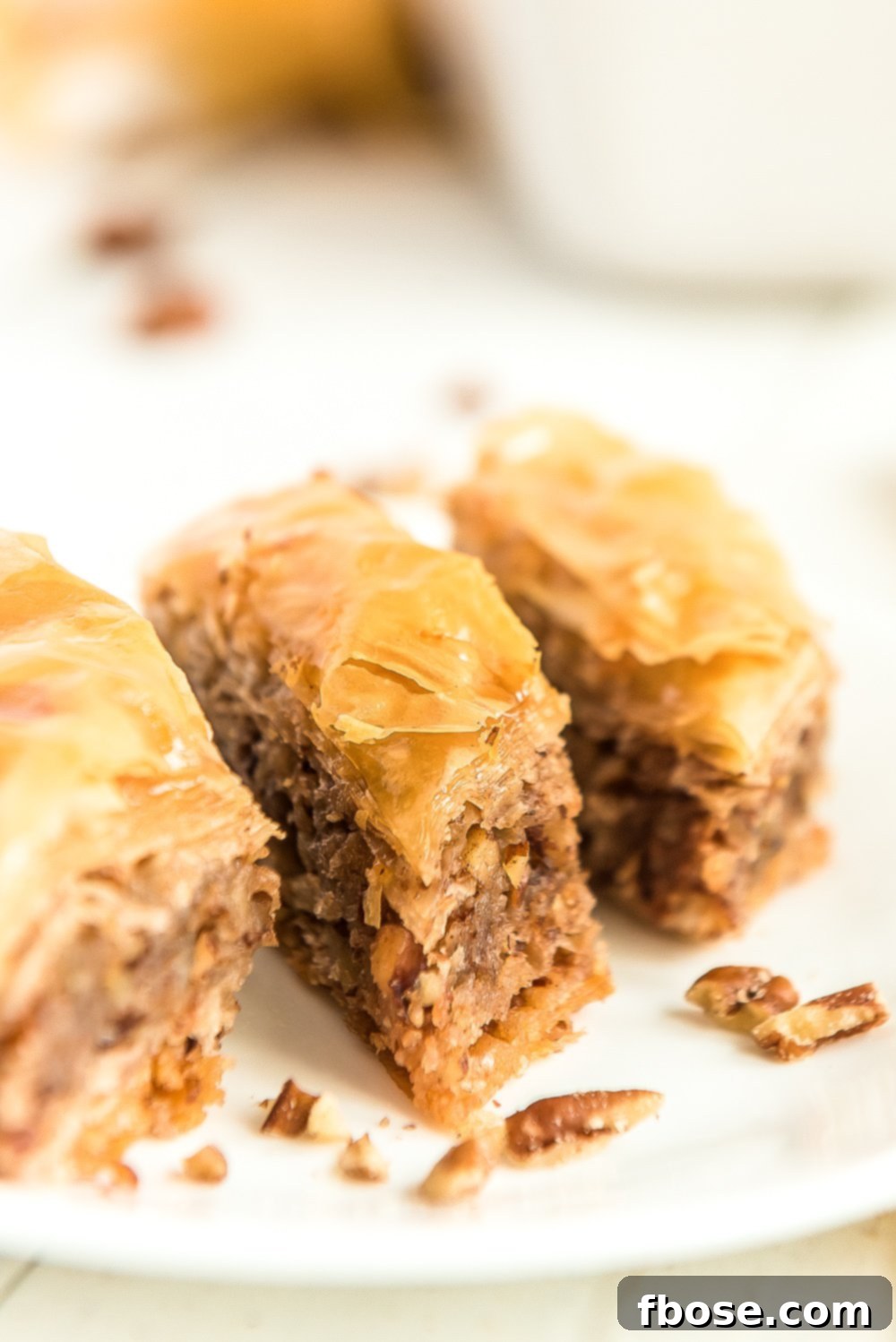
Recently, while immersed in a book that painted a vivid picture of Istanbul’s bustling streets, Baklava was mentioned, sparking a sudden realization: it had been years since I last tasted this magnificent pastry. This oversight simply had to be rectified immediately! So, I eagerly headed to the kitchen, determined to recreate that cherished memory. It’s truly fascinating how a narrative set on the other side of the world can rekindle such a dear childhood memory from central Maine, while simultaneously igniting an irresistible urge to board the next flight to Turkey. This is the profound beauty of reading – it allows you to traverse continents and time, all without ever leaving the comfort of your home.
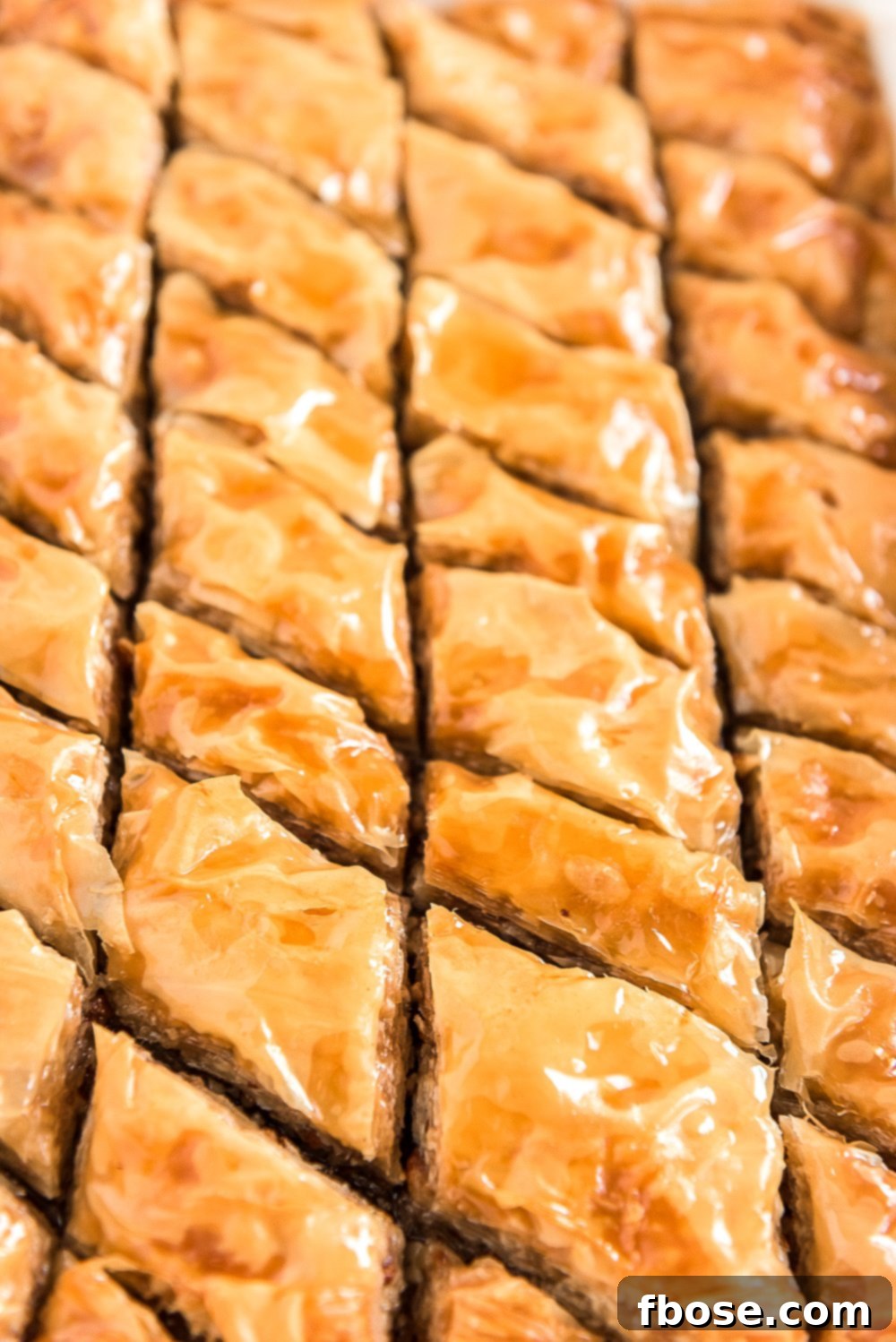
What Exactly is Baklava? Unpacking this Iconic Dessert
Baklava is far more than just a sweet treat; it’s a rich, intricately layered dessert pastry beloved across many cultures. At its heart, Baklava is characterized by dozens of whisper-thin sheets of phyllo dough, generously brushed with melted butter and layered with finely chopped nuts, typically walnuts or pistachios, often spiced with cinnamon. Once baked to a golden, crispy perfection, the pastry is drenched in a fragrant, sweet syrup, usually made with honey, sugar, and water, sometimes infused with citrus or rosewater. The syrup soaks into the warm layers, transforming the crunchy phyllo into a sticky, tender, and intensely flavorful confection.
The Ancient Roots of Baklava: Where Did This Delicacy Begin?
The exact origins of Baklava are a subject of historical debate, shrouded in the mists of ancient culinary traditions. While no single definitive answer exists, the earliest forms of Baklava are widely believed to have emerged within the vast **Ottoman Empire**, with recipes dating back to the 2nd century BCE. The city of Gaziantep in Turkey is particularly renowned for its Baklava, holding a Protected Designation of Origin status for its specific variety. However, Greece also has a strong historical claim to the dessert, with many citing ancient Greek honey cakes and layered pastries as precursors. The debate between Greek and Turkish culinary historians continues, each culture having refined and made Baklava their own with unique variations in nuts, spices, and syrup flavorings. What is clear is that this magnificent pastry has transcended borders, becoming a cherished part of dessert traditions throughout the Middle East, the Balkans, and beyond.
Why This Easy Baklava Recipe Will Become Your Go-To
There’s so much to adore about Baklava, but what truly captivates is its extraordinary interplay of textures and intense flavors. Imagine a dessert that’s simultaneously crunchy and gooey, bursting with the warm spice of cinnamon and the nutty richness of pecans, all harmoniously bound by a luscious, sweet honey syrup. This recipe delivers exactly that, making it a truly delicious experience. Beyond the obvious delight, you’ll be thrilled to discover that this sticky, complex-looking dessert is surprisingly straightforward to prepare at home. While it does require a bit of patience due to the numerous thin layers of phyllo dough, the process is incredibly rewarding. Each step builds anticipation, leading to a stunning final product that tastes like it came from a gourmet bakery. The effort is absolutely worth it for the incredible homemade result you’ll achieve.
Essential Ingredients for Homemade Baklava
Crafting exquisite Baklava requires a few key components that contribute to its signature taste and texture:
- **Phyllo Dough:** The foundation of Baklava, these paper-thin pastry sheets are responsible for its iconic crispiness and delicate layers.
- **Honey:** A crucial ingredient for the syrup, providing natural sweetness and a unique floral aroma that perfectly complements the nuts.
- **Pecans:** While various nuts can be used, pecans offer a buttery, rich flavor and a satisfying crunch in this particular recipe.
- **Cinnamon:** This warm spice elevates the nut filling, adding depth and a classic aromatic touch.
- **Butter:** Melted butter is brushed between each phyllo layer, creating the characteristic flakiness and rich flavor.
- **Water:** Used as a base for the sweet syrup, ensuring proper consistency and saturation.
- **Sugar:** Balances the sweetness of the honey in the syrup and aids in its syrupy texture.
- **Vanilla Extract:** A touch of vanilla in the syrup adds a comforting, aromatic note that enhances the overall flavor profile.
Choosing the Perfect Nuts for Your Baklava
The choice of nuts is pivotal to the character of your Baklava. While regional preferences vary, several options consistently deliver excellent results. **Pistachios** are perhaps the most popular worldwide, offering a vibrant green hue and a distinct, slightly sweet flavor. **Walnuts** are another traditional favorite, known for their earthy, robust taste. **Almonds** provide a milder, sweeter note and a delightful crunch. My personal preference for this recipe, however, leans towards **pecans**. Their buttery texture and subtly sweet, nutty flavor pair beautifully with the cinnamon and honey syrup, creating a Baklava that is both familiar and exquisitely satisfying.
Phyllo vs. Puff Pastry: Can I Substitute for Baklava?
The simple answer is no; you cannot use puff pastry as a substitute for phyllo dough in Baklava. While both are pastry doughs, their compositions and resulting textures are fundamentally different. Baklava’s iconic delicate crispiness and multitude of thin layers are entirely dependent on phyllo dough. Phyllo, a nearly translucent, unleavened dough made from flour, water, and a small amount of oil, bakes into distinct, paper-thin, super-crispy sheets. Puff pastry, on the other hand, is a laminated dough containing many layers of butter folded into the dough, which causes it to “puff” significantly when baked, resulting in a much thicker, airier, and chewier texture. Using puff pastry would yield a completely different dessert that lacks the characteristic flakiness and crisp elegance essential to traditional Baklava.
This was my first ever baklava. I brought it in to work and also gifted it some to family and friends. They raved about it. Couldn’t believe that it was homemade and not from a bakery, one co worker said it was best baklava he has ever had! I still need to master working with phyllo dough but hands down I will now be adding this to my Christmas and Easter baking every year. Thank you!!!
Christy
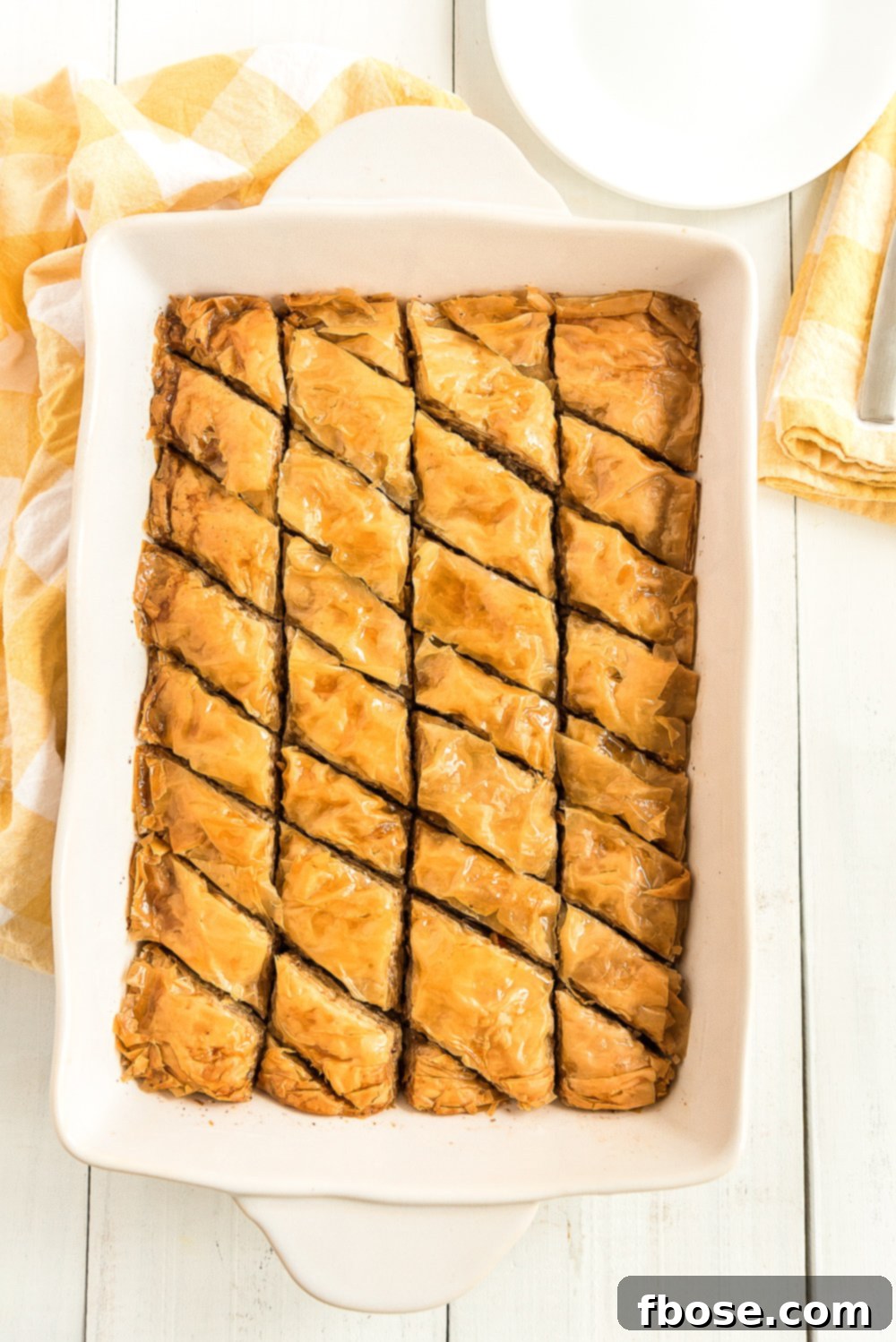
How to Make Baklava: A Step-by-Step Guide to Flaky Perfection
Despite its impressive appearance, creating a beautiful Baklava with all its flaky layers is surprisingly achievable right in your own kitchen. Follow these steps for a homemade dessert that will impress everyone:
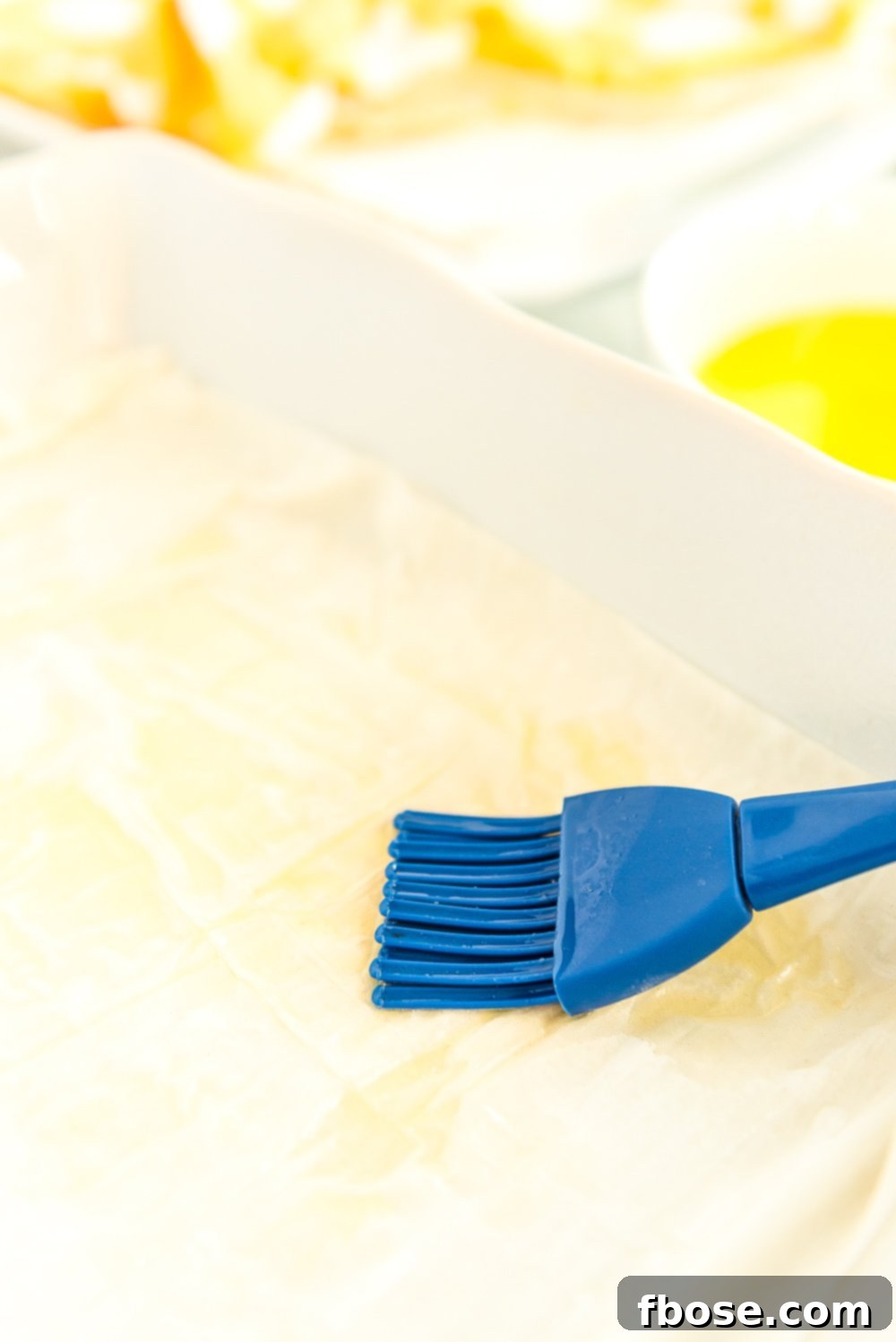
Step 1: Prepare Your Phyllo Base. Begin by preheating your oven to 350°F (175°C). Take a 9×13-inch baking dish and melt a generous amount of butter. Using a **pastry brush**, thoroughly butter the bottom and sides of the pan. Carefully unroll your phyllo dough (ensure it’s thawed and handled gently). Place two sheets of phyllo dough into the buttered pan, aligning them with the pan’s length. Gently brush the entire surface of these two sheets with melted butter. Repeat this layering and buttering process three more times, using two sheets each time, until you have a total of eight buttered phyllo layers forming your base.
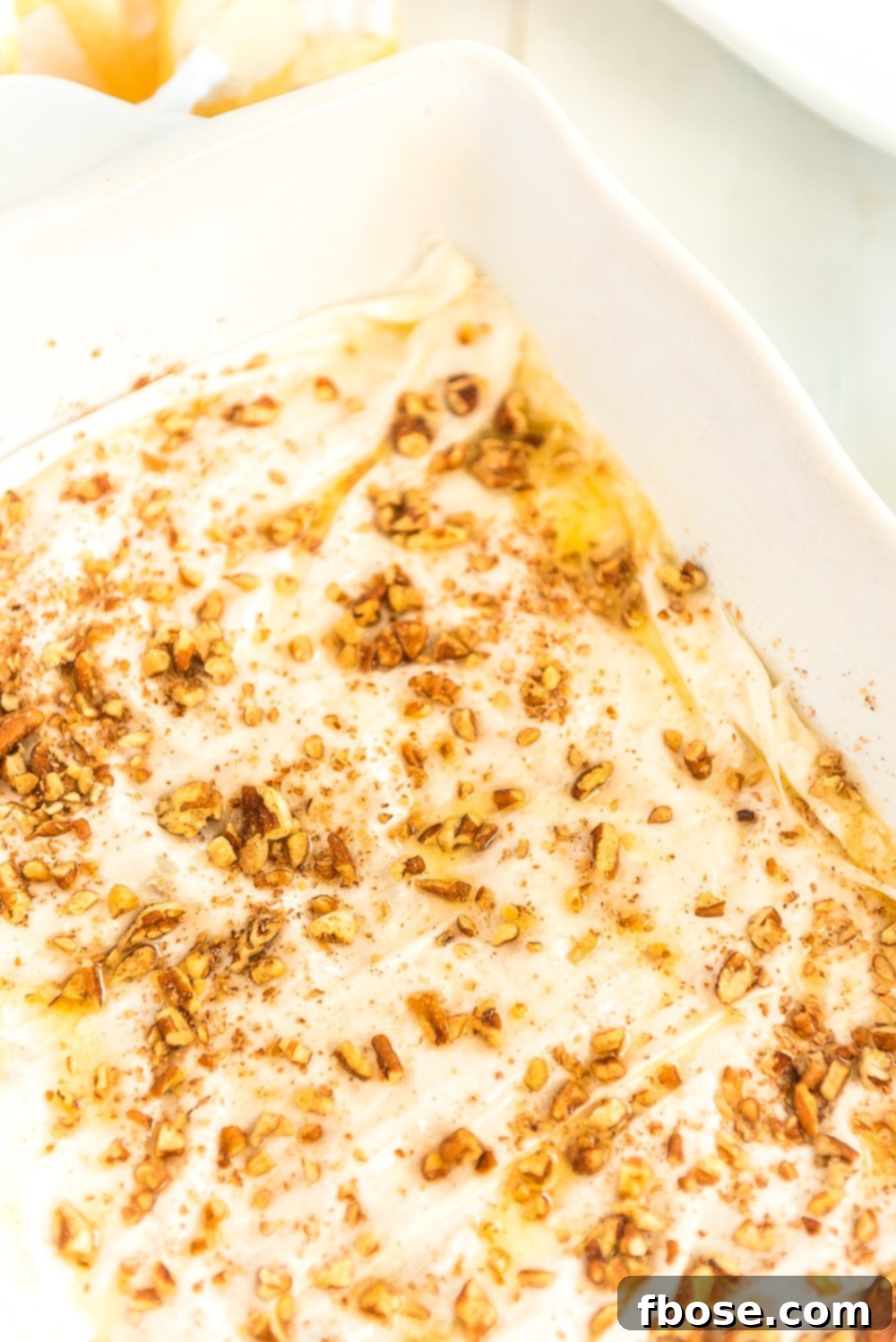
Step 2: Layer the Nutty Filling. In a separate bowl, combine your finely chopped nuts (pecans, walnuts, or pistachios) with the ground cinnamon, mixing them well. Once your base of eight phyllo layers is complete, evenly sprinkle a few tablespoons of this fragrant nut mixture over the top of the buttered dough. Now, continue the layering process: add another two sheets of phyllo, brush them generously with melted butter, and then sprinkle with more of the nut mixture. Repeat these dough, butter, and nut layers until you’ve used most of your phyllo dough, leaving only about eight sheets for the top. Finish with the remaining eight sheets, layering them two at a time and brushing each set with butter, ensuring the top is well-buttered for a beautiful golden crust.
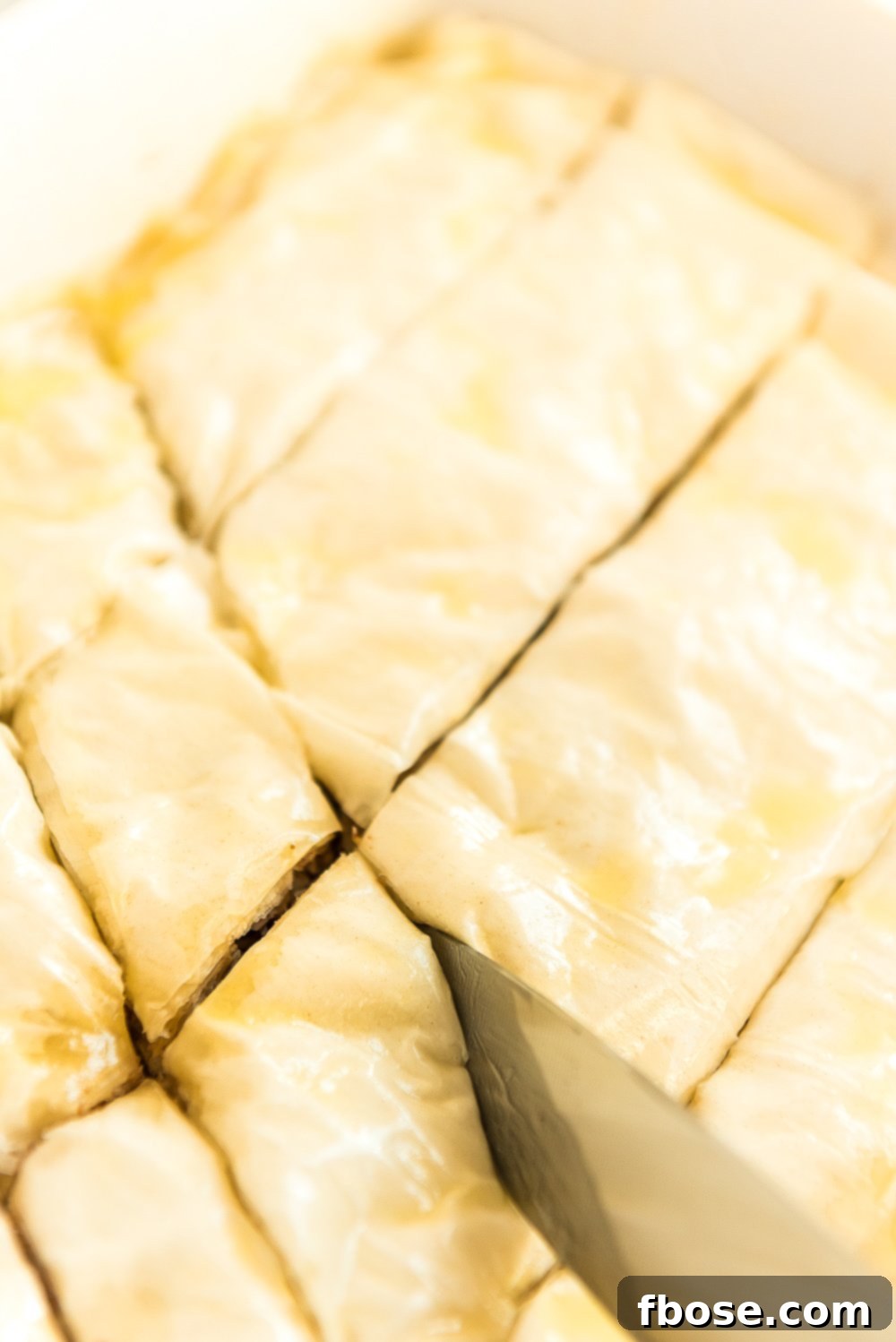
Step 3: Score and Bake to Golden Perfection. Before baking, it’s crucial to cut the Baklava. Using a very large and sharp knife, carefully score the Baklava into desired shapes. Traditionally, it’s cut lengthwise into long strips, then diagonally across to create elegant diamond shapes. Alternatively, you can opt for simple squares. This scoring before baking helps the syrup penetrate evenly and makes serving much easier later. Bake the Baklava in your preheated oven for approximately 45 to 50 minutes, or until the top layers achieve a rich golden-brown hue and a satisfying crispness.
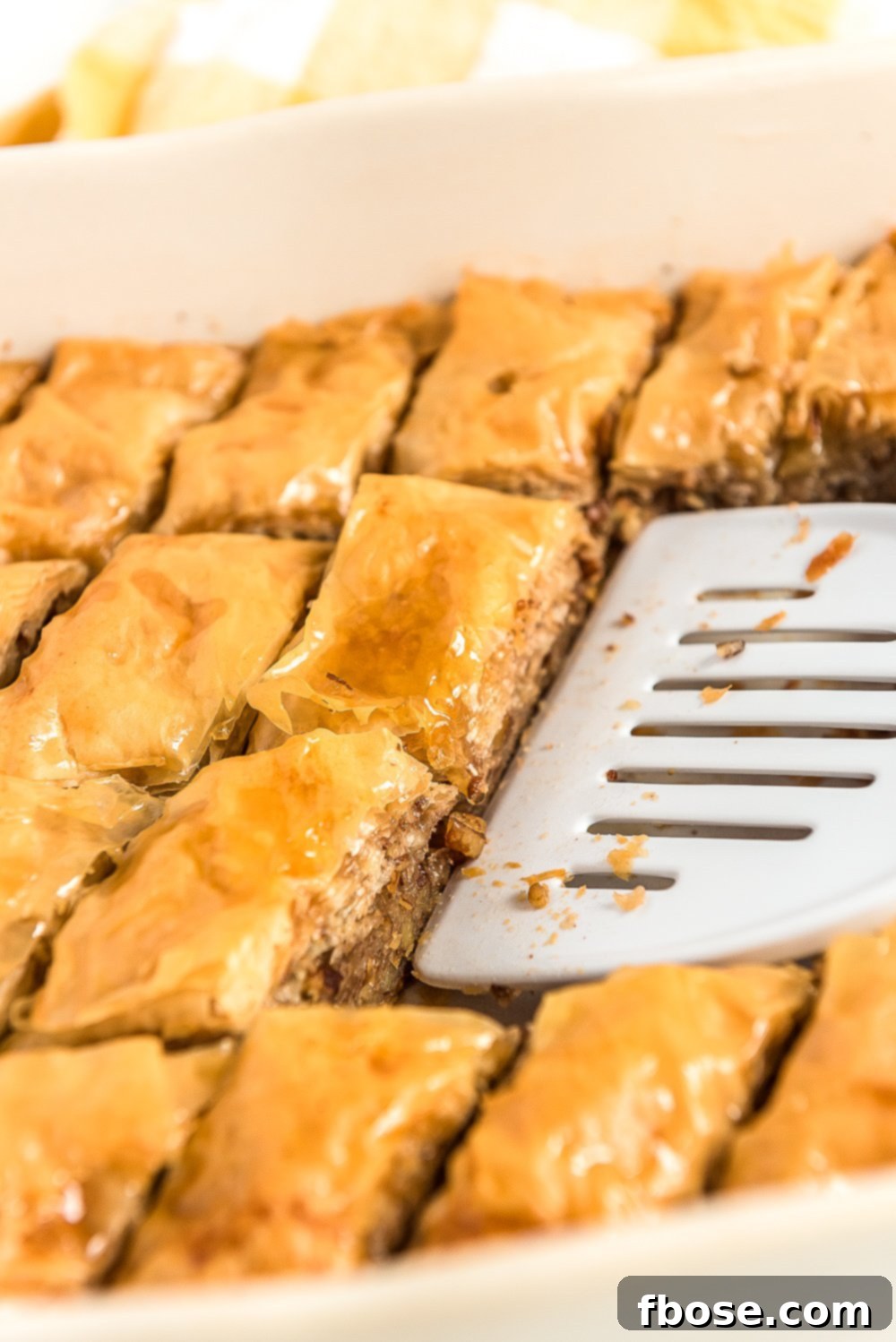
Step 4: Prepare and Drench with Honey Syrup. While your Baklava is baking during its last 30 minutes, it’s time to prepare the crucial honey syrup. In a small saucepan, combine the water and granulated sugar. Bring this mixture to a boil over medium-high heat, stirring until the sugar completely dissolves. Reduce the heat and stir in the honey and vanilla extract. Let the syrup gently simmer for about 20 minutes, stirring occasionally, until it slightly thickens. Once the Baklava is removed from the oven, immediately and evenly pour the hot syrup over the entire hot pastry in the baking pan. The sizzling sound confirms the magic is happening! Allow the Baklava to cool completely at room temperature, which can take several hours, to allow the syrup to fully absorb and set.
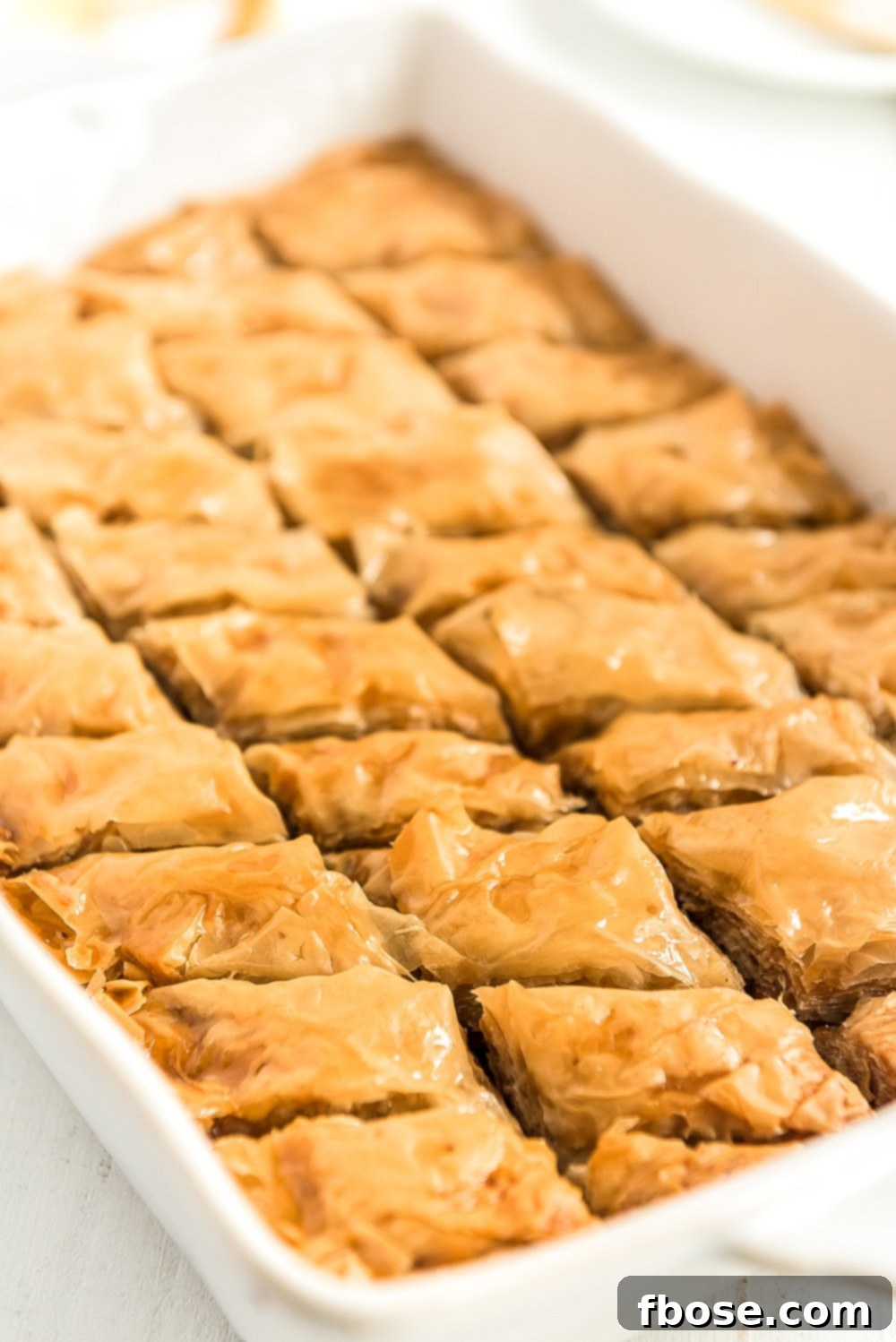
Once your Baklava has cooled thoroughly, it will have reached its perfect, sticky, flaky, and sweet state, ready to be enjoyed! Slice along the pre-cut lines and serve. The waiting is the hardest part, but it ensures every bite is pure perfection.
Expert Tips for the Best Traditional Baklava
- **Keep your phyllo dough covered:** Phyllo dough dries out incredibly quickly when exposed to air, becoming brittle and difficult to work with. To prevent this, always keep your stack of phyllo sheets loosely covered with plastic wrap and a damp (not wet) kitchen towel while you’re working with individual sheets. This ensures the dough remains pliable and easy to handle, contributing to a tender, not chewy, Baklava.
- **Choose your favorite nuts:** The beauty of Baklava lies in its versatility. While traditional recipes often call for pistachios or walnuts, feel free to use the nut you enjoy most. Almonds and pecans are also fantastic choices. The key is to finely chop them for an even distribution and pleasant texture throughout the layers.
- **Have your syrup ready:** The syrup must be poured over the Baklava immediately after it comes out of the oven. The hot pastry readily absorbs the warm syrup, allowing it to penetrate every flaky layer and create that signature sticky sweetness. Prepare your syrup while the Baklava bakes, ensuring it’s ready and slightly warm or at room temperature when the pastry finishes baking.
- **Store at room temperature:** For optimal texture and flavor, Baklava is best stored at room temperature in an airtight container. Refrigerating it can cause the delicate phyllo layers to lose their crispness and become soggy, diminishing the overall experience.
- **Use a pastry brush for even coverage:** A good quality pastry brush is indispensable for Baklava. It allows you to evenly coat each thin sheet of phyllo dough with melted butter, which is crucial for achieving distinct, flaky layers and a rich flavor throughout the dessert. Don’t skimp on the butter!
Storing Your Homemade Baklava for Lasting Freshness
One of the many wonderful qualities of Baklava is its excellent shelf life, making it an ideal make-ahead treat, especially for holidays or special events. When stored correctly, homemade Baklava can remain fresh and delicious for up to two weeks. To preserve its signature flaky texture and rich flavor, always store your Baklava in an airtight container at room temperature. It’s important to avoid refrigerating Baklava, as the cold environment can cause the delicate phyllo dough to absorb moisture, leading to a softer, less desirable texture. Enjoy your labor of love for days to come!
Frequently Asked Questions About Easy Baklava
No, phyllo dough and puff pastry are distinctly different, though both are pastry doughs. Phyllo (also known as filo) dough is incredibly thin, almost transparent, and made from flour, water, vinegar, and a touch of oil. It’s typically used in multiple layers, brushed with butter or oil, to create light, crispy, and flaky baked goods. Puff pastry, conversely, is a thicker, laminated dough, meaning butter is repeatedly folded into the dough. When baked, the butter creates steam, causing the pastry to puff up significantly, resulting in a rich, airy, and slightly chewy texture. Their unique compositions are why they are not interchangeable in recipes like Baklava.
While both Greek and Turkish Baklava are beloved variations of this layered pastry, they have key distinguishing features. Greek Baklava most commonly uses walnuts as its primary nut filling and often incorporates warm spices like cinnamon and cloves. Its syrup is typically honey-based, sometimes with the addition of lemon zest. Turkish Baklava, on the other hand, almost exclusively uses pistachios for its filling and generally omits the strong spices, allowing the pure pistachio flavor to shine. The syrup in Turkish Baklava is usually a simple sugar and water syrup, sometimes flavored with a hint of citrus or rose water. There are also other regional variations, such as Lebanese Baklava, which frequently features a simple syrup infused with rose or orange blossom water. It’s important to remember that these are general preferences, and variations can be found within each region.
Achieving crispy Baklava relies on a few critical techniques. First, ensure you are generously applying melted butter (or clarified butter/ghee for extra crispiness) between every two sheets of phyllo dough. This butter creates separation, allowing each layer to crisp up individually. Second, prevent your phyllo dough from drying out while you work, as dry phyllo can become brittle and chewy rather than flaky. Keep unused sheets covered with a damp cloth. Lastly, don’t underbake your Baklava! It needs sufficient time in the oven for the phyllo to turn deeply golden brown and develop its characteristic crunch. Proper cutting before baking also helps the heat circulate and syrup absorb evenly, contributing to crispness.
Baklava is traditionally best enjoyed at room temperature. While it can be tempting to eat it warm straight from the oven, allowing it to cool completely (ideally for several hours or overnight) is crucial. This cooling period gives the hot syrup ample time to fully absorb into all the phyllo layers, allowing the flavors to meld and the pastry to set into its perfect sticky-yet-flaky texture. When served at room temperature, the distinct layers are more pronounced, and the sweetness is perfectly balanced.
Globally, **Pistachio Baklava** is undeniably the most popular and recognizable flavor. Its vibrant green nuts, subtle sweetness, and distinct aroma make it a favorite across many cultures. However, the definition of “most popular” can vary regionally. For instance, in some parts of Greece, walnut Baklava is more common. But if you’re looking for a crowd-pleaser or a classic representation of Baklava, pistachio is often the top choice. Rest assured, this recipe is adaptable, and you can easily substitute pistachios for the pecans or walnuts if you prefer that flavor profile!
More Delightful Recipes Made With Honey
- Honey Cakes
- Honey Ginger Chicken Sheet Pan Chicken
- Sopapilla Cheesecake
- Honey Whiskey Pulled Pork
Let’s Connect! Share Your Baklava Creations!
If you’ve tried this **Traditional Baklava recipe**, we’d absolutely love to hear about your experience! Please take a moment to leave a comment below and share your thoughts. Your reviews and feedback are incredibly valuable and help our community of bakers!
Don’t forget to capture your delicious creations! Tag us – @sugarandsoulco – on Instagram and Pinterest with your photos. Even better, join our vibrant Sugar & Soul Show-offs Community on Facebook, where you can share your culinary triumphs and participate in our exciting recipe challenges! We can’t wait to see your Baklava masterpieces.
(Video for this recipe would typically be embedded here)
Traditional Baklava Recipe
This easy and Classic Baklava recipe is loaded with layers of cinnamon, nuts, and butter and saturated in a simple honey syrup! Everyone will love this sweet and sticky dessert!
Ingredients
Instructions
-
Preheat the oven to 350°F (175°C).
-
Add the chopped nuts and cinnamon to a medium bowl and mix them together thoroughly. Set this mixture aside.
-
Carefully unroll both packages (or tubes) of phyllo dough onto a clean, flat surface. To prevent the delicate dough from drying out and becoming brittle, cover it loosely with plastic wrap, followed by a lightly damp (not wet) dishcloth.
-
Melt the butter in the microwave, using 30-second intervals until fully melted. Using a pastry brush, generously butter the bottom and sides of a 9×13-inch baking pan. Align the phyllo dough with the length of the pan, trimming any excess at the ends (usually about an inch).
-
Place two sheets of phyllo dough into the buttered pan. Using the pastry brush, thoroughly brush melted butter over the entire surface of these two sheets. Repeat this process three more times, adding two sheets of phyllo and brushing with butter, until you have a total of 8 layered sheets for your base.
-
Evenly sprinkle 2 to 3 tablespoons of the prepared nut mixture over the top of the buttered 8th phyllo sheet.
-
Continue layering: lay another two sheets of phyllo on top, brush generously with butter, and then sprinkle with more nuts. Repeat this pattern of two dough sheets, butter, and nuts until you have just 8 sheets of phyllo dough remaining. For the final layers, add these remaining 8 sheets two at a time, brushing only with butter (no more nuts), ensuring the very top layer is well-buttered.
-
Before baking, use a very large and sharp knife to carefully cut the Baklava. First, make 4 rows down the length of the pan. Then, cut diagonally across the pan to create traditional diamond shapes. Alternatively, you can simply cut it into squares. This scoring will help the syrup penetrate evenly.
-
Bake the Baklava in the preheated oven for 45 to 50 minutes, or until the top layers are beautifully golden brown and crisp.
-
While the Baklava is baking (specifically with about 30 minutes remaining on the timer), begin preparing the honey syrup. In a small pot, combine the water and granulated sugar. Bring this mixture to a boil over medium-high heat, stirring until all the sugar has completely dissolved.
-
Reduce the heat to low, then add the vanilla extract and honey to the pot. Allow the syrup to gently simmer for 20 minutes, stirring occasionally, until it reaches a slightly thickened consistency.
-
Immediately remove the baked Baklava from the oven. Without delay, pour the hot honey syrup evenly over the entire hot Baklava in the baking pan. You’ll hear a satisfying sizzle as the syrup begins to absorb. Allow the Baklava to cool completely at room temperature before serving. This cooling time is essential for the syrup to fully permeate the layers and for the Baklava to set perfectly.
Video
(Recipe video for Baklava would be displayed here.)
Notes
- This recipe is adapted from All My Recipes.
- I typically use Athens brand phyllo dough, which comes with 36 sheets per box. Other brands may have varying numbers of sheets for the same weight due to differences in thickness. If your brand has fewer sheets, you may need to adjust the nut layering. Consider starting the nut additions with the 6th sheet and adding approximately 1/4 cup of nuts every two sheets thereafter.
- Baklava freezes exceptionally well. To freeze, wrap cooled Baklava tightly in plastic wrap, then aluminum foil, and store in a freezer-safe container for up to 2-3 months. Thaw at room temperature before serving.
- While pecans are recommended here, finely chopped pistachios or walnuts are also excellent alternatives and can be used interchangeably based on your preference.
Nutrition
Carbohydrates: 11g |
Protein: 1g |
Fat: 14g |
Saturated Fat: 4g |
Cholesterol: 14mg |
Sodium: 1mg |
Potassium: 55mg |
Fiber: 1g |
Sugar: 9g |
Vitamin A: 170IU |
Vitamin C: 0.2mg |
Calcium: 11mg |
Iron: 0.3mg
Did You Make This Recipe?
Don’t forget to share it with me on Instagram @sugarandsoulco and follow on Tiktok @sugarandsoulco and Pinterest @sugarandsoulco for more!
Pin Recipe
Share Recipe