
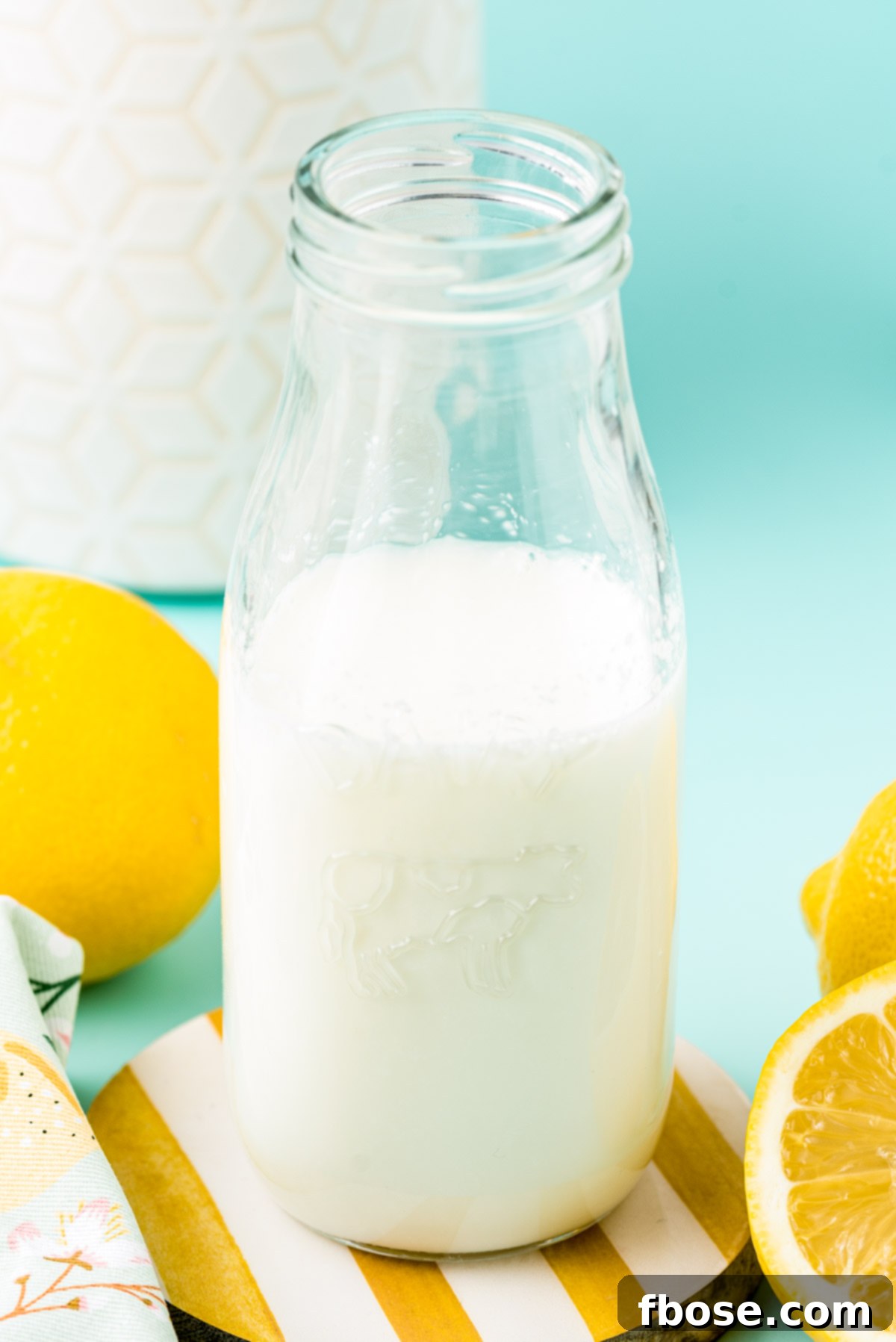
How to Make Buttermilk Substitute is an incredibly easy and quick way to create a homemade alternative right in your kitchen using just two simple ingredients! This guide will empower you to tackle any recipe calling for buttermilk, even when you don’t have the real thing on hand.
Buttermilk is a star ingredient in many beloved recipes, celebrated for its unique ability to add moisture, tenderness, and a delightful tang. Imagine crafting a perfectly moist Buttermilk Chocolate Cake or baking a batch of the fluffiest Best Homemade Buttermilk Pancakes, all without a last-minute dash to the grocery store. This simple substitute makes it all possible, transforming common pantry staples into a versatile ingredient you’ll rely on time and again.
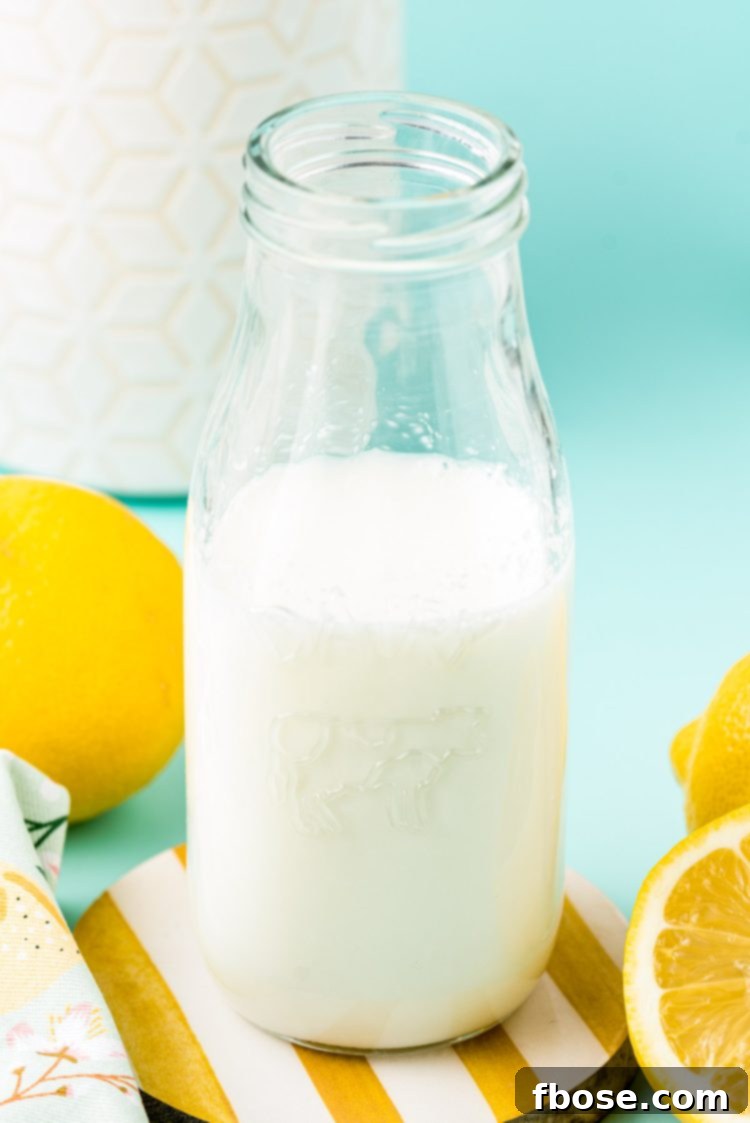
There’s nothing quite as frustrating as embarking on a new recipe, only to discover you’re missing a crucial ingredient like buttermilk. It’s a common scenario that often leads to abandoning your culinary plans. However, this homemade buttermilk substitute is your secret weapon, allowing you to bypass the need for a store-bought carton and continue cooking without interruption. This quick and effortless solution ensures you’re always prepared, turning potential kitchen disappointments into successful baking endeavors.
While this substitute excels in most baking applications, it’s important to note that for recipes where buttermilk’s distinct flavor is a primary component, such as crispy fried chicken like my Air Fryer Nashville Hot Chicken or refreshing drinks like a Blackberry Buttermilk Panna Cotta, using authentic buttermilk is recommended for the best flavor profile. The substitute is designed to replicate the acidity and texture-enhancing properties, making it ideal for cakes, muffins, and quick breads where its leavening and moistening qualities shine.
What Exactly Is Buttermilk?
Historically, buttermilk was the thin, slightly tart liquid left behind after churning butter from cream. This traditional process naturally produced a low-fat liquid with a distinct tang. However, modern commercial buttermilk is typically a cultured dairy product. It’s made by adding a bacterial culture, specifically Lactococcus lactis, to pasteurized milk. This culture ferments the lactose (milk sugar) into lactic acid, which gives buttermilk its characteristic tart flavor and slightly thickened consistency.
The lactic acid in buttermilk plays a pivotal role in baking. When combined with baking soda, it creates a chemical reaction that produces carbon dioxide gas. This gas forms tiny bubbles, leading to light, airy, and fluffy baked goods. Beyond its leavening power, buttermilk also tenderizes gluten, resulting in a wonderfully soft crumb in cakes, muffins, biscuits, and quick breads. Its versatility extends beyond the oven, finding its way into creamy salad dressings, marinades, and even refreshing beverages, adding depth and a pleasant acidity.
Why You Need a Buttermilk Substitute
Having a reliable buttermilk substitute recipe in your culinary arsenal is incredibly beneficial for several reasons. Firstly, it offers unparalleled convenience. How many times have you started a recipe only to realize you’re missing buttermilk? This substitute eliminates the need for an unplanned grocery run, saving you time and effort. Secondly, it’s cost-effective. You’re likely to have milk and an acidic agent already in your pantry, making this a budget-friendly solution compared to buying a separate carton of buttermilk that you might not use up entirely.
Furthermore, this substitute ensures consistency in your baking. Buttermilk’s acidity is crucial for activating baking soda, leading to proper leavening and a tender texture. A homemade substitute accurately mimics these chemical properties, guaranteeing that your baked goods achieve the desired rise and softness. It also broadens your recipe repertoire, allowing you to confidently try new dishes that call for buttermilk without hesitation. Whether you’re a seasoned baker or just starting, this simple trick simplifies your cooking process and reduces waste.
Ingredient Notes for Your DIY Buttermilk
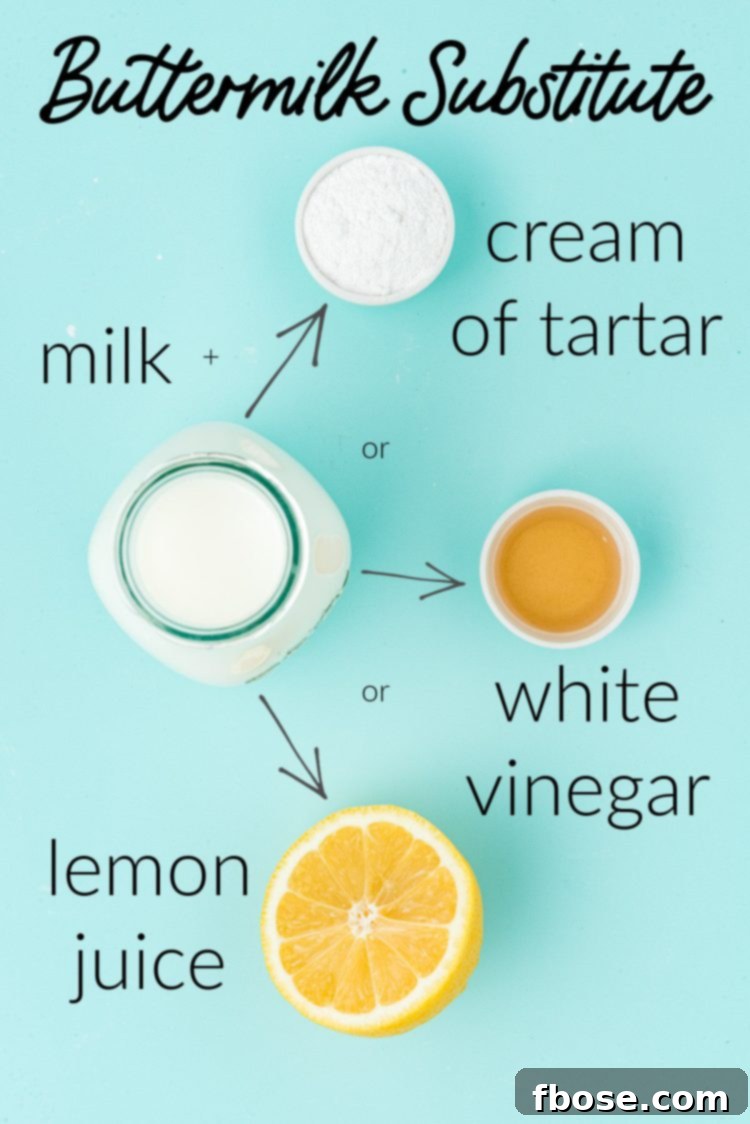
Crafting this simple homemade buttermilk substitute requires just two core ingredients you probably already have. The foundation is milk, and for the best results, I recommend using a higher-fat variety like 2% or whole milk. The fat content contributes to a richer texture in your substitute, more closely mimicking the consistency of traditional buttermilk. However, if you only have skim or 1% milk, it will still work, though the final product might be slightly thinner.
The second essential ingredient is an acid, which causes the milk to curdle and thicken. My preferred acids are lemon juice or white vinegar. Freshly squeezed lemon juice offers a bright, natural tang, while white vinegar provides a clean, neutral acidity that won’t overpower your recipes. For every cup of milk, you’ll typically need 1 tablespoon of either of these acids.
Don’t have lemon juice or vinegar? No problem! Cream of tartar is an excellent alternative. For one cup of milk, you’ll use approximately 1¾ teaspoons of cream of tartar. Mix it well with a small amount of milk first to form a paste, then add the rest of the milk to ensure it dissolves evenly. This prevents clumping and allows for proper curdling.
Beyond these classic combinations, there are other effective ways to make a buttermilk replacement. Plain Greek yogurt or sour cream can also be used as direct substitutes. For an equal part substitute (e.g., 1 cup buttermilk needed, use 1 cup Greek yogurt), Greek yogurt works well due to its thick, creamy texture and inherent acidity. If you find the Greek yogurt substitute a bit too thick for your recipe, you can thin it down by mixing 3/4 cup of sour cream with 1/4 cup of milk. This creates a slightly lighter consistency while retaining the necessary tang and thickening properties. As you can see, a missing buttermilk carton doesn’t mean canceling your baking plans; you’re now equipped with several handy kitchen hacks to make a perfect alternative!
How To Make Buttermilk Substitute: Step-by-Step Guide
Creating your own buttermilk substitute at home is surprisingly simple and much faster than a trip to the grocery store. Follow these straightforward steps to prepare this essential kitchen alternative:
-
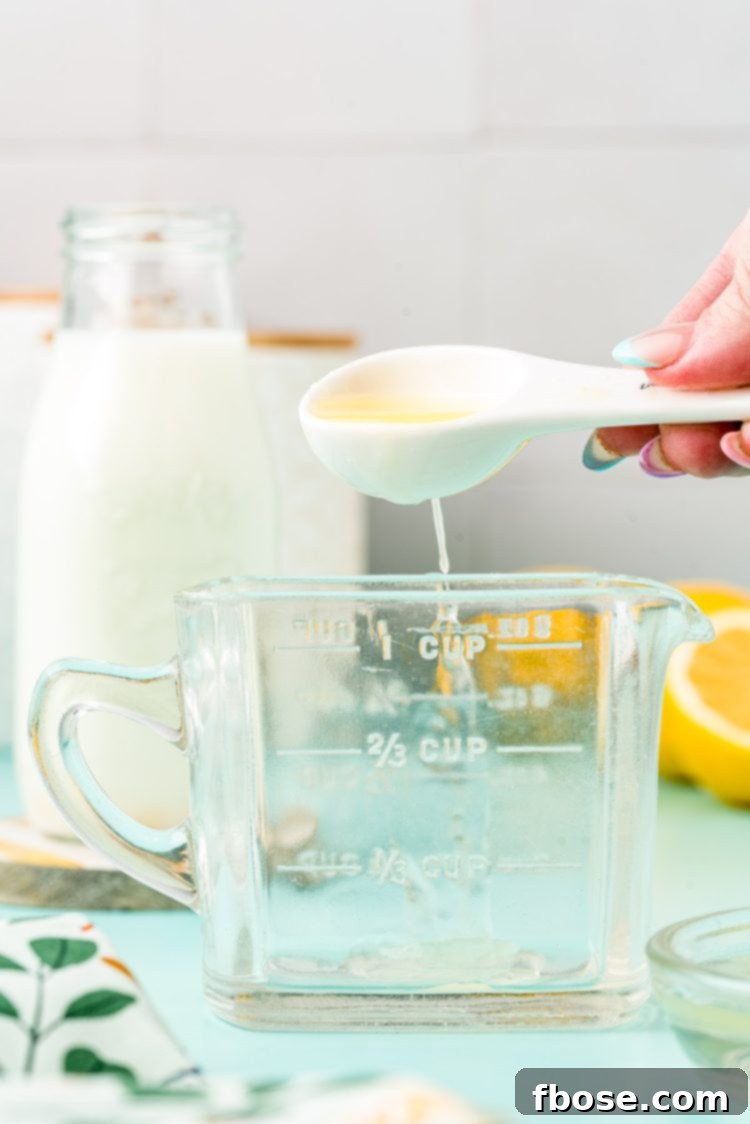
Measure and Add Your Acid: Begin by adding your chosen acidic ingredient into a 1-cup liquid measuring cup. You’ll need 1 tablespoon of white wine vinegar or lemon juice. If you’re using cream of tartar, measure out 1¾ teaspoons instead. Place the acid directly into the bottom of the measuring cup.

-
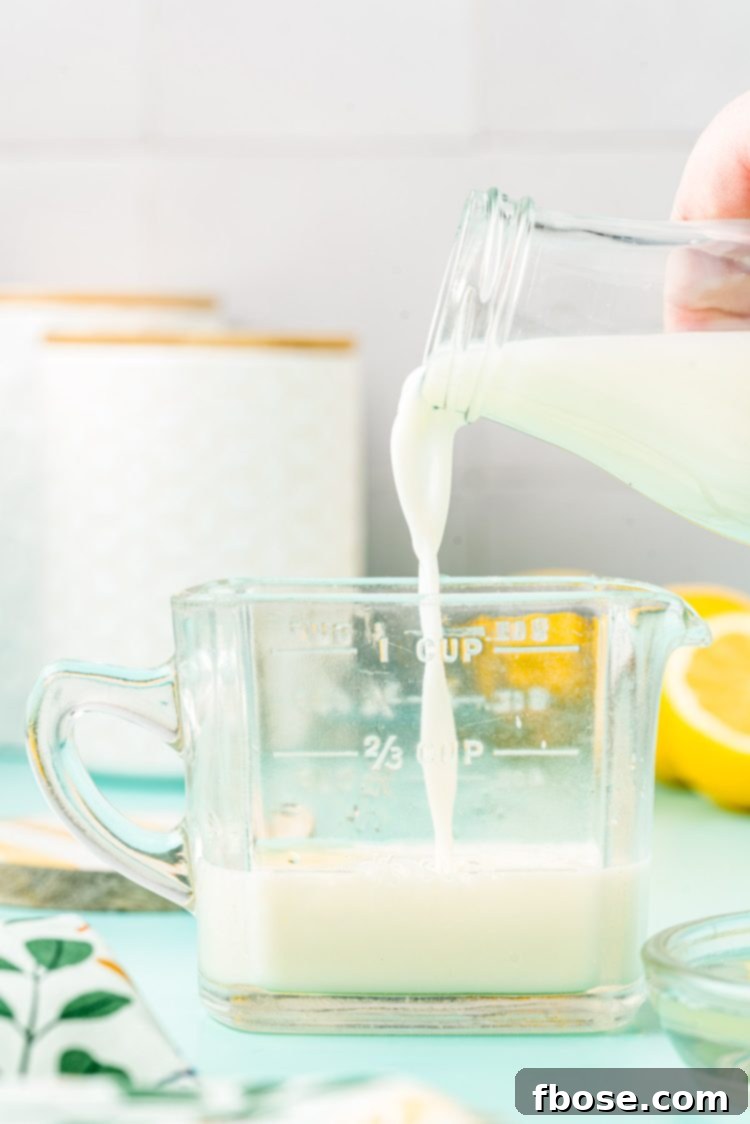
Fill with Milk: Next, pour milk into the measuring cup, filling it to the one-cup measurement line. A “scant cup” means just slightly under the full cup line to account for the volume of the acid. Use 2% or whole milk for the best results, but any milk will work.
-
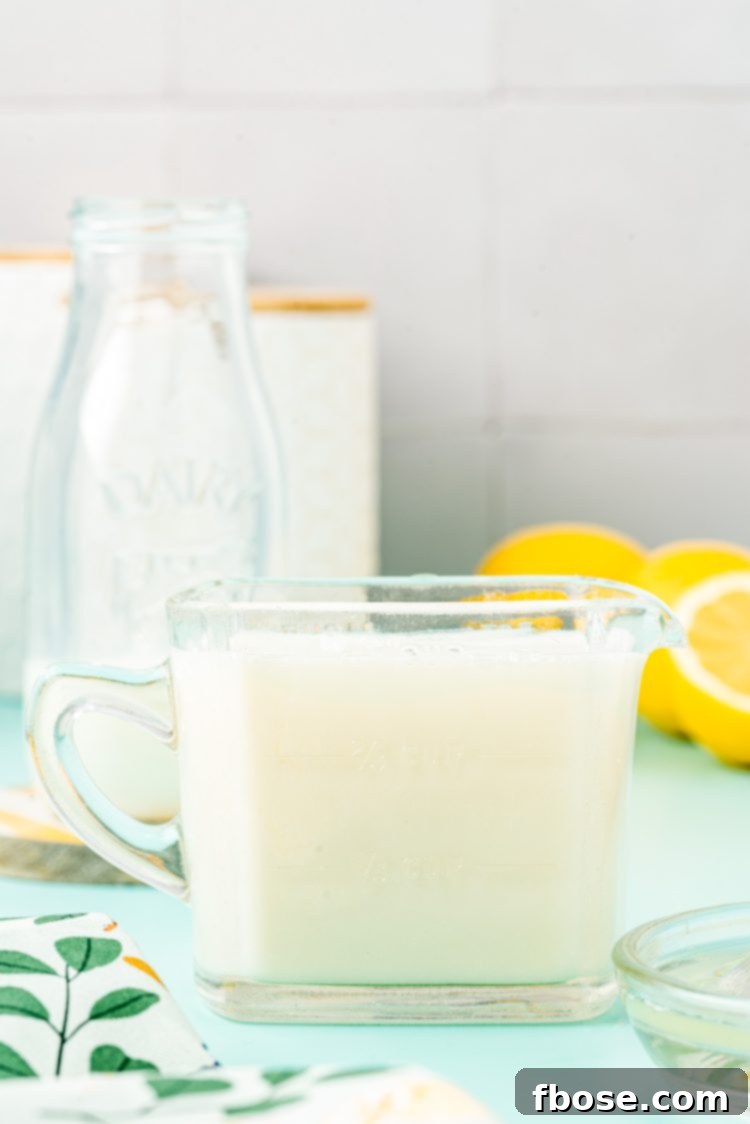
Rest and Curdle: Gently stir the mixture to combine the milk and acid. Then, set the measuring cup aside and let it rest undisturbed for 5 to 10 minutes. During this time, the acid will react with the milk proteins, causing it to thicken slightly and develop small curds. This curdling process is what mimics the texture and acidity of real buttermilk. Once you see the milk visibly thickening and small clumps forming, your homemade buttermilk substitute is ready to use in your recipe.
Tips for Success with Your Buttermilk Substitute
To ensure your homemade buttermilk substitute performs optimally in your recipes, consider these valuable tips:
- Use Room Temperature Milk: While not strictly necessary, using milk that’s closer to room temperature can help the curdling process happen a bit faster and more consistently. Cold milk may take a few extra minutes to visibly curdle.
- Allow Adequate Resting Time: Don’t rush the process. The 5-10 minute resting period is crucial for the acid to properly react with the milk and create the desired consistency. If you use it too soon, it might not have the full acidic punch needed for leavening.
- Observe for Curdling: Look for visual cues. The milk should appear slightly thicker, and you’ll notice small, fine curds forming. It won’t become as thick as yogurt, but the change from plain milk should be evident.
- Stir Before Using: Before adding your substitute to a recipe, give it a quick stir. This ensures the acid and thickened milk are evenly distributed throughout, providing consistent results in your baking.
- Measure Accurately: Precision in measuring both the milk and the acid is key. Too little acid, and the milk won’t curdle sufficiently; too much, and the flavor might become overly tart.
- Adjust for Quantity: This recipe yields one cup of buttermilk substitute. If your recipe calls for more, simply scale up the ingredients proportionately. For example, for two cups of substitute, use 2 tablespoons of acid and 2 scant cups of milk.
Frequently Asked Questions
Storage Instructions for Buttermilk Substitute
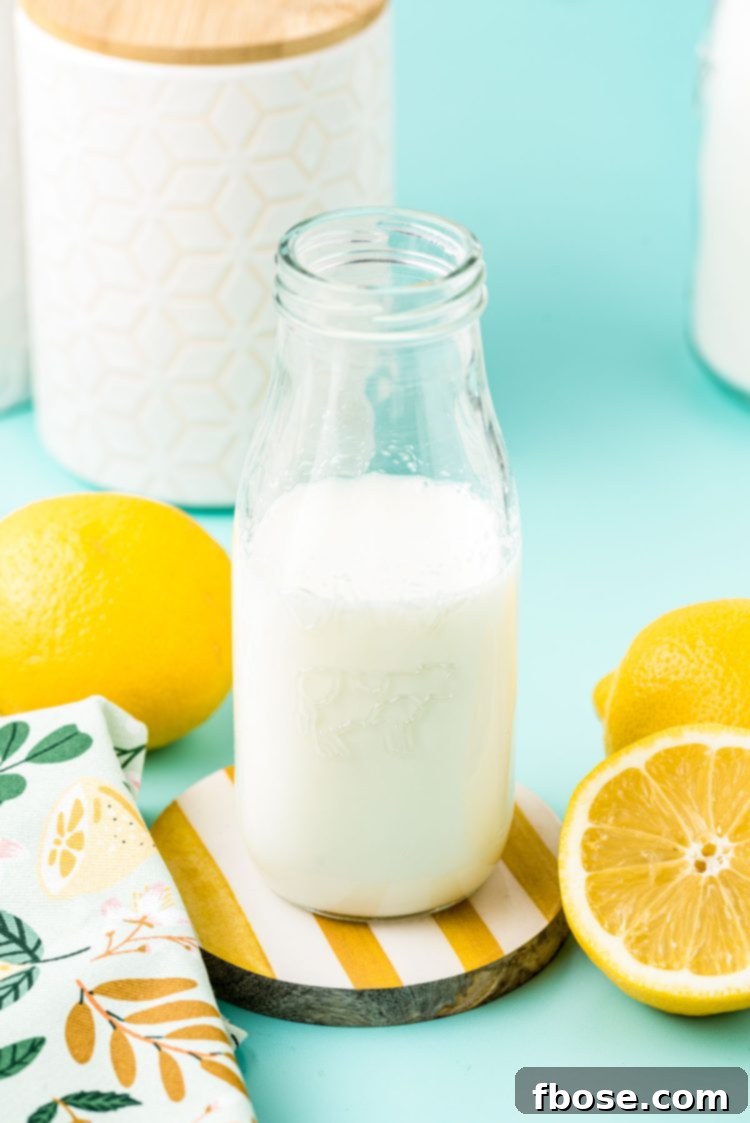
Once prepared, your homemade buttermilk substitute can be stored much like regular buttermilk. Pour it into an airtight container, such as a mason jar, and keep it refrigerated. It will remain fresh and usable for approximately 1 to 2 weeks. This makes it convenient to prepare a batch in advance if you anticipate needing it for multiple recipes.
For longer storage, freezing is an excellent option. To freeze, simply pour the buttermilk alternative into an ice cube tray. Once the cubes are completely frozen solid, transfer them to a freezer-safe Ziploc bag or airtight container. Frozen buttermilk cubes can last for up to 2 to 3 months. When you’re ready to use them, remember to allow the cubes to thaw completely in the refrigerator or at room temperature before incorporating them into your recipes. Thawing ensures the consistency is correct for optimal mixing and baking.
Can I Make This Buttermilk Vegan?
Absolutely, making a vegan buttermilk substitute is incredibly simple! Just swap out the dairy milk for your favorite plant-based milk. Popular choices that curdle well with acid include soy milk or almond milk. Oat milk and even some varieties of full-fat coconut milk (from a carton, not canned) can also work. The key is to ensure the plant-based milk has enough protein and fat content to visibly curdle when acid is added. Follow the same ratios and resting time as with dairy milk.
How Much Buttermilk Substitute Does This Recipe Make?
This recipe is designed to yield exactly one cup of buttermilk substitute, which is the amount most recipes typically call for. If your recipe requires more, you can easily scale up the ingredients. Simply double or triple the quantities of both the milk and the acid to create 2 or 3 cups, respectively. The preparation process remains the same, regardless of the batch size.
Popular Recipes to Try with Your Homemade Buttermilk Substitute
Now that you’re a pro at making an easy homemade buttermilk substitute, it’s time to put your newfound skill to the test! This versatile ingredient unlocks a world of delicious baking opportunities. Here are some of my all-time favorite buttermilk recipes where this substitute truly shines, promising a delightful treat as your reward:
- Strawberry Coffee Cake Muffins – These tender muffins are bursting with fresh, sweet berries and crowned with an irresistible homemade sugar and butter crumble. The buttermilk substitute ensures they stay moist and flavorful.
- Cream Cheese Pound Cake – Experience a dense yet perfectly tender and sweet pound cake. It’s fantastic served plain, or elevated with fresh fruit, a dollop of whipped cream, or a vibrant strawberry sauce. The buttermilk contributes to its rich texture.
- Starbucks Banana Bread – Recreate this beloved copycat recipe at home! It’s generously loaded with crunchy walnuts and sweet, ripe bananas. Best enjoyed warm with a smear of butter, the buttermilk helps achieve its signature moistness.
- Easy Strawberry Shortcake – A quintessential classic summer dessert that the entire family eagerly anticipates. Featuring juicy fresh berries and a cloud of Perfect Homemade Whipped Cream, the shortcake biscuits benefit immensely from buttermilk for a tender crumb.
- Black Magic Chocolate Cake – Indulge in three decadent layers of incredibly moist chocolate cake, generously enveloped in the Best Chocolate Buttercream Frosting. Buttermilk is key to its deep, rich flavor and ultra-moist texture.
Buttermilk Substitute
Author: Rebecca Hubbell
Category: Basic
Cuisine: American
Prep Time: 10 minutes
Total Time: 10 minutes
Yields: 1 cup
How To Make Buttermilk Substitute is an incredibly easy and quick way to make a homemade substitution right at home with just 2 ingredients!
Ingredients
- 1 tablespoon white wine vinegar or lemon juice (or 1¾ teaspoons cream of tartar)
- 1 scant cup whole milk
Instructions
- Add vinegar, lemon juice, or cream of tartar to a 1 cup measuring cup.
- Fill the cup to the 1 cup line with milk.
- Let it rest and curdle for 5 to 10 minutes before using.
Nutrition
Calories: 149kcal | Carbohydrates: 11g | Protein: 8g | Fat: 8g | Saturated Fat: 5g | Polyunsaturated Fat: 0.3g | Monounsaturated Fat: 2g | Cholesterol: 29mg | Sodium: 94mg | Potassium: 372mg | Sugar: 12g | Vitamin A: 395IU | Vitamin C: 0.1mg | Calcium: 301mg | Iron: 0.1mg
Did You Make This Recipe?
Don’t forget to share your creations with me on Instagram @sugarandsoulco and follow on Tiktok @sugarandsoulco and Pinterest @sugarandsoulco for more delicious inspiration!
Let’s Connect!
If you’ve tried this recipe, please let me know how you liked it in the comments below and leave a review. I love hearing from you and seeing your amazing results!
Don’t forget to tag me – @sugarandsoulco – on Instagram and Pinterest with your photos or join our Sugar & Soul Show-offs Community and share them there, where you can join our recipe challenges and connect with fellow food enthusiasts!