
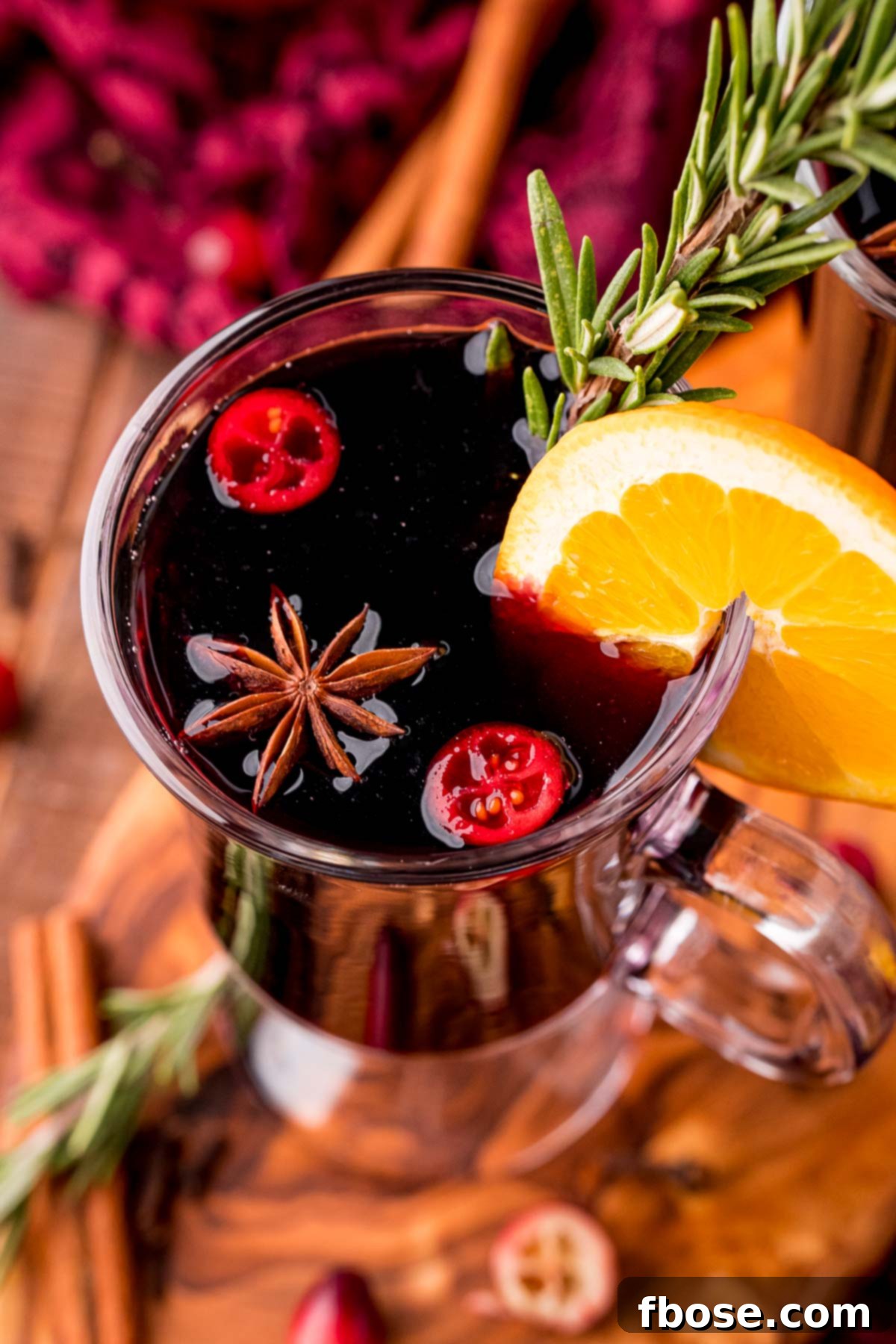
Mulled Wine is a quintessential winter beverage, offering a delightful blend of red wine, aromatic whole spices, a touch of honey, and a hint of brandy. This warm, comforting drink is an absolute must-have for anyone looking to embrace the cozy spirit of the colder months and festive holiday season. What’s even better? This enchanting concoction is ready to be savored in approximately 25 minutes, making it an ideal choice for spontaneous gatherings or a relaxing evening at home.
As you prepare to gather with friends and family, consider adding other festive drinks to your repertoire. Pair this incredible mulled wine with a vibrant Christmas Sangria, bursting with seasonal fruits, or a sparkling Cranberry Orange Christmas Mimosa Punch for a truly memorable holiday celebration. These festive libations are sure to impress and create lasting memories.
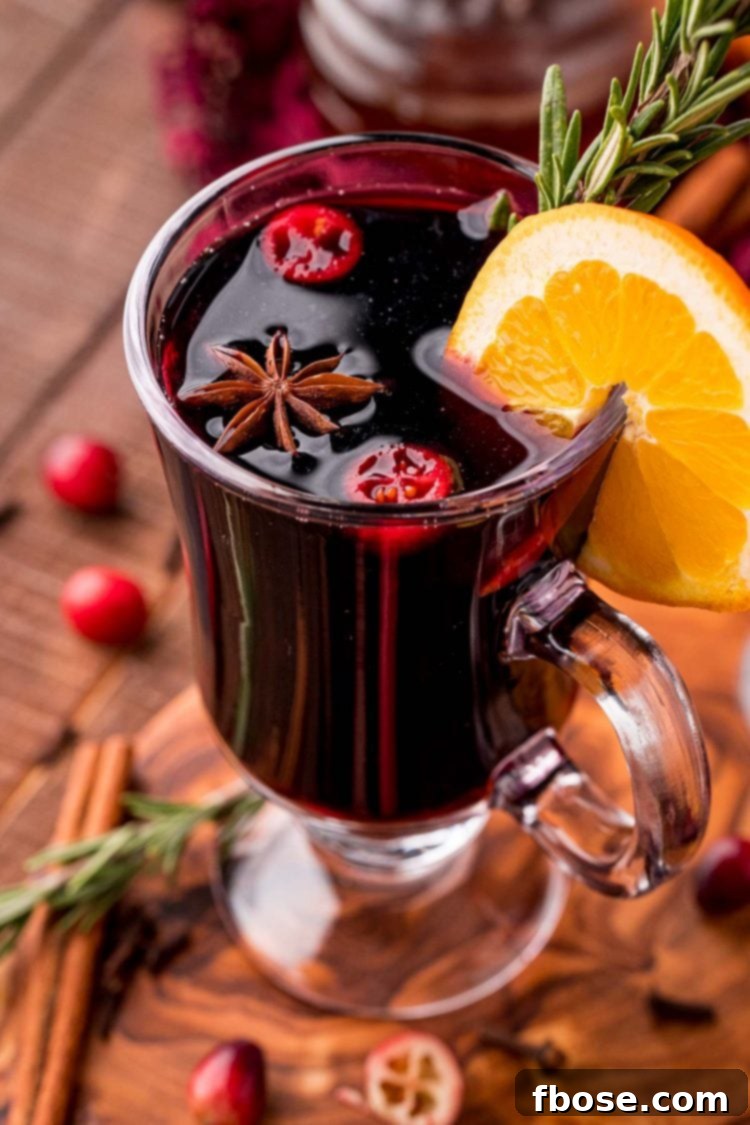
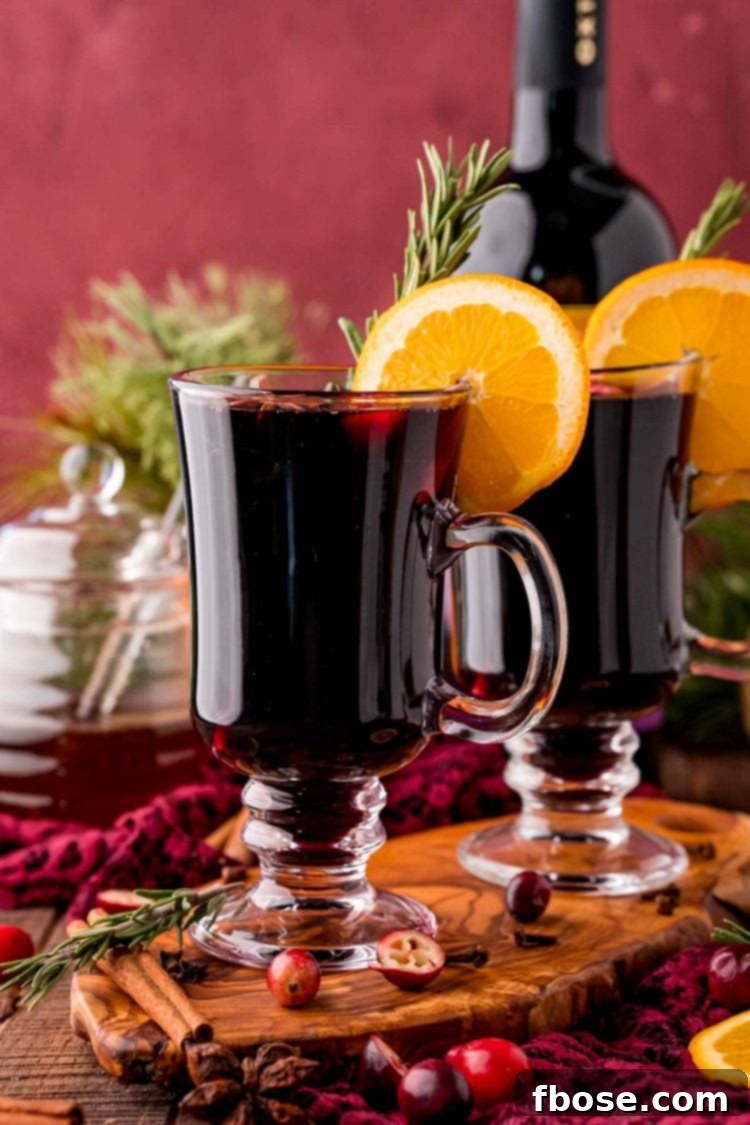
At its heart, Mulled Wine transforms an ordinary, inexpensive bottle of red wine into an extraordinary sensory experience. By infusing it with a selection of mulling spices, a complementary liqueur, and a natural sweetener like honey, you create a beverage that exudes warmth and holiday cheer. Imagine huddling around a slow cooker filled with this fragrant, simmering wine, sharing laughter and stories with loved ones as the captivating aroma fills the air. It’s more than just a drink; it’s an invitation to celebrate the holidays in true cozy fashion.
Understanding Mulled Wine: A Seasonal Delicacy
While often associated with festive gatherings, many wonder about the fundamental characteristics of this celebrated drink. What exactly differentiates it from a standard glass of red wine?
What’s The Difference Between Wine and Mulled Wine?
The distinction is quite simple yet profound. Classic bottled wine is typically enjoyed at its natural temperature, without any additions or alterations to its inherent flavor profile. It’s savored for its unadulterated complexity, a reflection of its terroir and winemaking process. In stark contrast, Mulled Wine undergoes a delightful transformation. It is crafted by gently steeping a medley of whole spices in red wine, often with citrus fruits and a sweetener, while slow cooking it over low heat. This process infuses the wine with a spectrum of warm, aromatic flavors, creating a spiced beverage that is entirely unique.
This “Spiced Wine,” known as Glühwein in Germany and Glögg in Scandinavia, is a cherished traditional Christmas drink enjoyed across numerous cultures. For many, it’s more than just a festive beverage; it’s a sensory gateway to cherished holiday memories. We all have that specific tradition, a signature dessert, or a particular fragrance that instantly ignites the joy and magic of Christmas. For me, that quintessential spark comes from Mulled Wine.
The moment its rich, spicy aroma wafts through the air, I am instantly transported back to the enchanting Christmas markets in Europe. I recall wandering through the charming cobblestone streets and bustling city squares, surrounded by vibrant market stalls and the joyful chatter of crowds. The glittering Christmas lights, the warmth from steaming mugs of Mulled Wine, and the sight of people carefully selecting gifts for their loved ones – these vivid memories instantly fill me with an overwhelming sense of Christmas cheer and nostalgia.
But the beauty of this recipe is that those cherished memories are no longer confined to distant travels. Now, I can recreate that same magical atmosphere right at home with my family. And, most importantly, I can still savor the authentic taste of Mulled Wine, all thanks to this incredibly easy recipe that comes together in under half an hour. It’s a taste of tradition, conveniently brought to your kitchen.
Crafting the Perfect Mulled Wine: Essential Ingredients
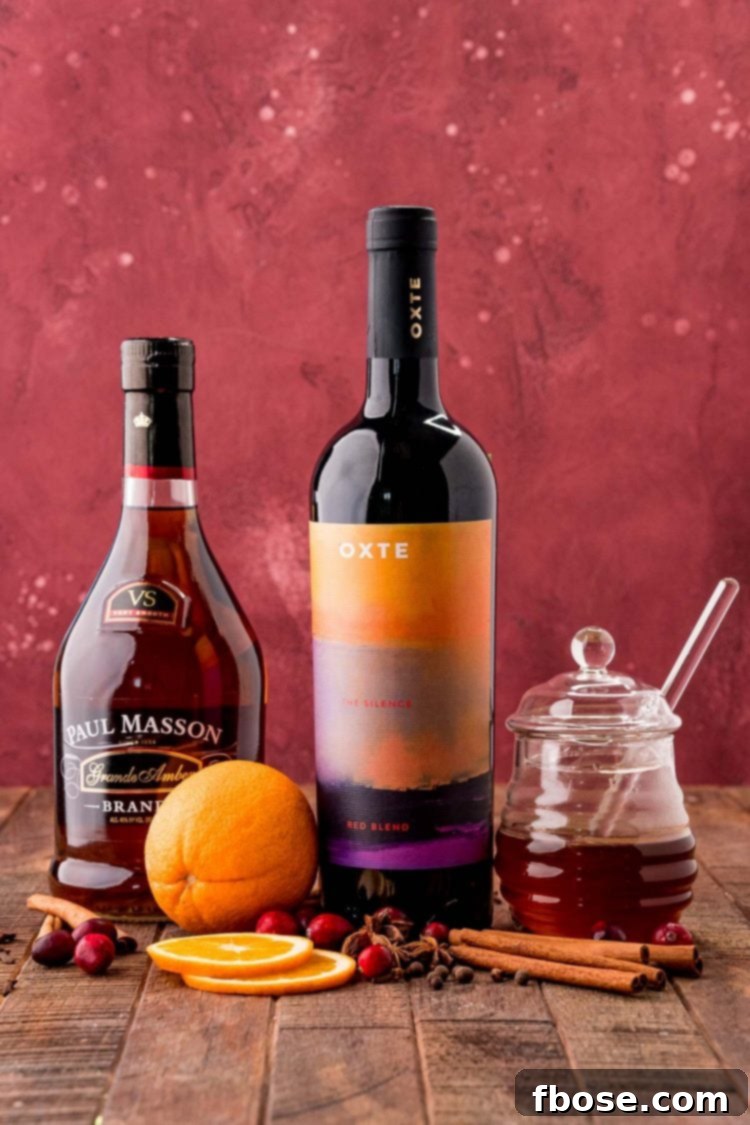
The foundation of an exceptional Mulled Wine lies in selecting the right ingredients. Each component plays a vital role in achieving that rich, balanced, and aromatic flavor profile. Let’s delve into the key elements you’ll need.
Choosing the Best Wine for Mulled Wine
To begin your mulled wine journey, the first step is selecting the ideal red wine. You don’t need to splurge on a top-shelf bottle, as its delicate nuances might be overshadowed by the spices. However, it’s equally important to avoid the absolute cheapest options, which can sometimes result in a thin or overly acidic base. The goal is to find a wine that serves as a robust canvas for the added flavors.
Through extensive experimentation, I’ve discovered that the best red wines for mulled wine are those that are full-bodied or possess inherent rich spice and berry notes. These types of wines have the structure and flavor profile to beautifully complement the mulling spices, absorbing their warmth without becoming overly sweet or losing their character. Their robust nature allows the spices to shine without overpowering the wine itself.
Consider any of the following red wines for an excellent base in this Mulled Wine Recipe:
- Merlot: Known for its soft tannins and plum-like fruit flavors, Merlot provides a smooth, approachable base that readily welcomes spices.
- Cabernet Sauvignon: A bolder choice, Cabernet Sauvignon offers dark fruit notes and often hints of spice, providing a deep, complex foundation.
- Red Zinfandel: This wine typically boasts jammy fruit flavors and a peppery spice, which naturally harmonizes with the mulling spices.
- Red Blend: Many red blends are crafted to offer a harmonious balance of fruit and spice, making them an excellent and versatile option.
Once you’ve chosen your red wine, the next crucial step is gathering the spices. It is imperative to use whole spices in this recipe, rather than ground spices. Ground spices, while convenient, will dissipate into the wine during heating, leading to a grainy texture and a cloudy appearance that detracts from the drinking experience. Whole spices, on the other hand, slowly release their essential oils and flavors, resulting in a clear, beautifully infused beverage.
The Signature Spices for Mulled Wine
The specific blend of mulling spices can vary widely from recipe to recipe, allowing for a great deal of personalization. For my classic mulled wine, I’ve carefully selected a combination that delivers a perfect balance of warmth and fragrance:
- Whole Cloves: These potent flower buds offer a warm, intensely aromatic, and slightly sweet-spicy flavor.
- Cinnamon Sticks: A cornerstone of mulled wine, cinnamon provides a sweet, woody fragrance and a comforting warmth. Using sticks rather than ground cinnamon prevents cloudiness.
- Allspice Berries: As their name suggests, allspice berries offer a complex flavor profile reminiscent of cloves, nutmeg, and cinnamon, all in one. These are optional, but add a wonderful depth.
- Star Anise: Visually striking and intensely aromatic, star anise imparts a distinct licorice-like flavor that adds an exotic twist. Like allspice, it can be optional if you prefer a less pronounced anise note.
If you wish to experiment, other popular mulling spices that can be integrated include cardamom pods for a citrusy, floral note, freshly grated nutmeg for earthy sweetness, or even a few peppercorns for a subtle, peppery kick that adds complexity without heat.
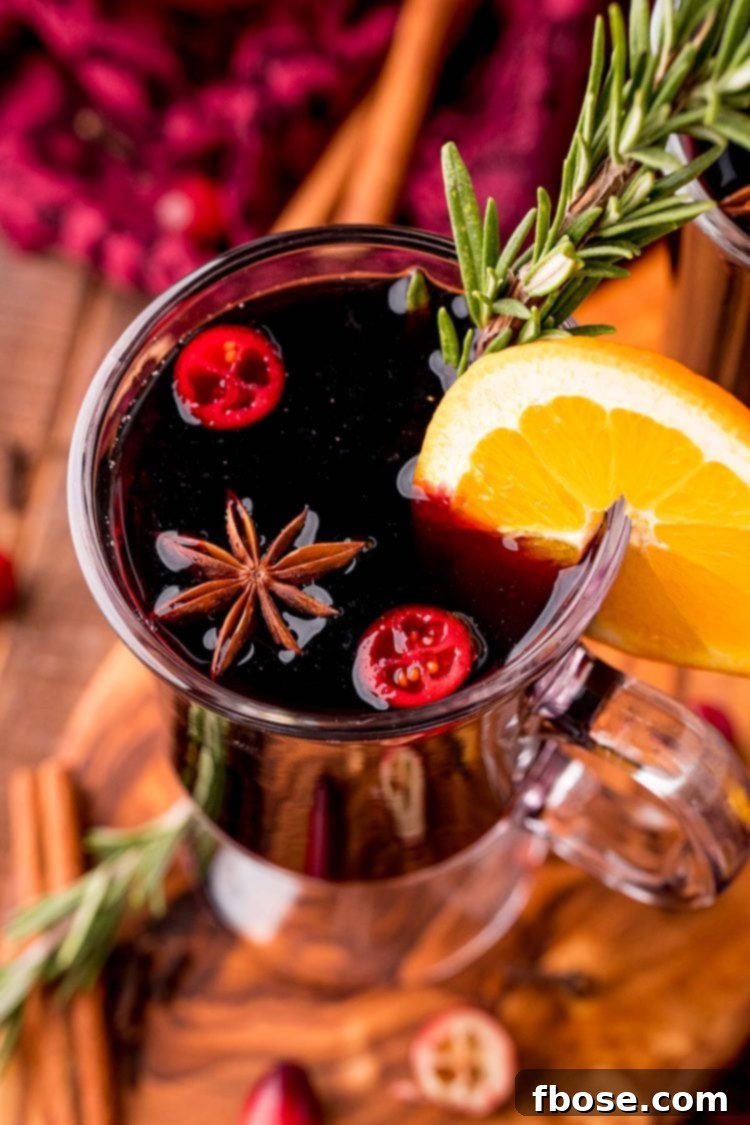
To round out this Mulled Wine Recipe and add brightness and depth, you’ll also need fresh orange slices, a generous amount of honey (which can be adjusted to taste), and an optional splash of brandy for an extra layer of warmth and complexity. Once heated and infused, simply ladle the Spiced Wine into your favorite mugs and garnish each serving with fresh cranberries and elegant sprigs of rosemary for a truly festive presentation.
The Art of Preparation: How To Make Mulled Wine
Creating this delightful mulled wine is a simple process, requiring minimal effort for maximum flavor. Follow these straightforward steps to achieve the perfect warm, spiced beverage.
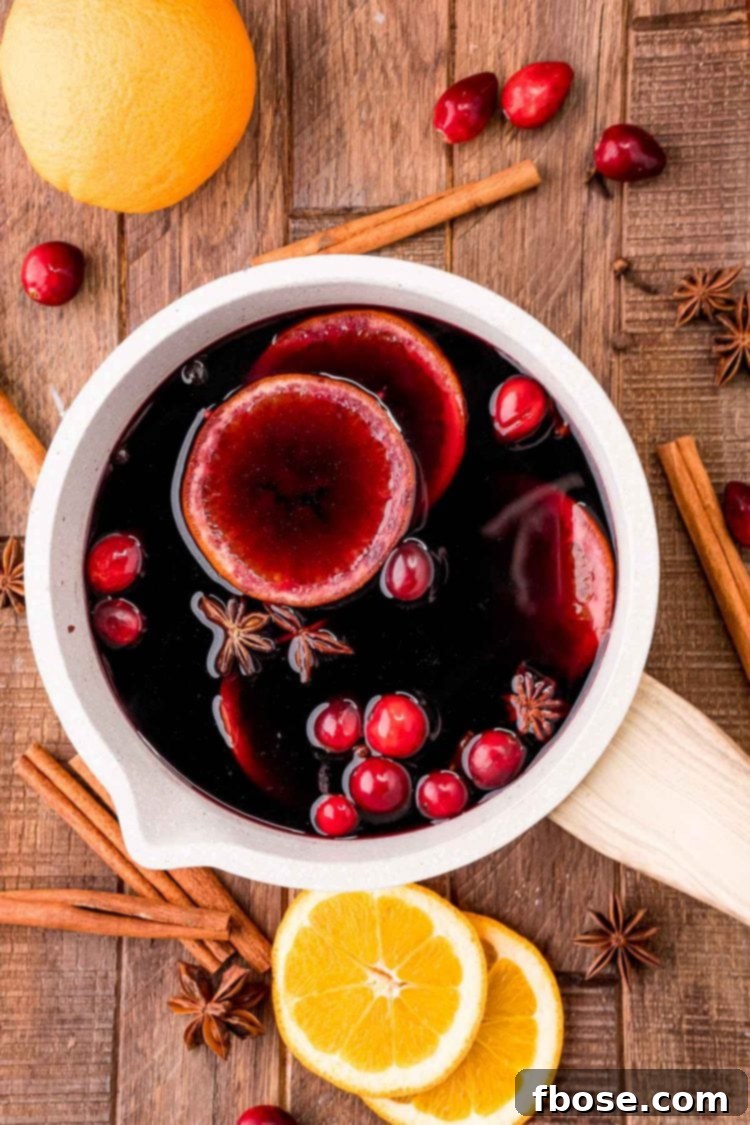
- Combine Ingredients: Begin by pouring your chosen red wine into a medium saucepan or a small Dutch oven. Add the whole spices: cinnamon sticks, whole cloves, allspice berries (if using), and star anise (if using). These whole spices are essential for infusing the wine with rich, clear flavors without creating a grainy texture.
- Introduce Citrus and Sweetener: Carefully add the fresh orange slices to the wine mixture. These will contribute a bright, citrusy note that beautifully complements the spices. At this stage, you can also add the honey. However, for those who prefer to adjust sweetness individually, you may opt to wait and add honey directly to each mug when serving.
- Gentle Heating is Key: Place the saucepan over medium-low heat. This is the most crucial step: you want to gently heat the wine, bringing it to a warm, comforting temperature without ever allowing it to simmer or boil. Keep a watchful eye, ensuring that the wine remains just below a bubbling point. Maintaining this low heat allows the spices to infuse slowly and deeply into the wine, extracting maximum flavor while preserving the alcohol content and preventing the wine from becoming syrupy. Continue to heat for about 20 minutes, allowing the flavors to meld beautifully.
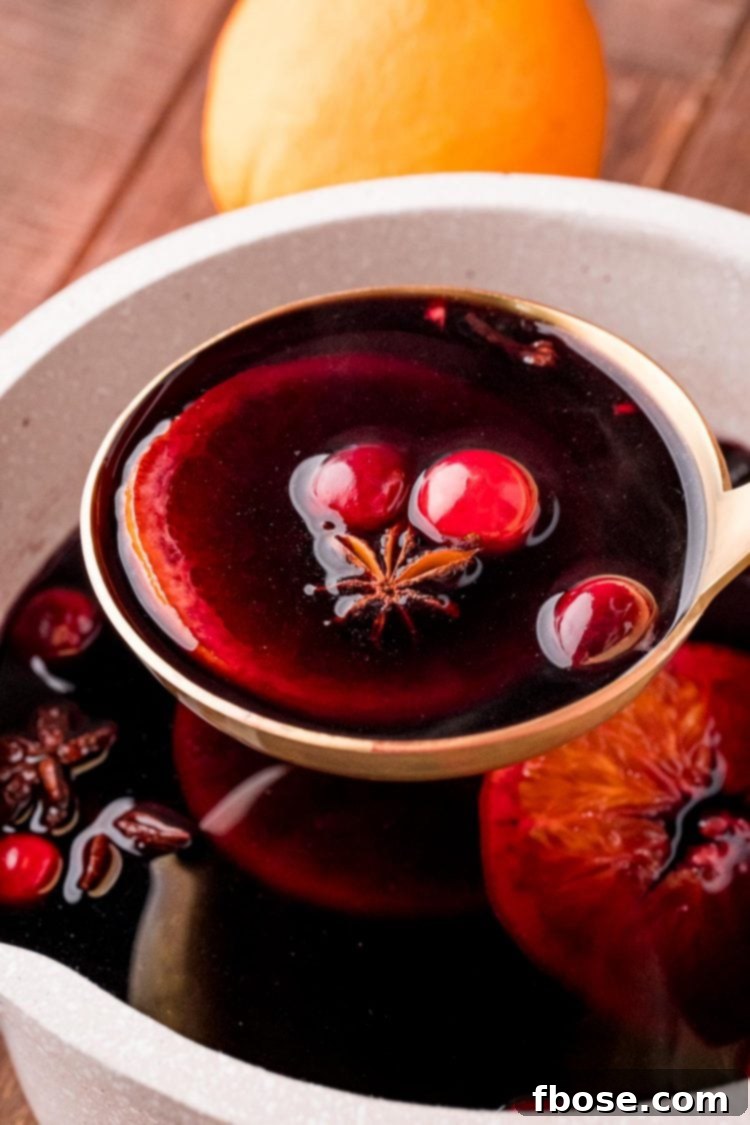
- Serve and Garnish: Once the mulled wine is fragrant and thoroughly warmed, it’s ready to be enjoyed. Carefully ladle the aromatic Mulled Wine mixture into heat-proof mugs. For an added festive touch and visual appeal, garnish each mug with fresh cranberries and elegant sprigs of rosemary. Serve immediately and savor the warmth and complex flavors!
Serving and Pairing Your Mulled Wine
Presentation is key when serving Mulled Wine. Ladle this beautiful beverage into fun, clear glass mugs or heat-proof glasses. This allows the rich, festive color of the wine and the vibrant garnishes to be proudly showcased, enhancing the overall drinking experience. Beyond its visual appeal, Mulled Wine is incredibly versatile and pairs wonderfully with a variety of settings and foods.
Enjoy your warm mug of Spiced Wine as a delightful accompaniment to:
- Festive Appetizers: Nothing says “welcome” quite like a warm mug of mulled wine alongside delicious finger foods. Keep a batch warming in a crock pot as friends arrive, and serve it with an array of appetizers like mini quiches, bruschetta, or savory tarts. It sets a wonderfully inviting tone for any gathering.
- Artisan Cheese & Crackers: The complex flavors of mulled wine make it an excellent partner for a curated cheese board. Its sweetness and spice beautifully contrast with rich, savory cheeses. Consider pairing it with robust varieties such as sharp blue cheese, aged cheddar, creamy Gorgonzola, or a smoky Gouda for a truly sophisticated experience.
- Indulgent Desserts: This Spiced Wine is not just a pre-dinner drink; it also harmonizes exquisitely with a range of desserts and facilitates good conversation. Once dinner is cleared and the dishes are put away, simply toss the ingredients for this wine into a slow cooker to warm gently while you bring out your holiday treats. It pairs particularly well with fruit tarts, gingerbread, spiced cookies, or dark chocolate desserts.
- A Thoughtful Hostess Gift: Looking for a unique and memorable gift? Assemble all the dry ingredients for this mulled wine (spices, perhaps a small bottle of honey and brandy) into a cozy basket, along with a bottle of good red wine and a charming mug. Present it to anyone hosting friends and family in their home during the holidays. Don’t be surprised when they’re eager to start brewing it up right away!
Frequently Asked Questions About Mulled Wine
Here are answers to some common questions about making, storing, and enjoying mulled wine, ensuring you master this festive beverage.
How To Store Leftover Mulled Wine
If you happen to have any leftover mulled wine (a rare occurrence!), ensure it cools completely to room temperature first. Once cool, pour it into an airtight container and store it in the refrigerator. It will keep well for up to 3 days, maintaining much of its spiced flavor.
How To Reheat Mulled Wine
While freshly made mulled wine offers the most vibrant flavors, reheated leftovers are still wonderfully delicious and comforting. To reheat, simply transfer the chilled mulled wine into a small pot on the stovetop or back into a slow cooker. Warm it slowly over low heat, being extremely careful not to let it come to a boil. Gentle reheating preserves its qualities.
Why Can’t Mulled Wine Be Boiled?
It is crucial to avoid boiling mulled wine. High heat causes the alcohol to evaporate rapidly, diminishing the wine’s depth and warmth. Furthermore, boiling can lead to a significant reduction in the liquid, resulting in a mixture that becomes excessively syrupy and concentrates sugars to an unpleasant degree. The goal is gentle infusion and warming, not cooking down.
What Other Sweeteners Can I Use In This Recipe?
While honey is the most traditional sweetener for classic mulled wine, you certainly have alternatives. Maple syrup offers a distinct, rich flavor, while brown sugar provides a caramel-like sweetness. Regardless of your choice, adding a sweetener is highly recommended. As the wine heats, its inherent alcoholic notes can become more pronounced, and a touch of sweetness helps to balance this, creating a smoother and more enjoyable drink.
Can I Prepare This On The Stovetop And Then Transfer It To A Slow Cooker To Keep Warm?
Absolutely! This is a fantastic method for entertaining. You can prepare the mulled wine on the stovetop to quickly infuse the flavors, then transfer it to a slow cooker set on a “warm” or “low” setting. This keeps the mulled wine at a perfect serving temperature throughout your gathering. Alternatively, you can make it entirely in the slow cooker. If opting for the slow cooker from the start, I recommend heating it on low for at least 1 hour before serving to ensure all the flavors have properly melded and the wine is thoroughly warmed.
What Can I Replace The Brandy With?
The addition of brandy in mulled wine is entirely optional, serving to add an extra layer of warmth and complexity. If you prefer to omit it, the recipe will still be wonderfully flavorful. However, if you’d like to include a spirit but don’t have brandy, excellent substitutions include bourbon for a smoky, vanilla note, cognac for a more refined grape-based flavor, or even an orange-flavored liqueur like Cointreau or Grand Marnier to enhance the citrus element. Choose your favorite liqueur to customize the taste.
Can I Make This Non-alcoholic?
Yes, you can certainly adapt this recipe to be non-alcoholic. Simply substitute regular red wine with a good quality non-alcoholic red wine. The spices, citrus, and sweetener will still provide all the comforting, festive flavors. Alternatively, if you’re looking for another delightful non-alcoholic holiday beverage, I highly recommend trying my Kinder Punch, which is a fantastic option for all ages.
Having a signature, comforting drink like this Mulled Wine is an absolute essential when you’re hosting any holiday gathering. Its inviting aroma and delicious taste create an instant festive atmosphere that guests will adore. Beyond mulled wine, here’s a handful of more popular beverage recipes that are guaranteed to be a hit at your parties this season:
- Slow Cooker Wassail Drink – A delightful blend of apple cider, various juices, brown sugar, and spices, slow-cooked together to create a beautifully warm and fragrant holiday beverage.
- Boozy or Not White Hot Chocolate – A luscious, dessert-like drink that is incredibly rich and sweet, perfect for pleasing any palate. Offer both alcoholic and non-alcoholic versions to cater to all your guests.
- Christmas Punch – An incredibly versatile and colorful recipe that can easily be made alcoholic with the addition of spirits or kept non-alcoholic for a refreshing family-friendly option.
- Peppermint Chocolate White Russian Cocktail – A sophisticated and festive cocktail made with smooth vodka, Kahlúa, and a hint of peppermint schnapps, all coming together in just 5 minutes for an impressive drink.
- Sparkling Holiday Punch – This vibrant non-alcoholic punch is a refreshing blend of Hawaiian punch, orange juice, cranberry juice, pomegranate juice, and pineapple juice, creating a fizzy, fruity explosion of flavor.
Let’s Connect!
If you’ve tried this recipe and loved it, please let me know your thoughts in the comments below and consider leaving a review. Your feedback is truly appreciated!
Don’t forget to tag me – @sugarandsoulco – on Instagram and Pinterest with your beautiful photos of this recipe. You can also join our Sugar & Soul Show-offs Community on Facebook and share your creations there, where you can also participate in our fun recipe challenges!
Mulled Wine
Rebecca Hubbell
Beverage
German, Italian
5 minutes
20 minutes
25 minutes
Servings
5
people
Ingredients
- 750 ml red wine merlot, cabernet, red zinfandel, red blend
- 6 whole cloves
- 3 cinnamon sticks
- 3 allspice berries optional
- 3 star anise optional
- 1 orange sliced
- ¼ cup honey more or less to taste
- ¼ cup brandy optional
- cranberries for garnish
- rosemary sprig for garnish
Instructions
-
Add the wine, cloves, cinnamon sticks, allspice berries, and star anise (if using) to a medium saucepan or small dutch oven.
-
Gently drop in the orange slices. You can add honey now as well or wait until serving.
-
Heat the wine over medium-low heat, watching closely that it does not simmer. You want the wine to come to temperature and stay just below bubbling. Cook for 20 minutes.
-
Ladle into mugs and garnish with cranberries and rosemary, if desired.
Notes
- Maple syrup or brown sugar may be used in place of honey but honey is the most traditional sweetener in mulled wine.
- It’s important to add some sweetener since the wine will take on a more alcoholic flavor as it’s warmed.
- Brandy is optional and you can also try bourbon, cognac, or your favorite liqueur.
- Choose a full-bodied red wine or red wine blend that has rich spice and berry notes for the best results.
- Do not let the wine come to a boil as we do not want the alcohol to evaporate or have any reduction to the wine which could cause it to become syrupy.
- You can transfer it to a slow cooker to keep warm or make it completely in the slow cooker. I recommend keeping it on low heat and heating for at least 1 hour before serving.
- Raisins are sometimes added to mulled wine, but these are also completely optional.
Nutrition
Did You Make This Recipe?
Don’t forget to share it with me on Instagram @sugarandsoulco and follow on Tiktok @sugarandsoulco and Pinterest @sugarandsoulco for more!
Pin Recipe
Share Recipe