

Mastering Flour Measurement: Your Key to Baking Perfection
Achieving consistently delicious results in baking hinges on one fundamental, yet often overlooked, skill: accurately measuring flour. This comprehensive guide will transform your approach to baking, ensuring every cake is moist, every cookie is perfectly chewy, and every loaf of bread rises beautifully. Forget dense, crumbly, or dry baked goods – by mastering precise flour measurement, you’ll unlock a world of culinary success.
Once you’ve perfected this essential technique, why not put your new skills to the test? Bake up a delightful loaf of this Cinnamon Swirl Bread. It’s fantastic toasted and buttered for a comforting breakfast or a sweet snack.

The Undeniable Importance of Accurate Flour Measurement in Baking
Many home bakers unknowingly sabotage their efforts by imprecise flour measurement. Flour is more than just a filler; it’s the primary structural component of most baked goods. Its quantity directly influences the texture, moisture, and rise of your creations. Too much flour, and your dough or batter becomes overly stiff, leading to dense, dry, and crumbly results. Imagine a dry muffin or a cookie that crumbles before you even take a bite – often, excess flour is the culprit. Conversely, too little flour can result in baked goods that are flat, overly moist, greasy, or lack the necessary structure to hold their shape.
Professional bakers understand that precise ingredient ratios are critical. While other ingredients might offer a small margin for error, flour demands accuracy. This is why learning how to measure flour properly is a cornerstone of successful baking. It ensures your favorite cakes, cookies, and bread recipes consistently deliver the heavenly texture and flavor you desire.
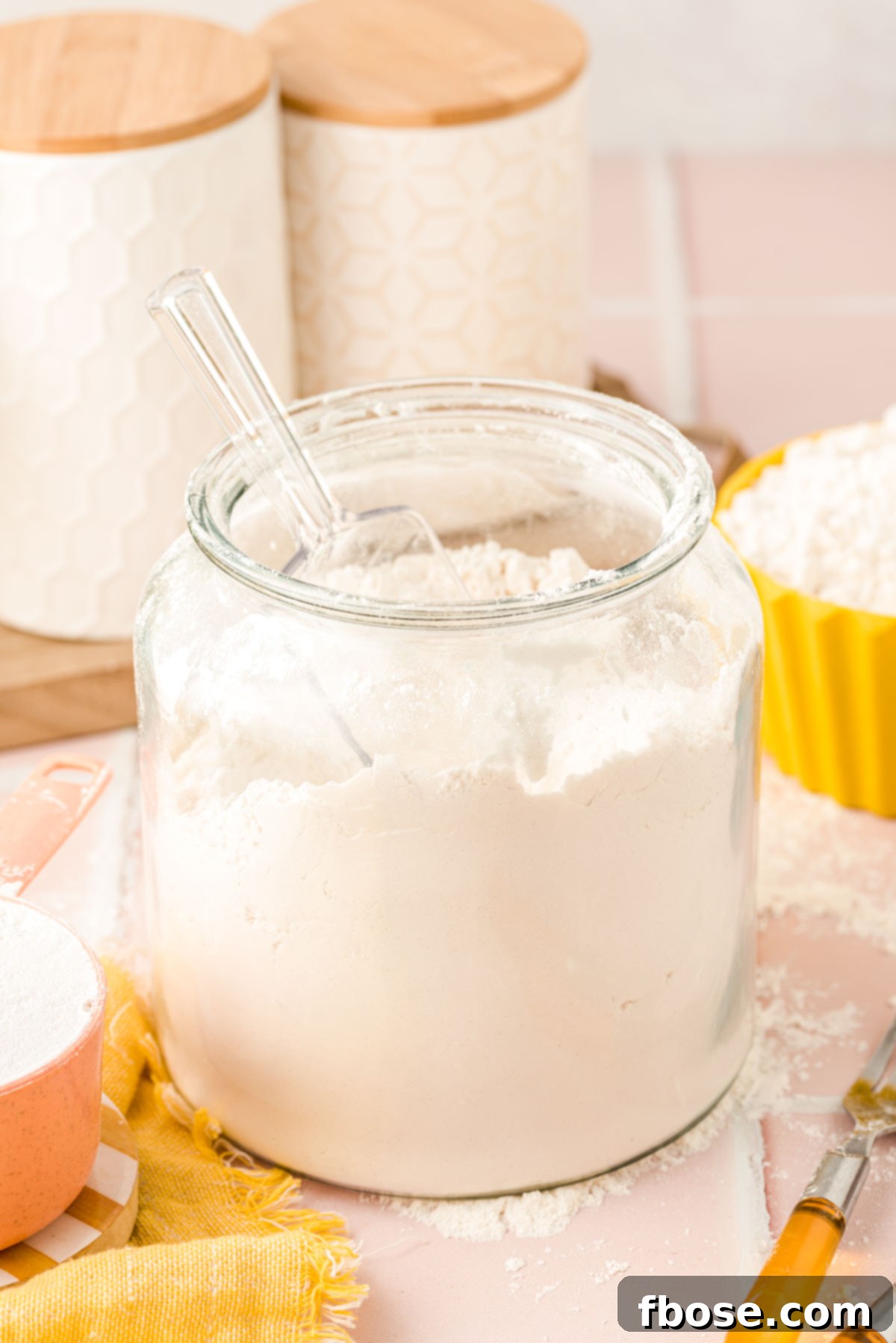
Ditching the “Scoop and Pack” Method: Why It Fails
We’ve all been there: reaching into the flour bag with a measuring cup, scooping vigorously, and then using the side of the bag or a finger to level it off. This common practice, often called the “scoop and pack” method, is the leading cause of inaccurate flour measurements. When you dive your measuring cup directly into the flour, you compress it, packing more flour into the cup than the recipe actually intends. A cup of flour scooped and packed can easily weigh 20-30% more than a properly measured cup, drastically altering the balance of your recipe. This seemingly small error can lead to significant disappointments in your final product.
By understanding this pitfall, you’re already on your way to more consistent baking. The good news is, there are much more reliable methods to ensure you get just the right amount of flour every time, guaranteeing your muffins and cupcakes are moist, light, and perfectly delicious.
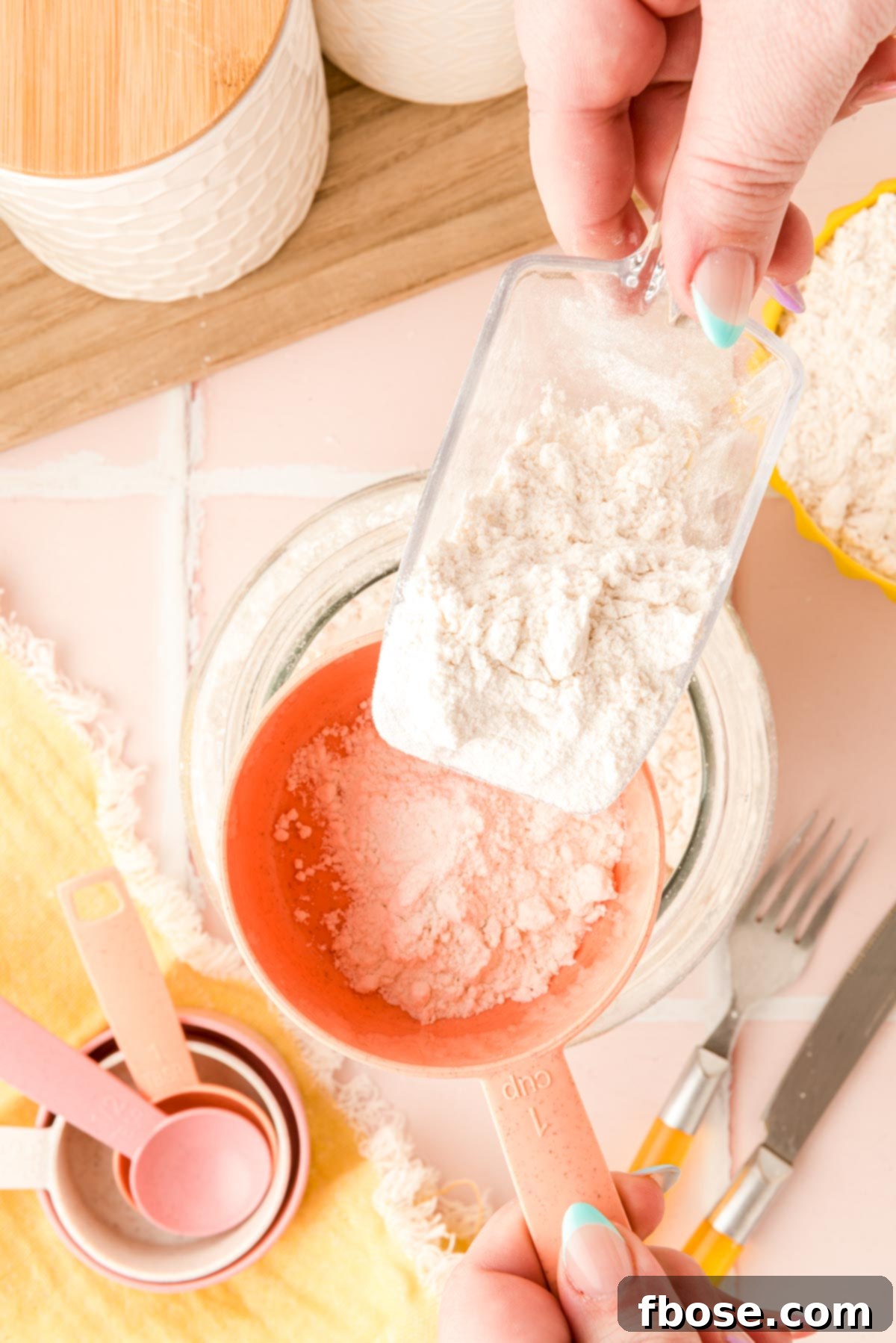
Method 1: The Spoon & Level Technique (Volume Measurement)
The spoon and level method is a significant improvement over the scoop and pack approach for volume measurement. While not as precise as a digital scale, it drastically reduces the chances of over-measuring flour. It’s a simple, two-minute kitchen hack that will yield noticeably better results.
Here’s how to master this technique:
- Fluff the Flour: Before you even begin, gently aerate your flour. When flour sits in its package or storage container, it naturally settles and becomes tightly packed. Use a fork or a spoon to thoroughly fluff it up, breaking up any clumps and incorporating air. This prevents you from inadvertently using dense, compacted flour that weighs more than intended.
- Spoon It Out: Once fluffed, use a separate spoon (not your measuring cup) to gently scoop the flour into your dry measuring cup. Allow the flour to lightly pile up above the rim of the cup. It’s crucial not to pack the flour down or tap the cup, as this defeats the purpose of fluffing. Make sure you are using dry measuring cups, which are designed to be leveled, unlike liquid measuring cups with their pouring spouts. These are my favorite measuring cups (affiliate link).
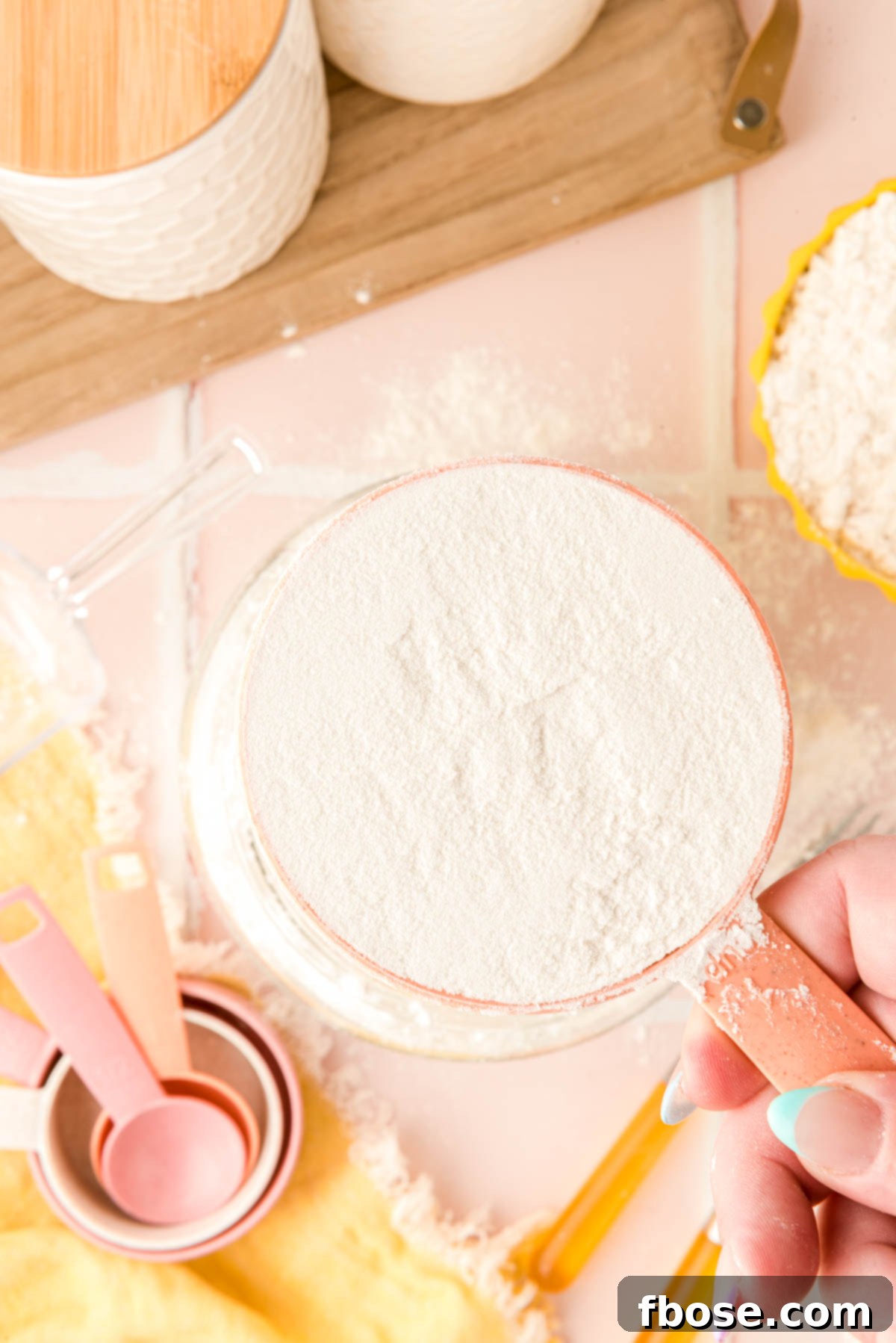
- Level It Off: Using the flat, straight edge of a butter knife or a similar utensil (like the back of a ruler or a bench scraper), carefully sweep across the top of the measuring cup, leveling off the excess flour. This action removes any flour above the rim without compressing the flour inside the cup, ensuring an accurate volume.
This method significantly improves the accuracy of volume-based flour measurements, leading to lighter, more tender baked goods. It’s an easy habit to adopt that makes a profound difference.
Remember that even with the spoon & level method, environmental factors like humidity can affect flour density. For ultimate precision, especially in delicate recipes, a kitchen scale is your best friend.

Method 2: The Gold Standard – Measuring Flour by Weight with a Kitchen Scale
For unparalleled accuracy and consistent baking results, measuring flour by weight using a digital kitchen scale is the superior method embraced by professional bakers worldwide. Weight measurement eliminates the variables inherent in volume measurement, such as how tightly flour is packed or how much it settles. Different flours have different densities, meaning a cup of all-purpose flour won’t weigh the same as a cup of whole wheat or cake flour. A scale accounts for this, ensuring you always add the exact amount of flour specified in your recipe.
How to Use a Kitchen Scale for Flour:
- Prepare Your Scale: Place your mixing bowl or the container you’ll be using on your digital kitchen scale. Turn the scale on and press the “tare” or “zero” button. This crucial step subtracts the weight of the container, so your measurement only reflects the flour.
- Spoon into the Bowl: Using a spoon, gently add flour directly into the tared bowl until your scale displays the desired weight. For general guidance, one cup of all-purpose flour typically weighs between 120 and 125 grams.
- Adjust as Needed: Add flour slowly towards the end to avoid overshooting your target weight. If you accidentally add too much, simply remove a spoonful until the correct weight is displayed.
Measuring by weight is not only more accurate but also often cleaner and faster, reducing the number of dishes used. It ensures that regardless of how dense your flour is or how you scoop it, the correct amount is always incorporated into your recipe. This method is particularly beneficial for recipes where precision is paramount, like delicate pastries, artisan breads, or gluten-free baking.
Understanding Flour Weight Differences:
It’s important to note that different types of flour have varying densities, and therefore, their weight per cup will differ. For instance, a cup of cake flour is typically lighter than a cup of all-purpose flour, which in turn is lighter than a cup of whole wheat flour. Always refer to a reliable ingredient weight chart for specific conversions. I have found this weight chart by King Arthur Flour incredibly helpful. It covers volume (cups), ounces, and grams for almost every ingredient you might use in baking, making it an invaluable resource for any serious baker.
Sifting Flour: Before or After Measuring?
The instructions for sifting flour can sometimes be confusing, but understanding the nuance is key to an accurate recipe. This depends entirely on how your specific recipe is worded:
- If the recipe specifies “1 cup sifted flour,” you should sift the flour *before* measuring it. Sifting adds air, making the flour lighter and less dense. If you measured first and then sifted, you would end up with less than the intended amount of flour by volume.
- However, if the recipe states “1 cup of flour, sifted,” you should measure the flour *first* using either the spoon & level method or a kitchen scale, and then sift that measured amount. This means you are starting with a precise amount of flour by volume or weight, and then simply aerating it and removing any lumps.
Always pay close attention to the exact phrasing in your recipe to ensure you’re sifting at the correct stage.
Common Flour Measuring Mistakes to Avoid
Beyond the “scoop and pack” error, several other common mistakes can lead to inaccurate flour measurements:
- Using Liquid Measuring Cups for Dry Ingredients: Liquid measuring cups are designed for liquids, featuring a spout and measurements up to the brim, allowing you to read at eye level. Dry measuring cups, however, are meant to be filled to the exact rim and leveled off, which is essential for accurate dry ingredient measurement. Using the wrong type of cup can lead to significant discrepancies.
- Tapping the Measuring Cup: Once you’ve spooned flour into a cup, do not tap the cup against the counter or side of the bag to settle the flour. This action compacts the flour, adding more to the cup than intended and negating the benefits of fluffing and leveling.
- Eyeballing Measurements: While some recipes might be forgiving, flour is not one of them. “Eyeballing” or estimating quantities can lead to inconsistent and disappointing results. Always use proper measuring tools and techniques.
Frequently Asked Questions About Measuring Flour
How accurate is the Spoon & Level method compared to using a kitchen scale?
The spoon & level method is significantly more accurate than simply scooping flour directly from the bag. It minimizes compaction, giving you a measurement much closer to the true volume. However, it still doesn’t eliminate all possibilities of slight variations due to flour density differences or subtle inconsistencies in leveling. For the absolute highest level of accuracy and consistency, especially for professional-level baking or precise dietary needs, a kitchen scale remains the gold standard.
Where can I buy a reliable kitchen scale for baking?
Kitchen scales are widely available and increasingly affordable. You can often find a good quality digital kitchen scale at your local grocery store, kitchen supply shops, or large retail chains like Walmart or Target. Online retailers such as Amazon also offer a vast selection, often with customer reviews that can help you choose the best model for your needs. Look for a scale that measures in both grams and ounces and has a “tare” function.
What if my recipe calls for both volume and weight measurements for flour?
If a recipe provides both volume (cups) and weight (grams/ounces) for flour, always prioritize the weight measurement. This is the most accurate instruction and will yield the most consistent results. Volume measurements are often included as a convenience for those without scales, but weight is preferred for precision.
Can I use this measuring technique for other dry ingredients?
Yes, the “spoon & level” method is also highly recommended for measuring other dry ingredients like cocoa powder, powdered sugar, cornstarch, and even softer flours like cake flour. For granular ingredients like granulated sugar or salt, direct scooping is generally acceptable as they don’t compact in the same way flour does, but leveling off is always good practice. Brown sugar, however, should be firmly packed into the measuring cup.
Elevate Your Baking Today!
Now that you’re equipped with the knowledge of how to accurately measure flour, your baking journey is set to reach new heights. This simple yet profound skill will ensure your baked goods are consistently moist, tender, and perfectly textured every single time. Say goodbye to baking frustrations and hello to delicious success!
Embrace your newfound precision in the kitchen. Grab this Black Magic Chocolate Cake recipe and get baking! Afterwards, share this simple kitchen hack with your family by making a batch of delightful Chocolate Chip Muffins!
How To Measure Flour
Author: Rebecca Hubbell
Course: Basic
Cuisine: American
Prep Time: 2 minutes
Total Time: 2 minutes
Servings: 1 cup
Ingredients
- 1 cup flour
Instructions
- Fluff up the flour in the storage container with a fork or spoon.
- Scoop the flour out of the container and into a measuring cup; it can overfill the cup.
- Use the flat edge of a butter knife to level off the flour. Use according to recipe.
Notes
- If My Recipe Calls For Sifting The Flour, Should I Measure It Before Or After Sifting? This depends on how your specific recipe instructions are worded. If the recipe says “1 cup sifted flour” you need to sift the flour before measuring it out. However, if the recipe says ” 1 cup of flour, sifted” you need to sift after measuring the flour.
- Where Can I Buy A Kitchen Scale So I Can Measure Out My Flour? Oftentimes you can grab a kitchen scale right at your local grocery store! If not check out Amazon or head to Walmart or Target.
- How Accurate Is It To Measure Flour Using This Method Instead Of Using A Kitchen Scale? This method will have more accuracy than scooping flour straight from the bag. However, it doesn’t eliminate all possibilities of getting too much flour. If you’re wanting the most accurate method, use the kitchen scale!
Nutrition
Calories: 455kcal | Carbohydrates: 95g | Protein: 13g | Fat: 1g | Saturated Fat: 0.2g | Polyunsaturated Fat: 1g | Monounsaturated Fat: 0.1g | Sodium: 3mg | Potassium: 134mg | Fiber: 3g | Sugar: 0.3g | Calcium: 19mg | Iron: 6mg
If you’ve tried this recipe or found this guide helpful, please let me know your thoughts in the comments below! I love hearing from you!
Don’t forget to tag me – @sugarandsoulco – on Instagram and Pinterest with your photos or join our Sugar & Soul Show-offs Community and share them there, where you can join our recipe challenges!