

Welcome to the ultimate guide for crafting authentic New Orleans-style Beignets right in your own kitchen! Forget the notion that these iconic French doughnuts are too complex for home bakers. This comprehensive recipe, meticulously developed from scratch using readily available pantry staples, demystifies the process with clear, step-by-step instructions. The result? Perfectly deep-fried, pillowy-soft pastries, generously dusted with powdered sugar, that evoke the timeless charm of Cafe du Monde without requiring a trip to Louisiana.
Beyond these delightful beignets, immerse yourself further in the vibrant flavors of the Crescent City with other classic New Orleans recipes like my Bananas Foster or a comforting bowl of One-Pot Jambalaya. Each dish offers a taste of Louisiana’s rich culinary heritage.
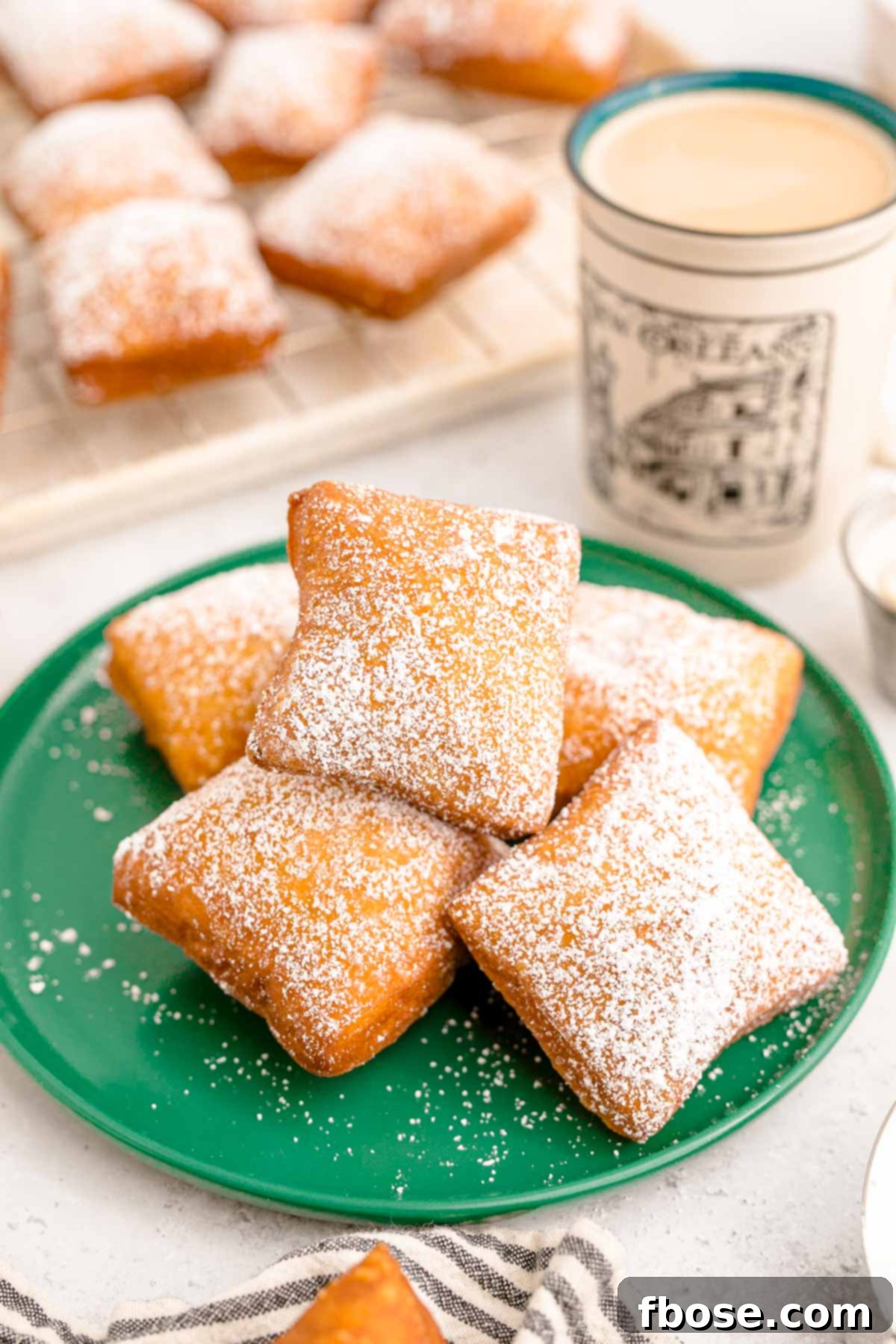
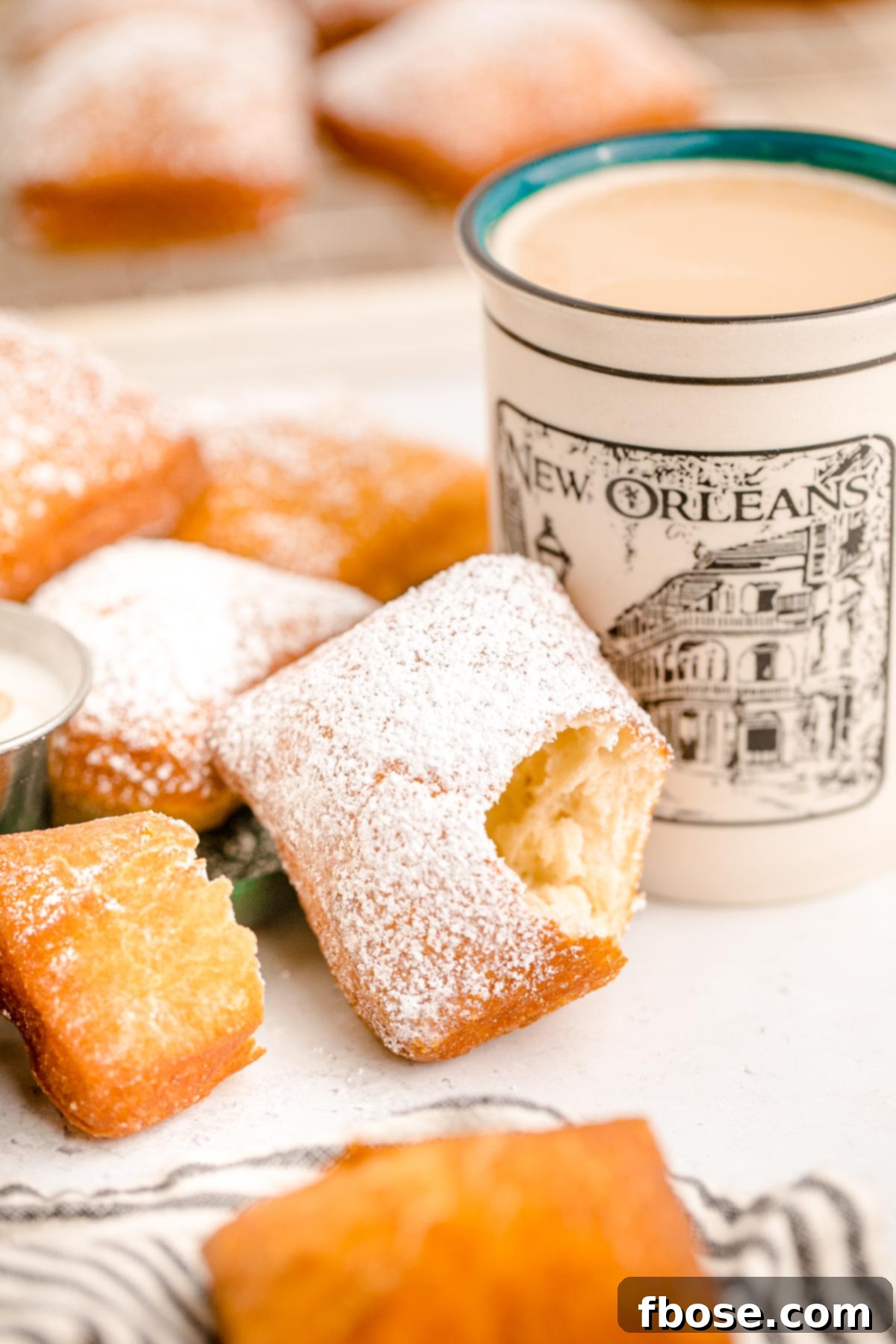
Beignets: A New Orleans Culinary Icon
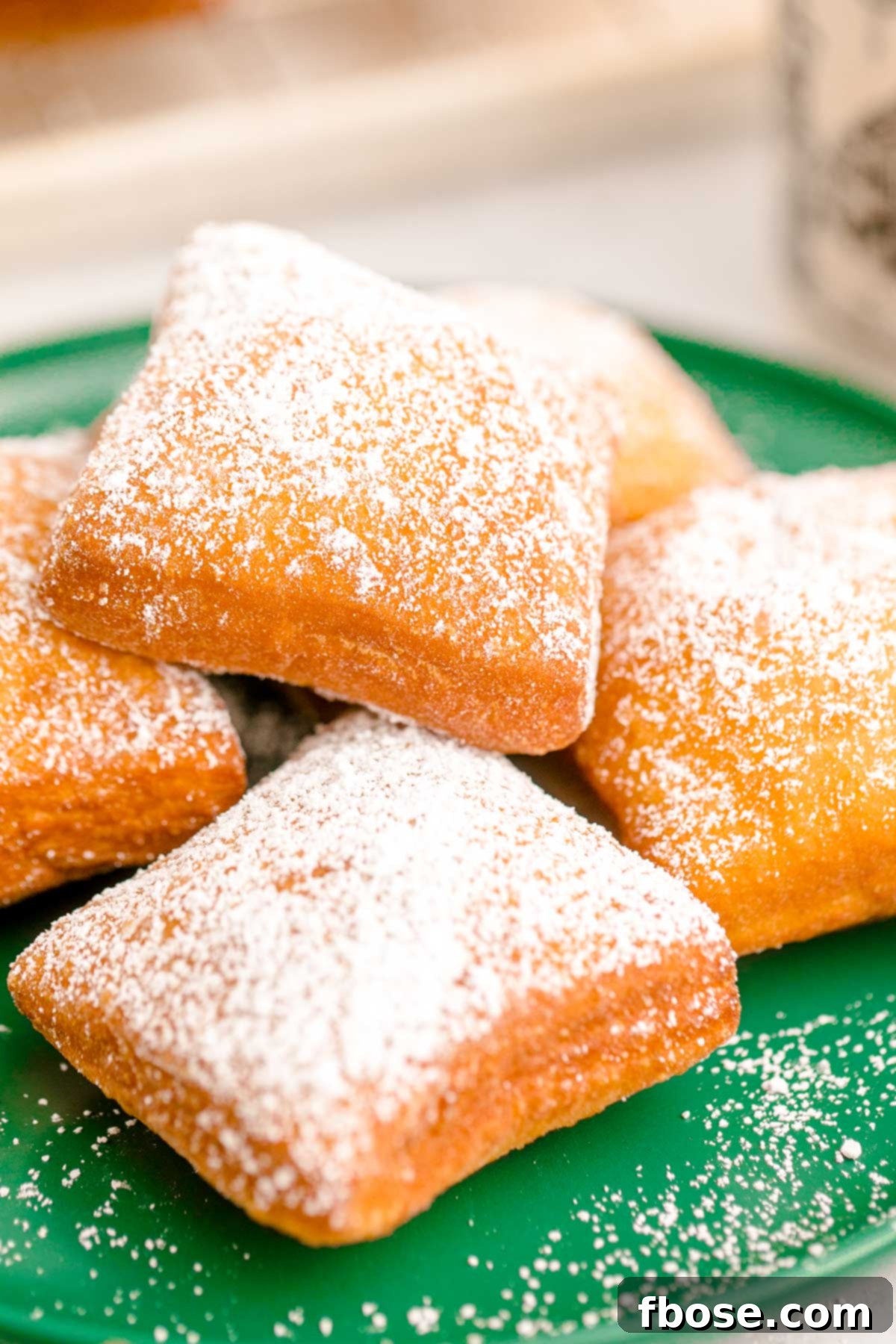
Imagine this: a crisp morning, a steaming cup of coffee, and a fresh plate of these exquisite New Orleans Style Beignets ready to be savored. These distinctive square doughnuts, characterized by their airy texture and a lavish snow-like dusting of powdered sugar, are more than just a sweet treat; they’re a quintessential experience. They vanish from the table as quickly as they appear, leaving behind only sweet memories.
My profound affection for this deep-fried French pastry blossomed during my first visit to New Orleans in 2019. The unforgettable moment came with my inaugural bite of a Cafe Du Monde beignet. While this homemade rendition captures their delicious essence beautifully, there’s an undeniable magic in the southern atmosphere that makes those original Beignets truly iconic. This recipe, however, is a perfect antidote to those cravings when a spontaneous trip to the historic Cafe in Louisiana isn’t feasible. With simple pantry ingredients and just about 20 minutes of frying time, you can bring that taste of New Orleans directly to your home.
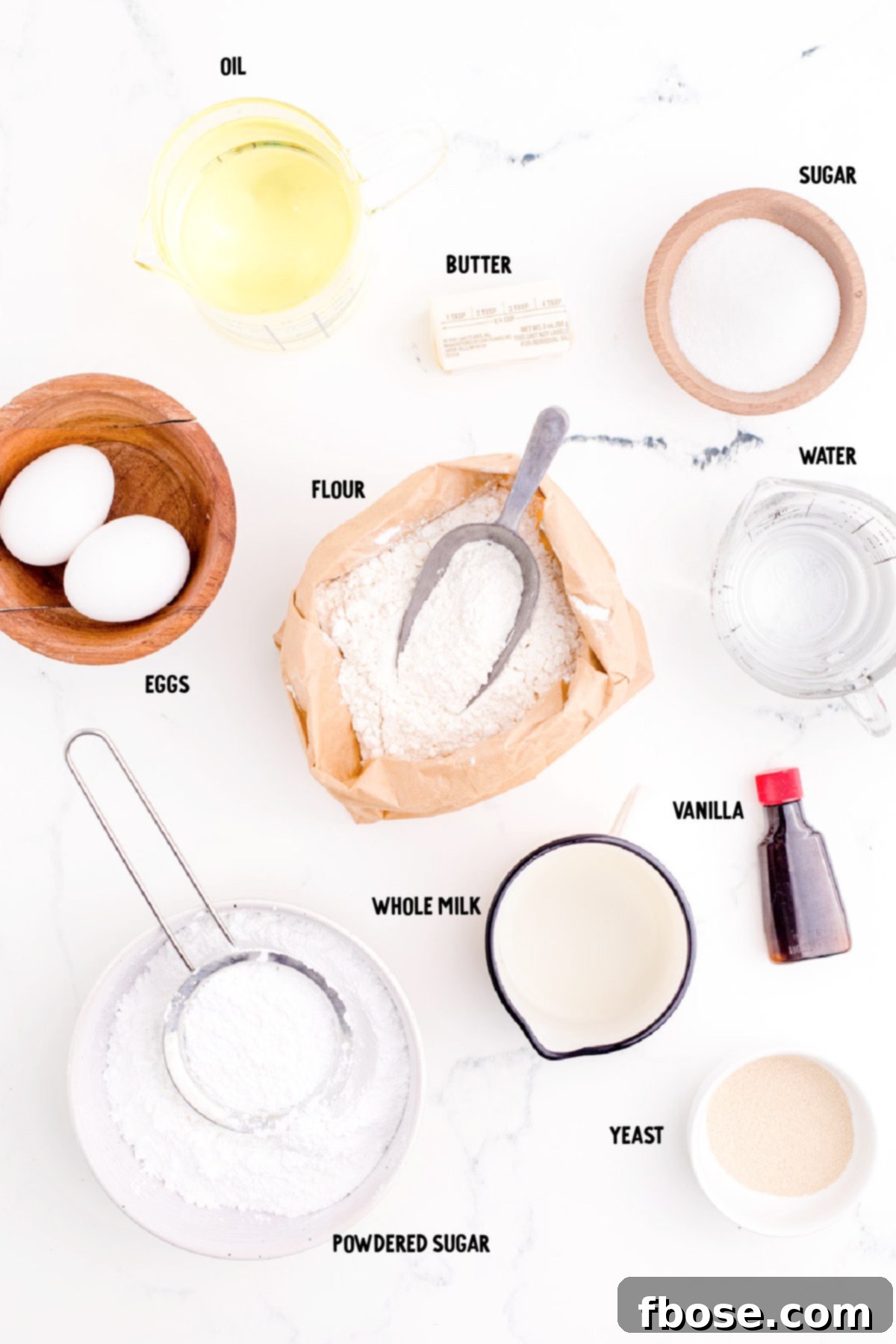
Essential Ingredients for Perfect Beignets
Don’t let the idea of making a homemade French dessert intimidate you! This Beignet recipe is surprisingly straightforward, with the most crucial role played by the yeast. Achieving that signature light and airy texture starts with properly activating your yeast. The initial step of combining yeast with warm water and a touch of sugar is key. Look for a slightly foamy mixture – this tells you your yeast is alive and ready to work its magic.
Once your yeast mixture is bubbly and active, you’ll incorporate the remaining dough ingredients: fresh eggs, rich whole milk, a hint of vanilla extract for depth of flavor, all-purpose flour to form the structure, and luscious melted butter for tenderness. Each component plays a vital role in creating the perfect beignet dough. After a period of rising, the dough transforms into a soft, pliable mass, ready to be rolled, cut into its iconic squares, and then gloriously deep-fried in vegetable oil. Finally, the freshly fried beignets are showered with irresistible toppings. While a generous dusting of powdered sugar is traditional and highly recommended, we often experiment with other delightful additions:
- A classic sprinkle of powdered sugar for that authentic Cafe du Monde experience.
- Rich Chocolate Sauce, perfect for dipping.
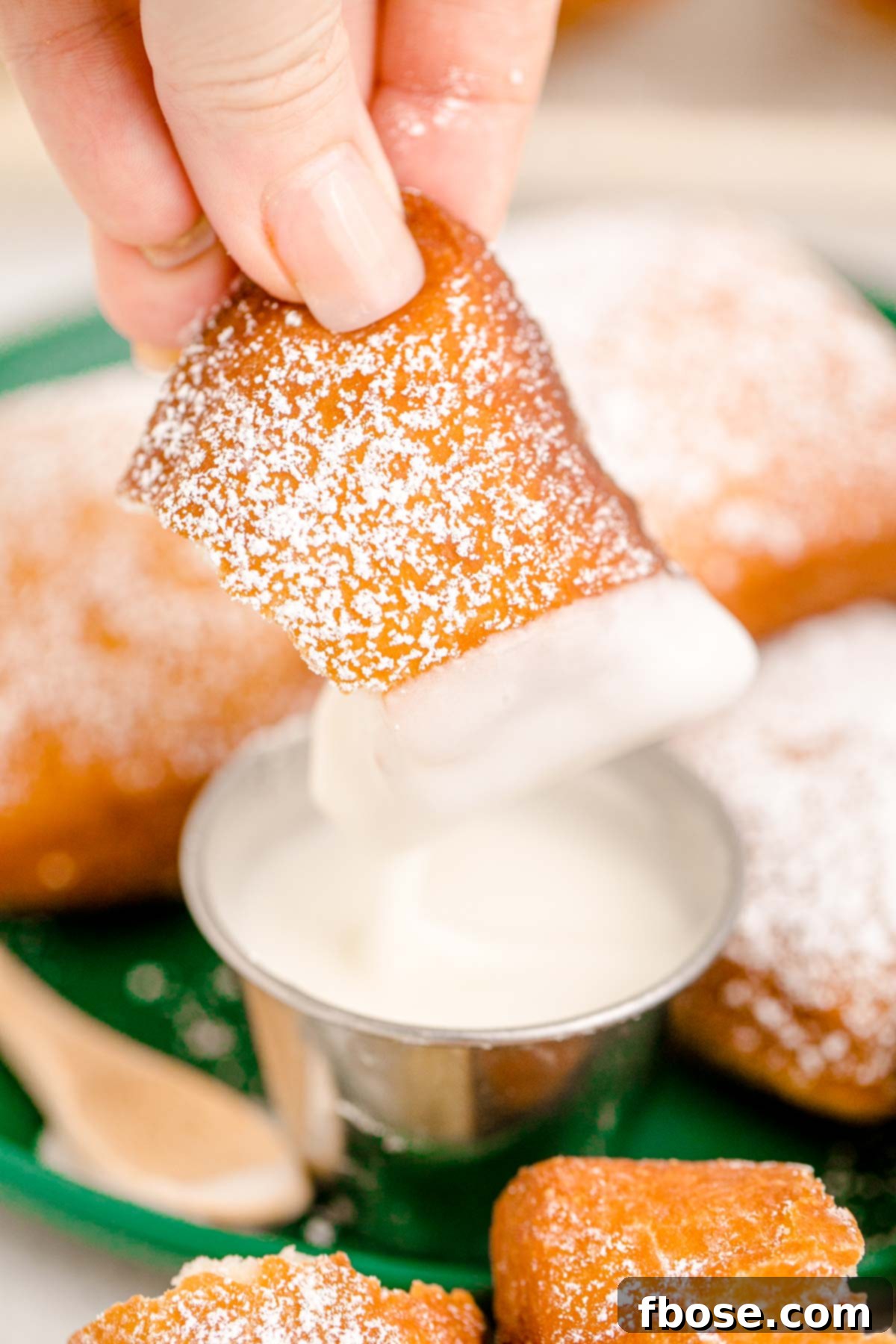
- Smooth Vanilla Icing, adding another layer of sweetness.
- Fresh Fruit, for a touch of brightness and natural sweetness.
- Homemade Whipped Cream, light and creamy.
- A comforting blend of Cinnamon Sugar.
- Assorted Jams and Fruit Sauces for a burst of fruity flavor.
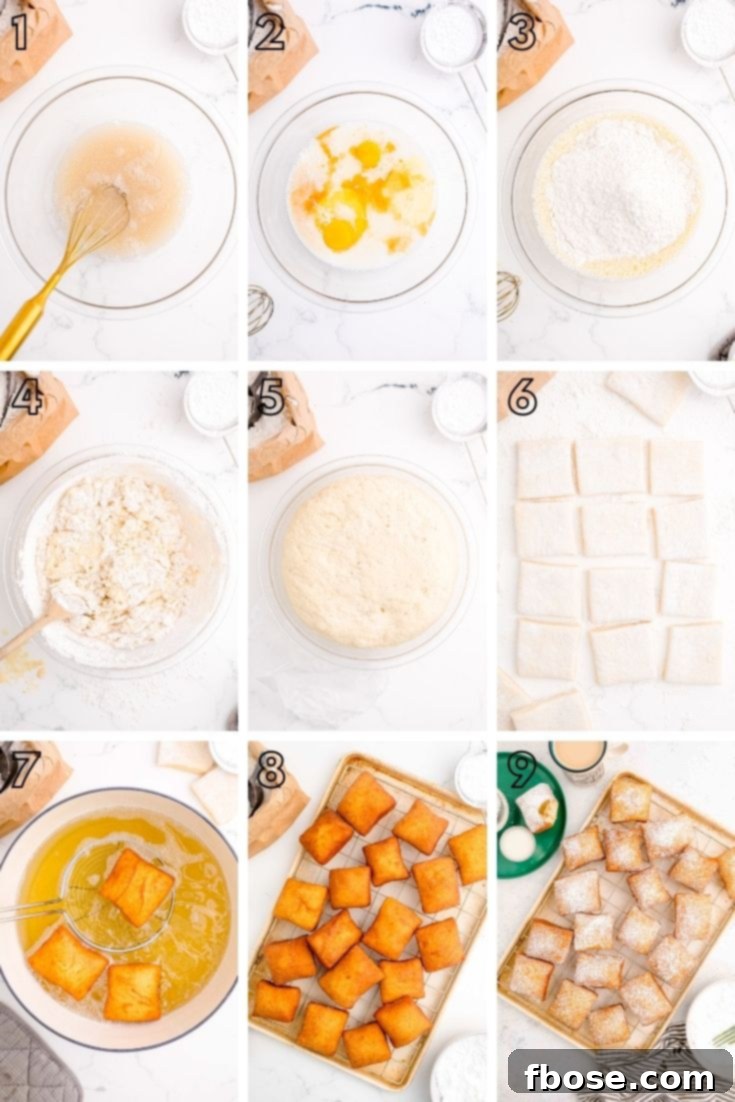
Step-by-Step Guide: Crafting Authentic New Orleans Beignets
Follow these detailed steps to create perfectly light and fluffy beignets that will transport you straight to the heart of New Orleans:
- Activate the Yeast: Begin by pouring warm water into a medium-sized mixing bowl. It’s crucial that the water temperature is between 105°-110°F (40°-43°C) – too hot will kill the yeast, too cold won’t activate it. Whisk in the active dry yeast and granulated sugar. Allow this mixture to sit undisturbed for 5 to 10 minutes. You should observe a light foamy layer forming on the surface, indicating the yeast is active. If no foam appears, your yeast may be expired or the water temperature was incorrect, and you’ll need to start fresh.
- Prepare the Wet Ingredients: Once the yeast is active, gently whisk in the room-temperature eggs, whole milk, and vanilla extract until well combined. Ensuring these ingredients are at room temperature helps them integrate smoothly into the dough and promotes a consistent rise.
- Combine Dry and Wet: Gradually add about 2 cups of the all-purpose flour to the wet mixture, mixing until just incorporated. Then, drizzle in the melted butter, followed by the remaining flour. Continue to mix until a shaggy dough forms.
- Knead the Dough: Transfer the dough mixture onto a lightly floured surface. Knead the dough with your hands for about 5-7 minutes, or until it becomes smooth and elastic. The dough should be soft but no longer overly sticky. If it remains too sticky, add an additional tablespoon of flour at a time, kneading after each addition, until the desired consistency is achieved.
- First Rise (Proofing): Shape the smooth dough into a ball and place it into a large, lightly oiled bowl. Turn the dough once to coat it evenly with oil. Cover the bowl tightly with plastic wrap or a damp kitchen towel. Place the covered bowl in a warm, draft-free area, such as a slightly warmed oven (turned off) or a sunny spot. Allow the dough to rise until it has doubled in size, which typically takes between 1 to 2 hours, depending on the warmth of your environment. This first rise is critical for developing flavor and texture.
- Roll and Cut: Once the dough has doubled, gently punch it down to release the air. Transfer it to a lightly floured surface and roll it out evenly to a thickness of approximately ¼ inch. Using a sharp knife or a pizza cutter, cut the dough into 2 ½ inch squares. Resist the urge to re-knead and re-roll any leftover dough scraps, as this can result in tough beignets. Instead, fry these smaller, irregular pieces as they are; they might cook faster but will be equally delicious!
- Heat the Oil: In a large, heavy-bottomed pot or Dutch oven, pour in enough vegetable oil to reach a depth of at least 2 inches, ensuring ample room for the beignets to float and fry properly. Heat the oil over medium-high heat until it reaches a precise temperature of 370°F (188°C). A candy thermometer is indispensable here for accurate temperature monitoring, which is crucial for perfect frying.
- Deep Fry the Beignets: Carefully drop the beignet squares into the hot oil, working in small batches to avoid overcrowding the pot. Overcrowding will significantly drop the oil’s temperature, leading to greasy, dense beignets instead of light, puffy ones. The beignets should puff up almost immediately upon hitting the hot oil. If they don’t, the oil is not hot enough. Spoon some hot oil over the tops of the beignets as they fry to help them puff evenly. Fry for about 1 to 2 minutes per side, turning them once, until they achieve a beautiful golden brown color. Avoid over-browning.
- Drain and Serve: Using a slotted spoon or tongs, carefully remove the golden beignets from the oil and transfer them to a plate generously lined with paper towels. This allows excess oil to drain off, keeping the beignets crisp.
- Dust and Enjoy: While still warm, liberally dust the beignets with a generous amount of powdered sugar. A fine-mesh sieve works wonderfully for an even coating. Serve immediately with your preferred toppings and a hot cup of coffee.
You’ll likely have scraps from cutting the dough, don’t try to remix these scraps and cut them into squares, as this would result in tough beignets. Fry these scrap pieces just the way they are; they may not need to cook for as long but will be just as delicious!
Beignet Recipe Tips & Troubleshooting for Success
Mastering homemade beignets is easier than you think, especially with these helpful tips and troubleshooting advice. Achieving that perfect fluffy interior and crisp exterior is within reach!
How To Store Fried Beignets:
Beignets are undoubtedly best enjoyed fresh and hot, straight from the fryer. However, if you find yourself with leftovers, you can store them in an airtight container at room temperature for up to 2 to 3 days. For longer preservation, they freeze beautifully for up to 1 to 2 months. To reheat, simply pop them into a toaster oven or air fryer until warmed through and slightly crisp, then re-dust with powdered sugar.
How Come My Beignets Didn’t Rise?
A common culprit for unrisen beignets is inactive yeast. To determine the cause, first check the expiration date on your yeast package. Even if not expired, yeast can lose potency. The real test is the initial activation step: did the yeast froth up when dissolved in the warm water and sugar? If there was no visible foam after 5-10 minutes, your yeast was likely not active. Another critical factor is water temperature. Yeast thrives in warm water (105°-110°F or 40°-43°C); if the water is too hot, it will kill the yeast, and if it’s too cold, it won’t activate properly. Always use a kitchen thermometer to ensure accuracy.
Why Aren’t My Beignets Puffing Up?
If your beignets aren’t achieving that characteristic puff, there are a few potential reasons. Most commonly, it’s due to overcrowding the frying pan. Each piece of dough cools down the oil, and if too many are added at once, the oil temperature drops too drastically, preventing them from puffing. Fry in small batches to maintain a consistent high oil temperature. Additionally, ensure you haven’t over-rolled the dough, making it too thin. Thinner dough struggles to develop enough internal structure to puff properly.
What Should I Do If The Dough Is Too Sticky While Kneading It?
A sticky dough can be frustrating, but it’s easily remedied. If your dough is too sticky during kneading, simply add a tablespoon of all-purpose flour at a time, kneading well after each addition. Continue this process until the dough becomes smooth, elastic, and manageable, no longer sticking excessively to your hands or the work surface.
Frequently Asked Questions About New Orleans Beignets
For deep frying beignets, you need oils with a high smoke point that can withstand the necessary high heat without burning. Excellent choices include soybean oil, corn oil, sunflower oil, and peanut oil. These oils impart a neutral flavor, allowing the delicious taste of the beignets to shine through.
The ideal temperature for frying beignets is 370°F (188°C). Maintaining this temperature is critical for perfectly cooked beignets – too low and they’ll be greasy, too high and they’ll burn outside before cooking through. To accurately monitor the oil temperature, always use a reliable kitchen thermometer.
Absolutely! A standing mixer can simplify the dough-making process significantly. Just be sure to use the dough hook attachment. Mix the ingredients on low to medium speed until the dough comes cleanly away from the sides of the bowl and forms a smooth, elastic ball, typically taking about 5-7 minutes.
While whole milk contributes to the richness and tender texture of these beignets, you can certainly use other types of milk you have on hand. Skim milk, 2% milk, or even canned evaporated milk can work. The key is to ensure the milk is at room temperature to aid yeast activation. I personally find whole milk yields the best taste and most luxurious texture.
Yes, you can prepare the beignet dough in advance! Instead of allowing the dough to proof at room temperature, simply place the mixed dough (shaped into a ball in an oiled bowl and covered with plastic wrap) directly into the refrigerator. The cold temperature will slow down the yeast activity, allowing the dough to rise gradually overnight. This means the dough will be perfectly proofed and ready to roll, cut, and fry the next day, whenever you are!
Certainly! This versatile beignet dough makes excellent homemade doughnuts. After rolling out the dough, simply use a doughnut cutter to create the classic ring shapes instead of cutting squares. Fry them as directed, and finish with your favorite doughnut glazes or toppings.
While both donuts and beignets are beloved deep-fried treats, their primary distinction lies in their texture and origin. Donuts are typically denser and often yeast-leavened, sometimes featuring a cake-like crumb. Beignets, particularly the New Orleans variety, are specifically characterized by their exceptionally light, airy, and pillowy texture, achieved through a specific yeast-based dough, and they are traditionally square with no hole.
The term “beignet” itself is French for “fritter.” Classic French beignets often refer to a choux pastry that relies on moisture content (steam) for its rise and hollow interior. In contrast, Louisiana beignets, specifically those famous in New Orleans, are made with a yeast-leavened dough, similar to a doughnut, which gives them their distinctive fluffy and airy consistency. The New Orleans version is a unique adaptation that has become iconic in its own right.
Yes, beignet dough can be successfully proofed overnight in the refrigerator. To do this, prepare the dough as usual, but instead of leaving it out to rise at room temperature, transfer the covered bowl directly to the fridge after mixing. The cold environment will allow the dough to slowly ferment and rise, developing deeper flavors, and it will be perfectly ready for rolling and frying the following day.
Explore More French-Inspired Delights
My adoration for beignets, whether freshly homemade or savored at a charming cafe, is boundless. If this New Orleans Beignets recipe has ignited your passion for exquisite French desserts, you’ll be thrilled to discover more delectable treats that promise to tantalize your taste buds:
- Classic French Madeleines – These delicate, shell-shaped mini sponge cakes are light, airy, and boast a rich buttery flavor. They pair wonderfully with your afternoon coffee or tea.
- Chocolate Eclair with Vanilla Bean Pastry Cream – Indulge in this elegant dessert featuring tender choux dough filled with silky vanilla bean pastry cream and finished with a glossy chocolate glaze.
- Scotch and Chocolate Pots de Creme – A surprisingly simple yet incredibly rich and creamy French dessert that can be prepped in just 5 minutes, offering sophisticated flavors with minimal effort.
- Chocolate Peanut Butter Macarons – Master the art of macarons with this easy-to-follow recipe, complete with step-by-step photos to guide you to perfect, chewy meringue cookies filled with a delightful chocolate peanut butter ganache.
- Chocolate Ganache – Learn to make this versatile, smooth, and decadent chocolate creation, ideal as a luxurious filling, frosting, or topping for an array of your favorite desserts.

Easy Beignets Recipe
Equipment
-
Rolling Pin
-
Large pot
-
Candy Thermometer
Ingredients
- ¾ cup warm water 105°-110°F
- 2¼ teaspoons active dry yeast
- ⅓ cup granulated sugar
- 2 large eggs room temperature
- ½ cup whole milk room temperature
- ½ teaspoon vanilla extract
- 4 cups all-purpose flour plus a little more as needed
- 3 tablespoons salted butter melted
- 4-8 cups vegetable oil for frying
- 2 cups powdered sugar
- chocolate sauce for serving
- vanilla icing for serving
Instructions
-
Pour the warm water into a medium-sized bowl, double check the temperature with a kitchen thermometer to make sure it’s not too hot or too cold. Whisk in the yeast and sugar and allow it to sit for 5 to 10 minutes. It should become slightly foamy – or your yeast may be bad.¾ cup warm water, 2¼ teaspoons active dry yeast, ⅓ cup granulated sugar
-
Whisk in the eggs, milk, and vanilla.2 large eggs, ½ cup whole milk, ½ teaspoon vanilla extract
-
Mix in 2 cups of the flour, then the melted butter, then the rest of the flour. Knead the mixture with your hands until the dough is smooth. If it is too sticky, you may want to add more flour, a tablespoon at a time, until smooth.4 cups all-purpose flour, 3 tablespoons salted butter
-
Shape the dough into a ball and place it in a lightly oiled bowl. Cover the dough with plastic wrap or a damp towel and leave it undisturbed in a warm place. Allow the dough to rise until doubled in size, about 1 to 2 hours.
-
Roll out dough to ¼ inch thick. Cut into 2 ½ inch squares. You’ll likely have scraps from cutting the dough, don’t try to remix these scraps and cut them into squares, this would result in tough beignets. Fry these scrap pieces just the way they are, they may not need to cook for as long but will be just as delicious!
-
In a large heavy-bottomed pot, heat oil to 370°F. You want to have at least 2 inches of oil for deep frying.4-8 cups vegetable oil
-
Deep fry the beignets in batches so you don’t crowd the pot or cool down the oil too much. They should pop up when you put them in the oil, if they don’t, this means the oil is not hot enough. Spoon the oil over the tops of the beignets as the bottoms are frying. Make sure to turn them over so they are golden (not brown) on both sides, about 1 to 2 minutes per side.
-
Drain on a plate lined with paper towels.
-
Sprinkle generously with powdered sugar and serve hot.2 cups powdered sugar
Video
Notes
- What Other Oils Work Well For Deep Frying? The oils to use for deep frying are ones that are well suited for high heat and have a neutral flavor profile. These include soybean oil, corn oil, sunflower oil, and peanut oil.
- Can I Use A Standing Mixer To Make The Beignet Dough? You sure can! Use a dough hook attachment and mix until the dough comes cleanly away from the sides of the bowl and is smooth and elastic.
- What Could I Use Instead of Whole Milk? Feel free to use whatever milk you have on hand, even canned evaporated milk will work! I personally just enjoy the richer taste and more tender texture of them when they’re made with whole milk.
- How Come My Beignets Didn’t Rise? To start tracing the cause, I’d first check the expiration date on your yeast. Then, verify if the yeast foamed up when it was dissolved in the warm water and sugar. If not, the yeast did not activate properly or was expired. Another crucial point is ensuring the water is warm, not hot. If the water is too hot, it will kill the yeast, preventing any rise.
- What Temperature Should The Vegetable Oil Be Before Frying The Beignets? You’ll want the temperature to be precisely 370°F (188°C). To keep accurate track of the oil temperature, always use a reliable kitchen thermometer or candy thermometer.
- Can I Make Doughnuts Instead Using This Beignet Recipe? Yes! After you roll the dough out, just use a doughnut cutter to create classic ring shapes instead of cutting squares.
- How Should I Store These Once They’re Finished? They’re actually best when served immediately after frying. However, you can store cooled beignets in an airtight container at room temperature for up to 2 to 3 days. They can also be frozen for up to 1 to 2 months. Reheat gently in a toaster oven for best results.
- Can I Make These Beignets Ahead Of Time? You can certainly make the dough ahead of time! Instead of leaving it out to proof at room temperature, simply place the mixed dough into the fridge as soon as it’s ready. It will take longer for them to proof in the refrigerator (typically overnight), so the dough will be ready when you are the next day.
- What Should I Do If The Dough Is Too Sticky While Kneading It? If the dough is excessively sticky during kneading, you can add flour a tablespoon at a time, kneading after each addition, until the dough reaches a smooth and workable consistency.
Nutrition
Did You Make This Recipe?
Don’t forget to share it with me on Instagram @sugarandsoulco and follow on Tiktok @sugarandsoulco and Pinterest @sugarandsoulco for more!
Pin Recipe
Share Recipe